Welcome, Classic Film Lovers!
Welcome to Sister Celluloid: Where Old Movies Go To Live! I’m so happy we found each other! Here, it’s all about classic films—and you! It’s a dialogue, not a monologue. Please take a look around, and jump in on every story that interests you. Stop by often, as I’ll be adding lots of great history, news, interviews, photos etc. And I’ll be running contests for fabulous prizes like vintage jewelry, great books and terrific DVDs and CDs! Please scroll through, dig in and pipe up! I’d love to hear from you!
Summoning the Patron Saint of STFU at the Movies
Happy New Year to my classic movie family! May this year be better than the last (talk about setting a bar low), and may all good things come your way!
Yesterday afternoon, my husband Tim and I bid a relieved adieu to 2025 by going to see SONG SUNG BLUE, which was the perfect year-end cleanse. We got to the counter, chose our seats (there were only a handful taken), dropped our bulky coats, scarves, and sundry other baggage onto the seat next to mine and settled in with our popcorn. Soon after, two women who might have been played by Margaret Dumont and Kathleen Howard at their haughtiest bustled down the aisle and into our row. “You have to move these!” Margaret barked. What? Why? “We’re sitting here!” Honest to God there weren’t enough people in the whole theater to field a pickup softball team. And we’d picked our seats pretty much at random, since wherever we sat we’d have lots of space (or so we thought). It’s not like we’d hit some kind of magic lottery of movie seating that the whole town would want in on.
I shlepped everything from the seat next to me to the one next to Tim, and the two of them plopped down—with Margaret sending my bottled water, which was mercifully capped, spinning furiously in its little cubbyhole. Then the trailers began. And so did the talking. They chattered loudly over every one of them, as if what was on screen was just a minor impediment to their riveting conversation. “Okay fine, it’s just the trailers,” I told myself. “Maybe they’ll stop when the movie starts.”
But… no. The yammering bled right into the opening scene. I already kind of loathed them, so I reminded myself to stay calm. Then, just as it does in the movies, an inspiration flashed before me: Liam Neeson in TAKEN.

Without raising my voice, I summoned every ounce of menace I had in me and growled, “Okay this is where the talking STOPS. You’re not in your freakin’ living room.” They sort of froze and looked at each other, appalled. (Did I hear a harrumph? I believe I may have). And then… utter, blissful silence. At which point a guy somewhere behind us, in a voice usually reserved for the Knicks making a three-point buzzer-beater, cried “YES!”
The bombastic biddies spoke not another word for the rest of the movie.
I should add that I’m not one of those movie nazis who erupts when people make passing comments during a film or quickly catch someone up on the plot if they’d stepped out to the restroom. But these two were… not that. And it is my fervent wish that anyone trapped next to them in the future summon St. Liam of Neeson to be their savior.
Calling All Romantics… A Mystery from the 1939 World’s Fair, Solved! (Well, Mostly)
Recently I stumbled onto a haunting old mystery I just had to share with my hopelessly romantic classic movie family.
In one of the few real bookstores left in New York, I was riffling through boxes of old postcards, looking for any from the 1939 World’s Fair, which I’m mildly obsessed with. I found one with a note on the back—from a woman to her brother, about a secret love affair. Sensing I’d come in on the middle of the story, I needed to know more! So I dug through every single box and pulled out every postcard from the Fair, and then asked if they had any more in the back. After sneezing my way through stacks of dusty boxes, I found a total of nine from the same woman!

These were never sent as postcards; there are no stamps or cancellations. But Ann must have mailed them to John, perhaps in envelopes to conceal their contents—because in one, she mentions hearing that he broke his leg in a polo match, and how that would explain why she didn’t hear back from him.
John’s address is on one of them—and it’s in Beacon Hill. So they were society types. But Douglas, her secret love, lived in Winthrop, then a working-class fishing village.
Here is Ann’s story:
Dear John,
I’m in love it’s as simple as that and it’s one of the greatest things God intended us to have and to cherish. His name is Douglas and his eyes are blue.
Love, Ann
Dear John,
I met him again today and for the first time I realized his eyes were blue. Robin eggs blue. Let’s eat today at the most wonderful place in New York. Where’s that I asked. He shook his head, I don’t know but we will find it and I knew we would.
Love, Ann
Dear John,
What will mother think when she knows that her Ann has fallen for a man that never has appeared in the society column. Oh John we must never tell her.
Love, Ann
Dear John,
It rained to-day and so we went to the movies and saw Gary Cooper and Jean Arthur in “Mr. Deeds Goes to Town.” Douglas asked me to supper so I’ll have an awful lot to tell you.
Love, Ann
Dear John,
Mother arrived last night on one of her surprise trips. Of course Doug had to be with me. She wanted to know who he was and he didn’t care a damn who she was and said so. Oh come, I need you.
Love, Ann
Dear John,
Douglas has gone and I don’t know where he lives in Winthrop and besides I’m not so sure he went home. I must find him but mother watches me like a hawk.
Love, Ann
Dear John,
If you could only come and help me find him for now I realize I would never let mother stand in the way of our happiness but first I must find him.
Dear John,
I heard you broke your leg in a polo game. No wonder you couldn’t help me. Well John I visited the fair. I saw him but was unable to reach him. Perhaps I will see him again. It is my one last hope for tomorrow I leave with mother.
Love, Ann
Dear John,
I’ve seen him at last. He said for me to go home and that in August I must go to [she gives his address] and there I may see him and we will talk about what lies ahead for us two.
Love, Ann
There, maddeningly, is where the story ended—and the search began. I had the brother’s address and last name (a frustratingly common one), and Doug’s address, with no last name. I assume Mr. Deeds Goes to Town was re-released in sometime in 1939. (I thought maybe she meant Mr. Smith Goes to Washington, but that didn’t open until October.) So the movie reference didn’t give me much of a clue about when the postcards were sent. But Boston’s polo season starts in late May, so I’m guessing they were sent in June; if it were July, wouldn’t she have said “next month” instead of “in August”? That means Ann endured an agonizing couple of months to wait to see Doug again. What happened when she did?
He pored over Ancestry.com. He plowed into the Boston society pages on Newspaper.com. He dug and dug through all kinds of records, and now I know more about Ann than I know about my own family.
But first, the bad news about Douglas.
Dear Reader, she didn’t marry him.
STREAMING SATURDAYS! Peter Cushing in CASH ON DEMAND, the Christmas Sleeper You Didn’t Know You Needed
Welcome to another edition of STREAMING SATURDAYS, where we bring you free, fabulous films to watch right here!
Imagine if Ebenezer Scrooge were scared straight not by four ghosts but by a criminal mastermind who utterly beguiled Bob Cratchit. That’s pretty much the set-up in CASH ON DEMAND, a woefully overlooked Hammer classic from 1961.
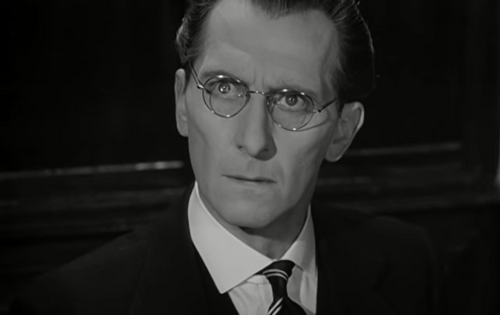
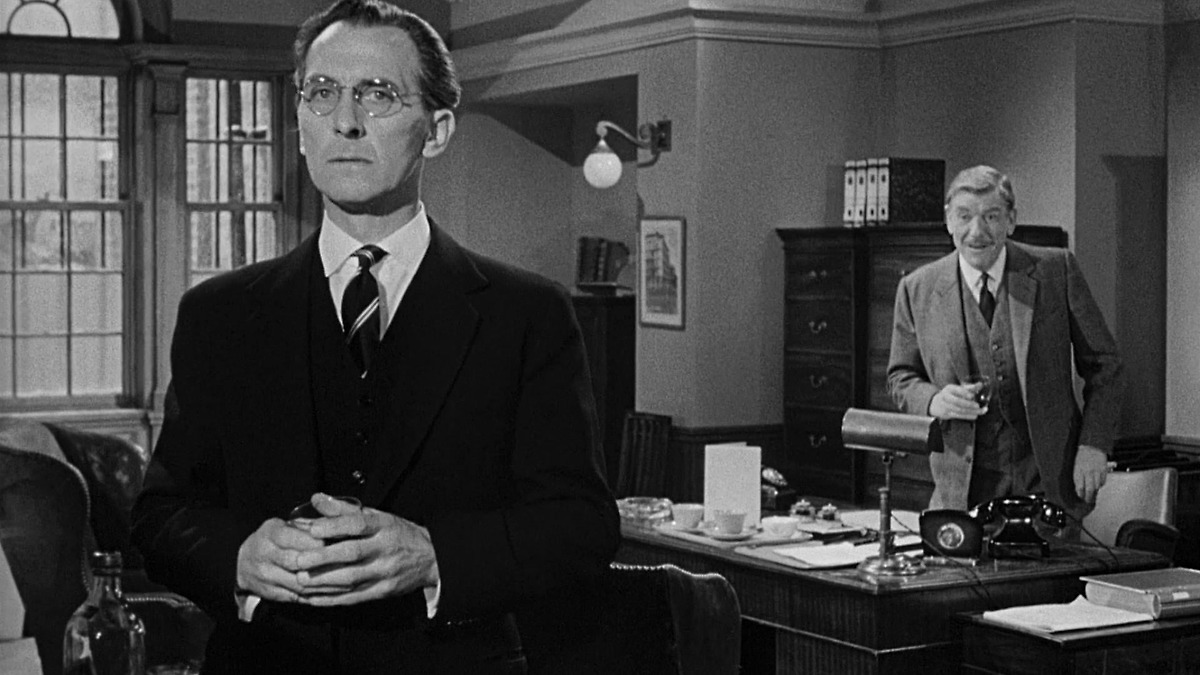
Two days before Christmas, a genial man calling himself Colonel Gore-Hepburn (André Morell) strides into a small Haversham bank, claiming to be an insurance inspector. He’s quickly ushered to the office of the branch manager, Harry Fordyce (Peter Cushing), who’s so tense and brittle it’s a wonder Hepburn’s hearty handshake doesn’t snap him in half. But once the door closes behind them, he reveals he’s the ringleader of a gang of thieves who are holding Fordyce’s wife and son hostage—and demands help in stealing £93,000 to guarantee their safety.
Meanwhile the unsuspecting staff are preparing to make merry out on the shop floor—or as merry as they can with a petty little prig like Fordyce as their boss. Gore-Hepburn pops out every so often to ask for their help with the books, but also asks after their families and Christmas plans and generally becomes the life of their sad little party. His mood hardens when he’s alone with Fordyce, threatening him with the awful fate that awaits his wife if he doesn’t cooperate.
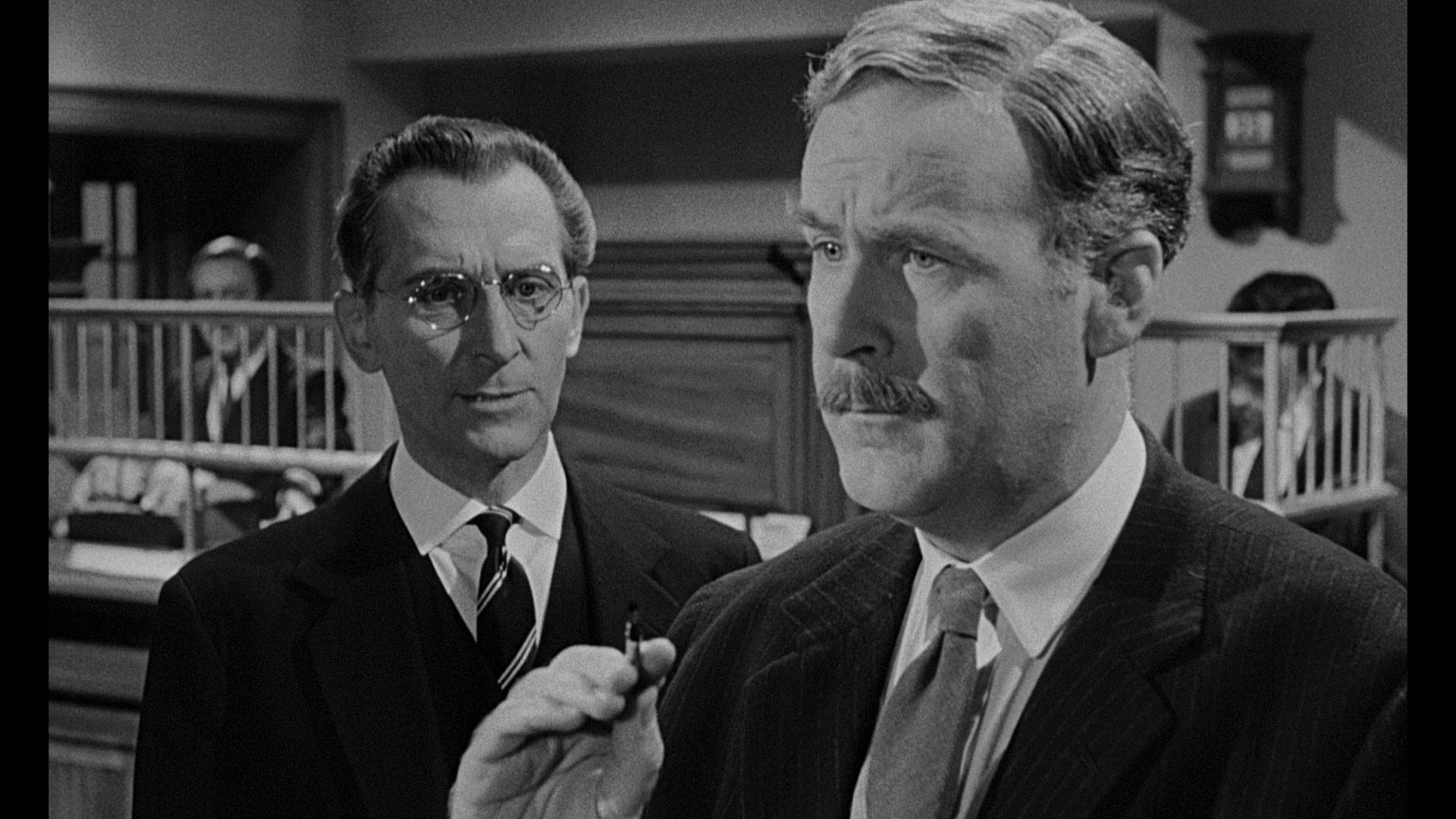

Cushing is brilliant as the cold, dry little bureaucrat, pinching his lips into a straight line and peering icily over his glasses. Even his cheekbones seem sharper than usual. Here was his chance to shake off the tweedy deerstalker caps, capes and waistcoats that marked most of his tenure at Hammer (fabulous though it was, including a turn as Sherlock Holmes with Morell as Dr. Watson), and he makes the most of it. And Morell is terrific as the glad-handing bank robber who cares more about the staff than their actual boss does.
The film takes some delicious twists and turns that I won’t spoil here, so settle in for a very Hammer Christmas!
STREAMING SATURDAYS is a semi-regular feature on Sister Celluloid. You can catch up on movies you may have missed by clicking here! And why not bookmark the page to make sure you never miss another?
TINTYPE TUESDAY: When Hollywood Publicity Shots… Go Wrong! (But Feel So Right)
Welcome to another edition of TINTYPE TUESDAY!
In today’s episode, we salute those relentlessly cheery classic-era flacks, who churned out whimsical publicity pix that gave you no clue what the movie was actually about. These are some of my faves; please feel free to drop your own pix in Comments and I’ll fold them in (with credit, of course)!
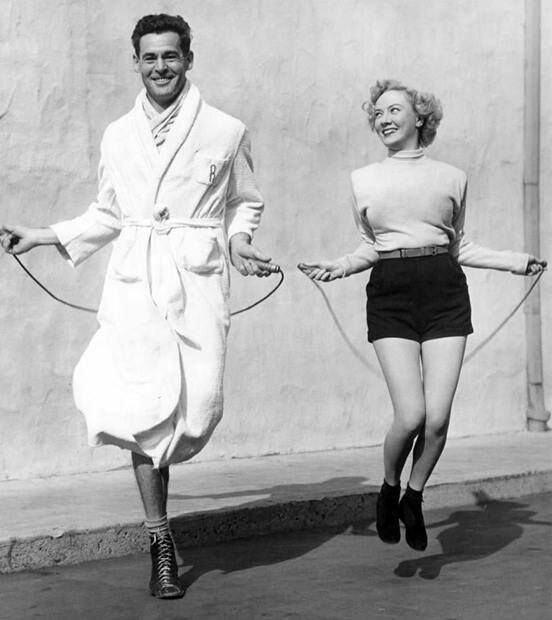
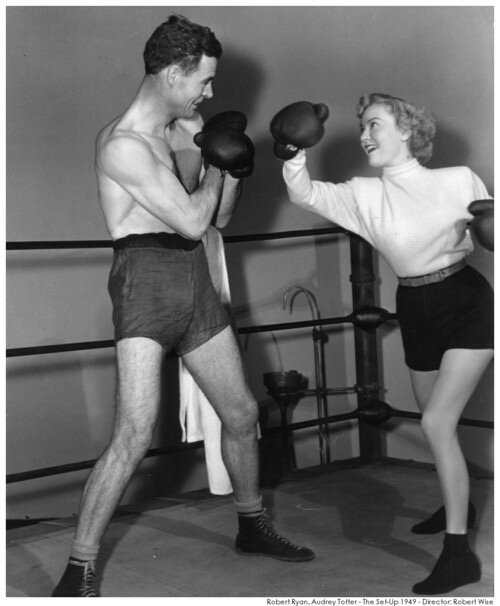
Who can forget that wacky rom-com The Set-Up, where Robert Ryan and Audrey Totter are set up for fun! Watch it, Bob, you may have been a champion boxer at Dartmouth, but Audrey’s got a mean uppercut! Maybe stick to jumping rope instead. Whatever the sport, these two are fit… for laughs!
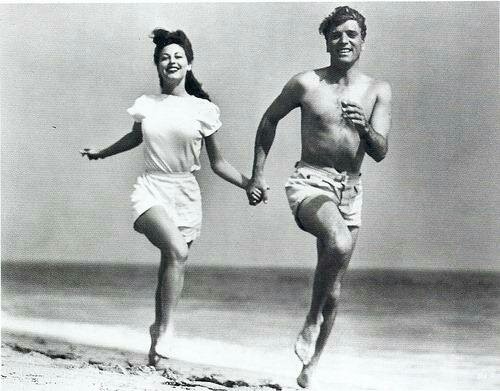
Running from shadowy figures in fedoras gives Burt Lancaster quite a workout in The Killers! Gamely keeping pace is his wholesome, faithful gal Ava Gardner. Looks like he’s got a lot of fun on his hands—literally!

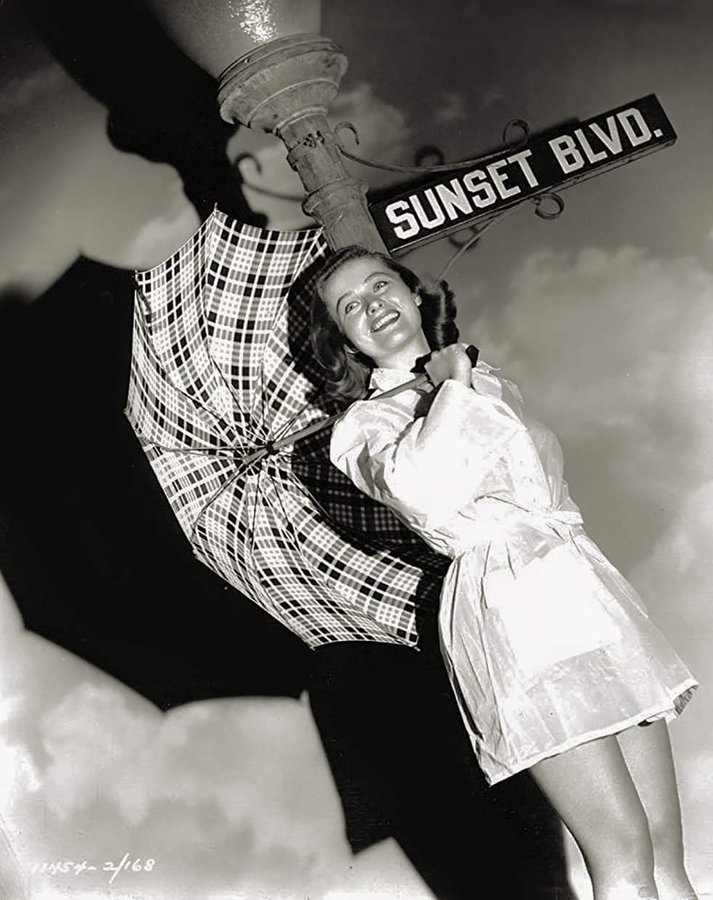
Billy Wilder turns his hand to musicals with Sunset Boulevard! Here Nancy Olson pops open a brolly and twirls around a lamppost as she sings in the rain—leave it to Billy to come up with an idea too daring to copy! No doubt our plucky songbird will soon find fair weather, clad in that adorable wrapper. I see a man in her future—and a mansion! Maybe even a swimming pool!
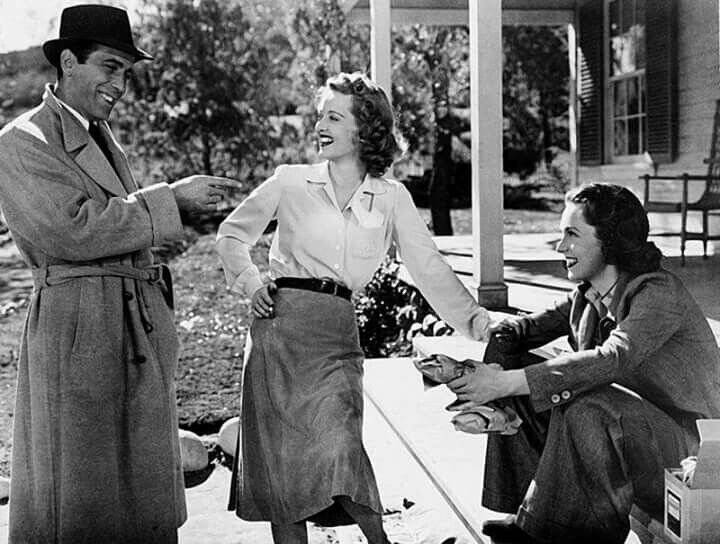
Who’s got time for medical gobbledygook when Bogie and his occasional brogue pop by? Surely there are nothing but magically delicious days ahead for Bette and Geraldine!
“Shhh, don’t tell her what I got her!” pleads Gene Kelly as he and Deanna Durbin plan for a soothing, romantic Christmas Holiday. Nothing but merriment under the tree for this fun-loving pair!
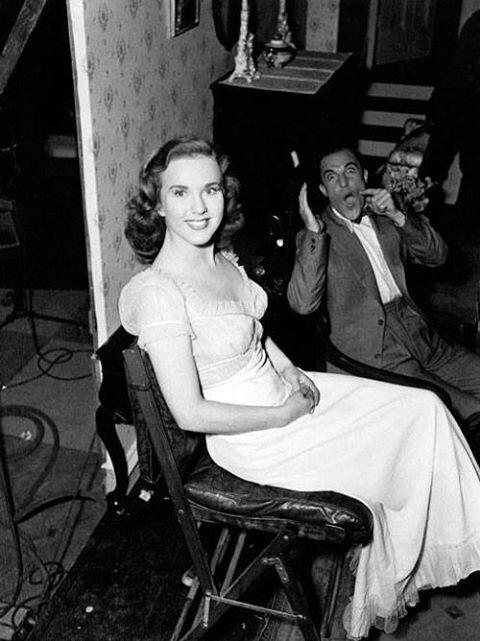
You can just tell from their glowing faces that these lucky lovebirds are sailing smoothly through their “court” ship! Their biggest problem? Too much sun in their eyes!

Uh-oh, Jimmy has double trouble with the Novak twins! Looks like the brunette has her eyes (and eyebrows!) on him! Luckily his steady girl is standing by, and surely he’ll appreciate her wit, charm and brains. Either way, any girl who meets our hero will come out the better for it. He’s not at all creepy!
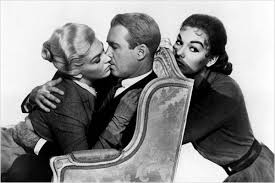
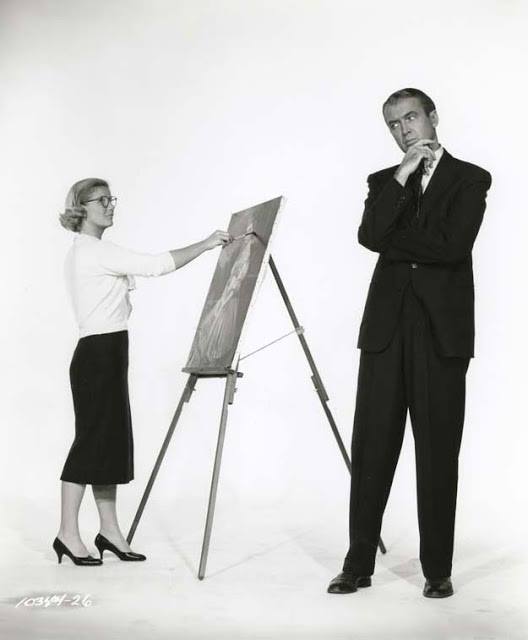
How will Jack “palance” these two lovely ladies? Fasten your seatbelts for a fun romantic tussle between Ida Lupino and Jean Hagen! The Big Knife will cut the wedding cake for one lucky gal!
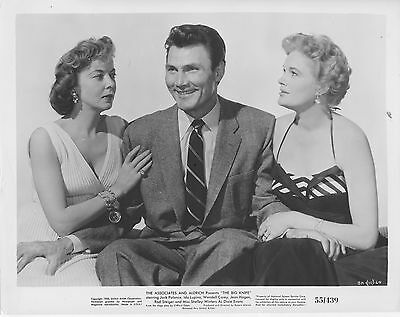
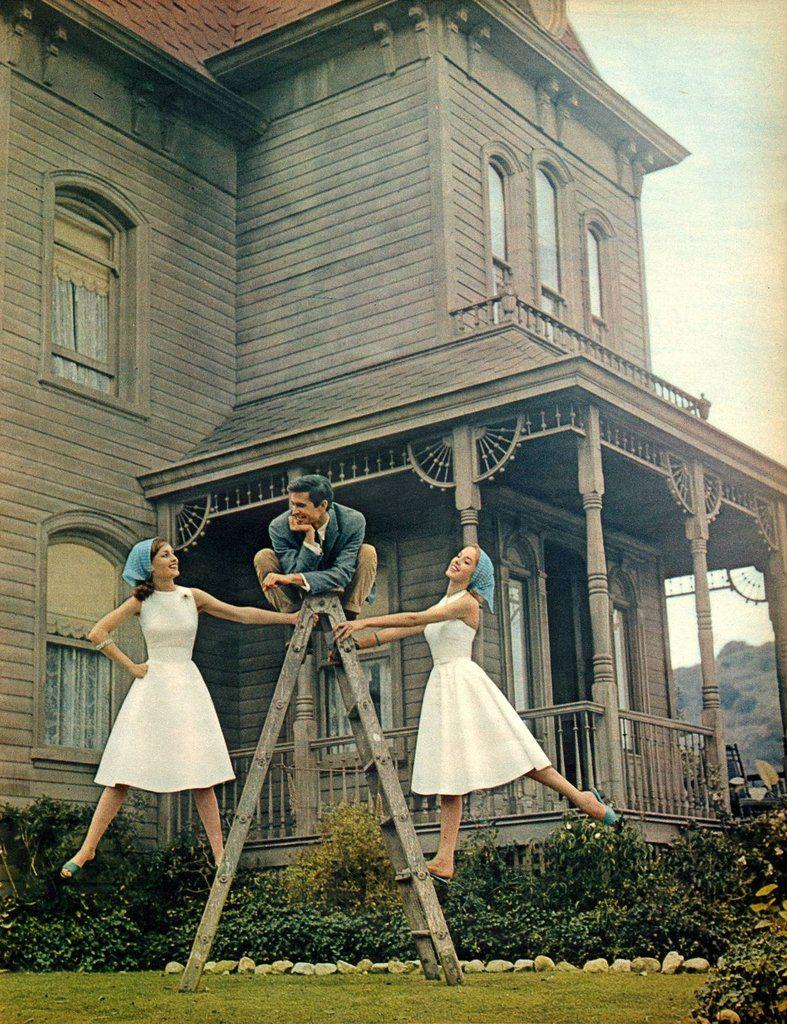
Alfred Hitchcock insists that no one be admitted to Psycho after the start of the film… because he doesn’t want them to miss the splashy opening number! So which spunky, oddly kerchiefed maiden will reach the top of the ladder for Tony? Only his mother knows for sure!
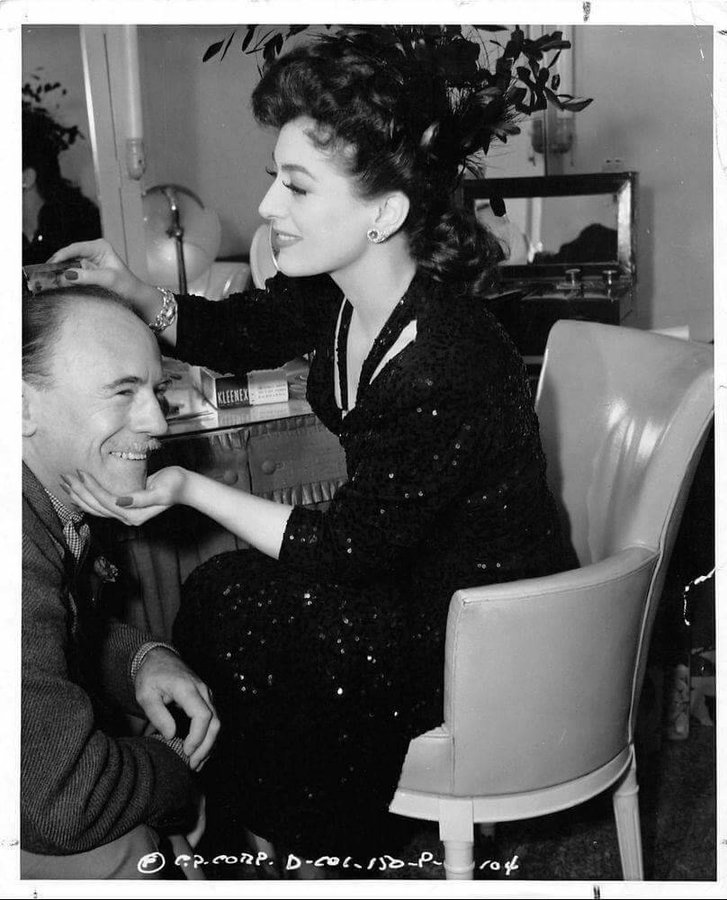
Some publicity shots weren’t so much misleading as just… odd. Here’s Joan Crawford grooming Roland Young like a gibbon between scenes of They All Kissed the Bride (watch the full movie here).
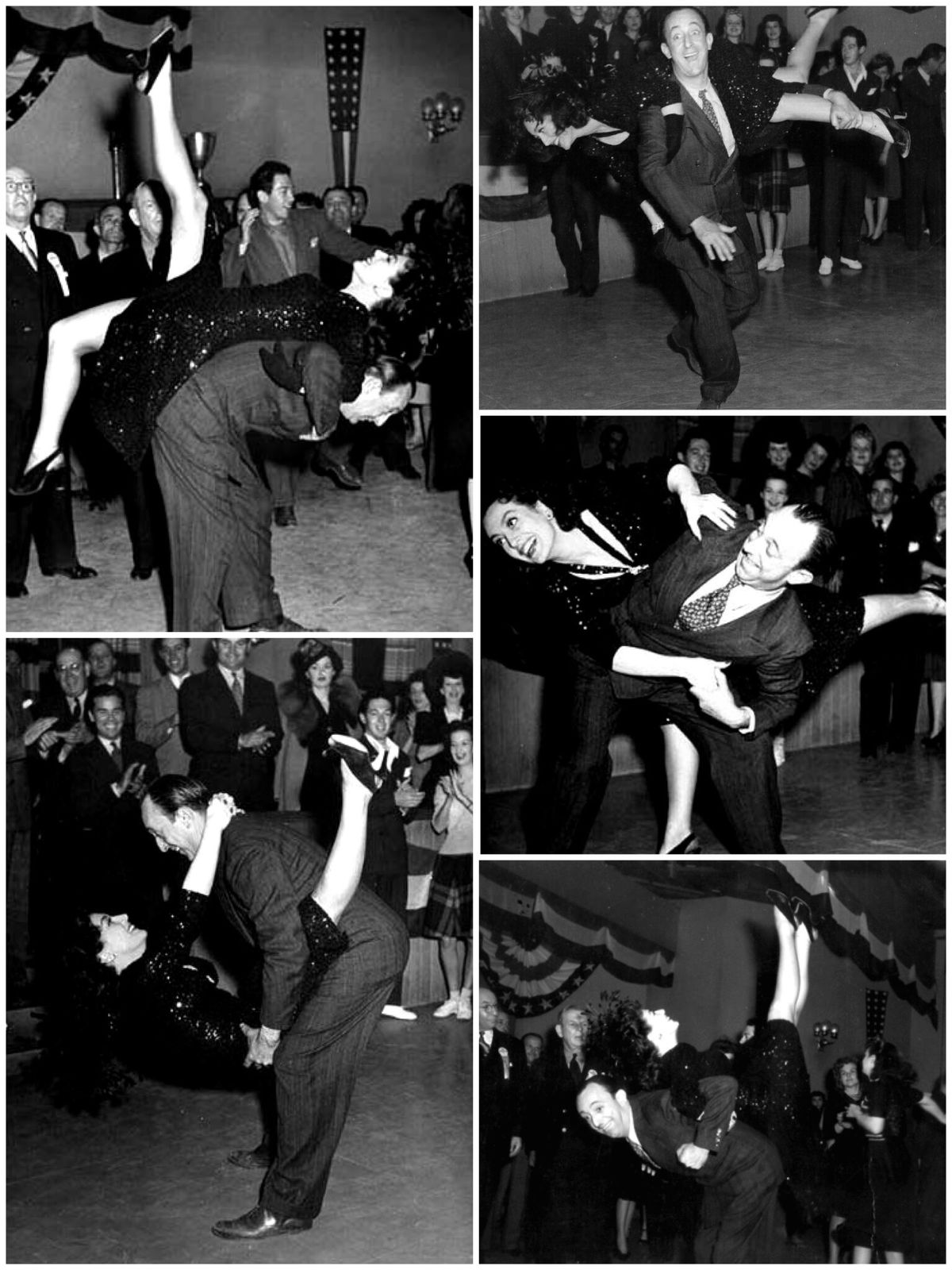
Actually the best shots from this film were of Allen Jenkins and Joan (who started as a dancer) jitterbugging. Never as sure of her comic chops as she should have been, Joan reluctantly stepped into the lead of a screwball vehicle tailored for Carole Lombard, who had been killed in a plane crash just two months earlier while on a war bond drive. Joan donated her entire $125,000 salary to the Red Cross, and fired her agent when he refused to kick in his ten percent. (PS: Louis B. Mayer also felt no need to part with any of the fee MGM collected from Columbia for loaning Joan out.)
But when it comes to dancing, Joan has nothing on… Jimmy Stewart and Lew Ayres? Here’s a pub shot for the ages from The Ice Follies of 1939, where our two heroes gamely fight (and skate!) to see who has less chemistry with Crawford. You might think the movie couldn’t be as bad as the photo, but an excruciating hour and a half later you’d change your mind.

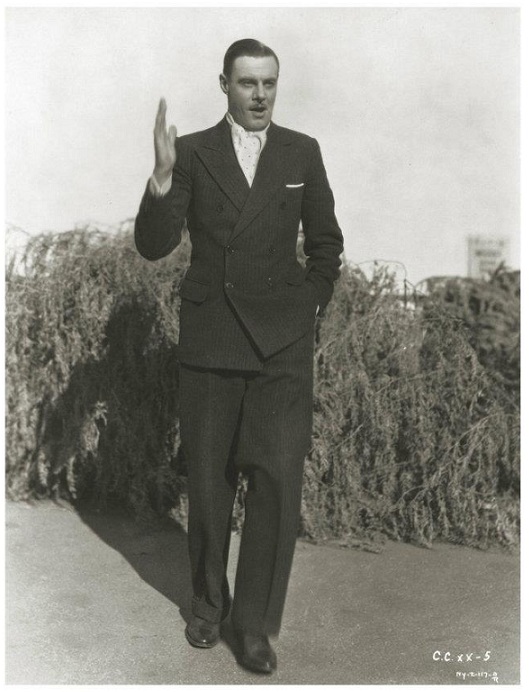
Think that photo is the strangest in the lot? Colin Clive, seen here jauntily strolling out of a random field, says “Hold my beer!” Nothing screams “farm life” like an ascot and double-breasted suit. I’ve seen every one of Colin’s films and have no idea what this photo was connected to. But it seems an appropriate note to end on. At least for now…
TINTYPE TUESDAY is a semi-regular feature on Sister Celluloid, with fabulous classic movie pix (and backstory!) to help you make it to Hump Day! For previous editions, just click here—and why not bookmark the page, to make sure you never miss one?
STREAMING SATURDAYS! Noir Drops the Hammer in HELL IS A CITY
Welcome to another edition of Streaming Saturdays, where we embed a free, fun movie for you to watch right here!
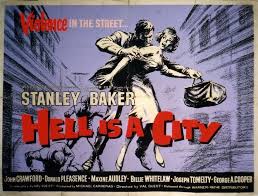
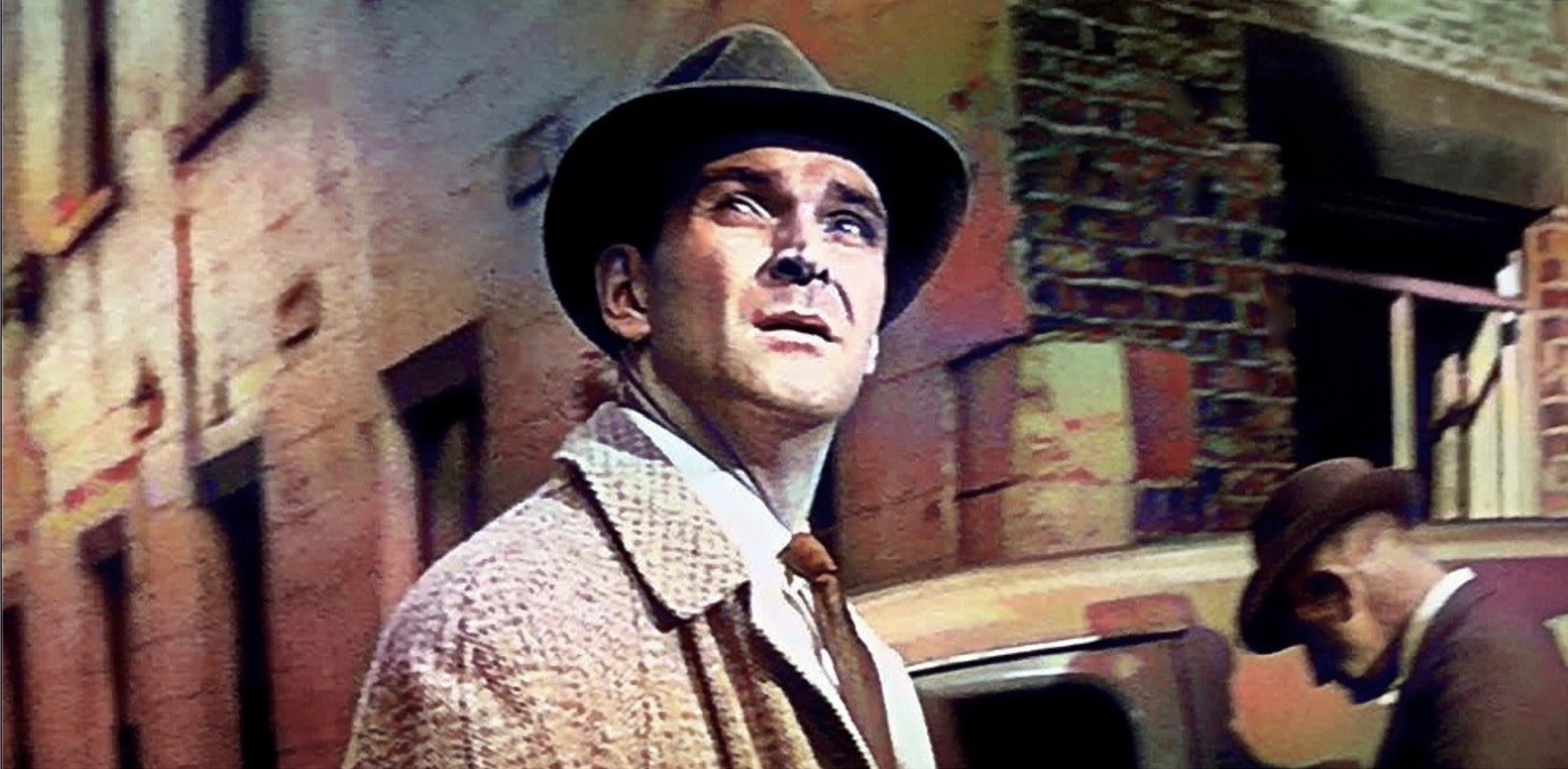
From 1960, it’s HELL IS A CITY, directed by Val Guest, who also adapted the screenplay from Maurice Procter’s novel of the same name. Blurring the line between noir and the burgeoning British New Wave, the fast-paced crime drama was shot entirely in working-class Manchester, lending it a grittiness that sets it apart from the sleeker, more stylized detective films that would come to mark the decade.
At its center is Stanley Baker (Inspector Harry Martineau), in his second and last film for Hammer before his fame outpaced their budgets. If you want to see what a superstar on the verge looks like, just spend a quick ninety minutes with him here. (Bonus points for the fact that he’s always reminded me of my movie husband, Rod Taylor.)
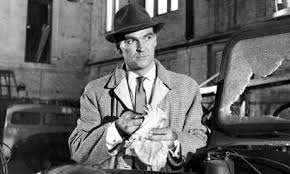
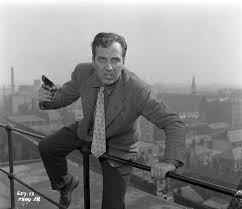
The supporting cast isn’t too shabby either, with Donald Pleasence as a mousy, bespectacled accountant who is somehow married to Billie Whitelaw, a mystery that could take up a whole nother film. Also fun is Vanda Godsell as a blowsy barmaid who harbors a hankering for Harry—well not so much harbors as lets it loose all over town.
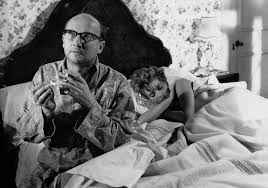
The plot is fairly typical—an especially nasty crook has been sprung from prison, with scores to settle and loot to recover. But everything about the film feels vibrant. Click below and enjoy!
STREAMING SATURDAYS is a semi-regular feature on Sister Celluloid. You can catch up on movies you may have missed by clicking here! And why not bookmark the page to make sure you never miss another?
For Donna Hill, With Love and Gratitude
On the last Friday of the year, Donna Hill said goodnight to her beloved William, who may have been right there beside her, or maybe he was in his little heated bed, or in the velvet wingchair with the brocade pillow, in the living room lined with lovingly framed posters and portraits of stars gone by.
And then Donna went to sleep for the last time, setting off waves of grief from all corners of the classic film world.

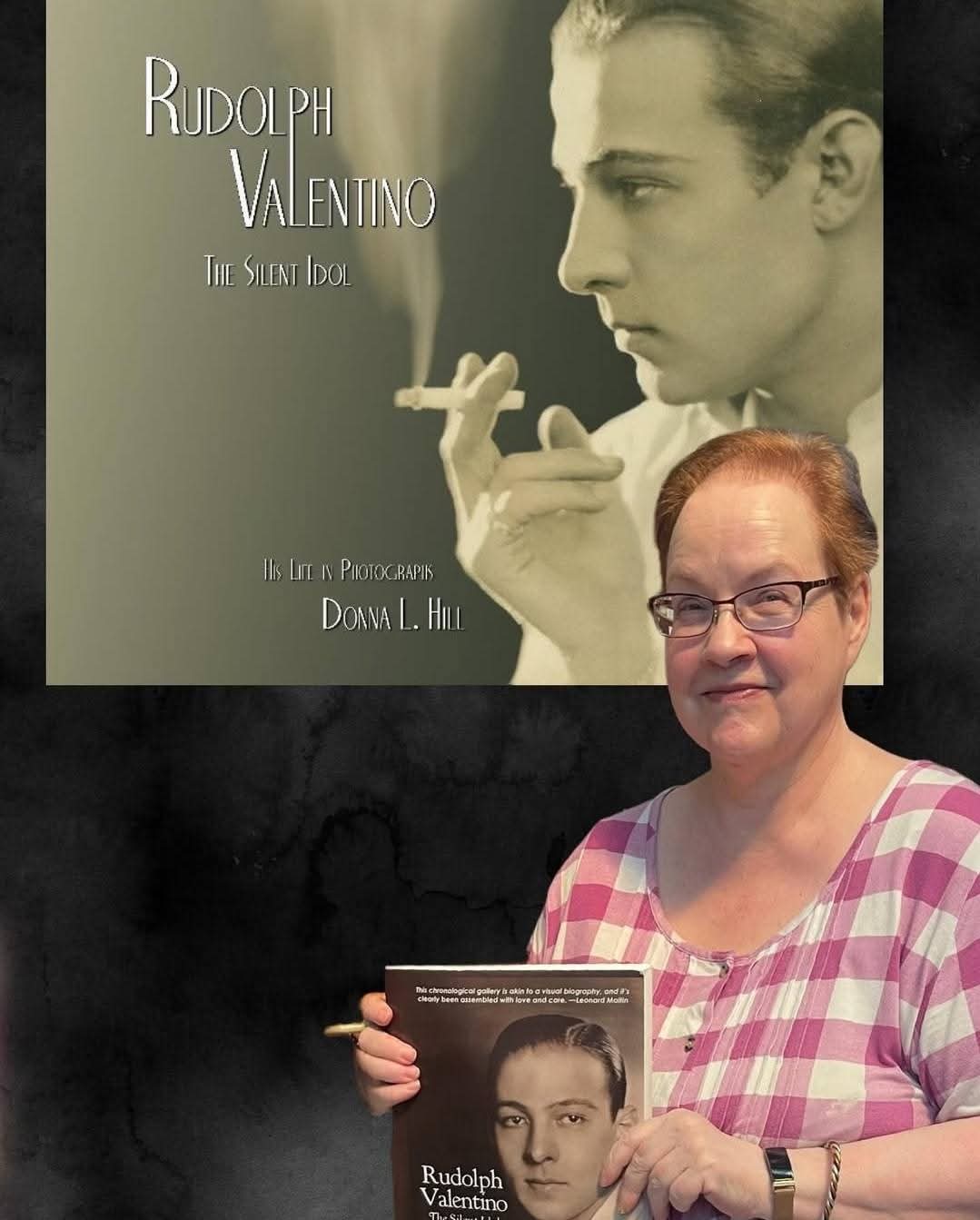
Donna had struggled with diabetes for years, but rarely spoke of it. She’d much rather talk about Rudolph Valentino, about whom she wrote the best book of all the ones out there, capturing the romantic soul that so matched her own. Or Dorothy Gish, the subject of the bio she was working on, whose photos she loved to collect. Or Renata Tebaldi, the soprano she adored above all others. She’d rather help other writers and historians by sharing her encyclopedic insights into silent film—which were so extensive that even Kevin Brownlow sometimes tapped her brain for information. And like Kevin, she was always breezy and generous, never show-offy or stuffy.
In the past few days, with eyes bleary from tears, I’ve probably read every tribute out there, as other grieving members of the film community shared their stories about Donna. Pretty much all of them have one word in common: kindness. My memories are no different.
Donna was one of the first people I spoke with after losing my Mom. It was during the pandemic, and she was working from home, but still very much working—she always seemed a little swamped. I kept interrupting our call to say, “You know, I understand if you need to get back to work…” and she’d insist she had all the time in the world. After a long talk that I dearly needed, I finally took the initiative to ring off, knowing she’d have stayed on all day otherwise, just to be there for me.
She was always there in other ways too. When I was struggling to write a tribute piece on Norm Macdonald, afraid I wouldn’t do him justice and would unleash a horde of his passionate fans, Donna talked me through it. Not in a rah-rah, you-got-this kind of way, but with genuine compassion and understanding, along with some motherly prodding. It got to the point where I was more concerned about disappointing Donna than angering any rabid Macdonald fans.
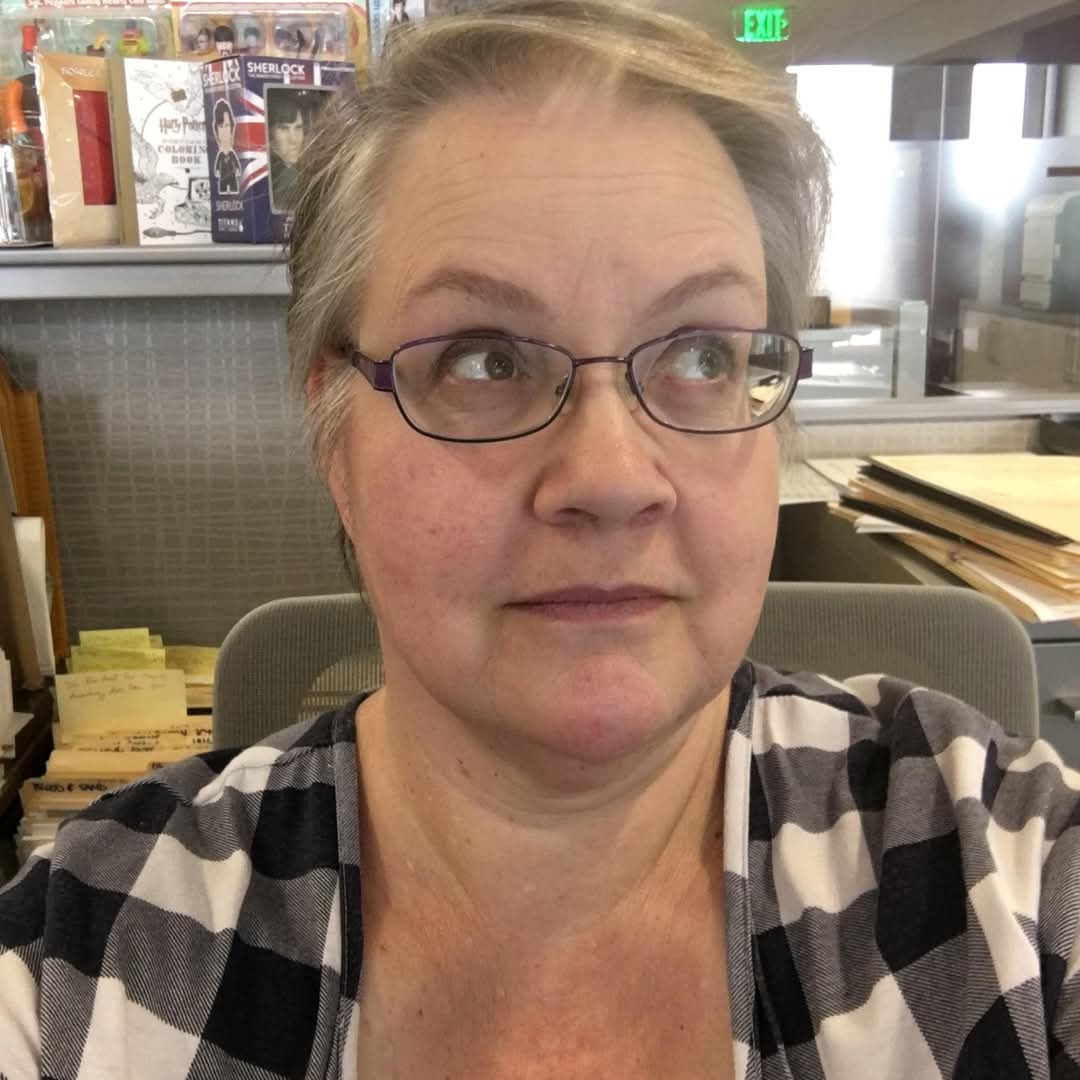
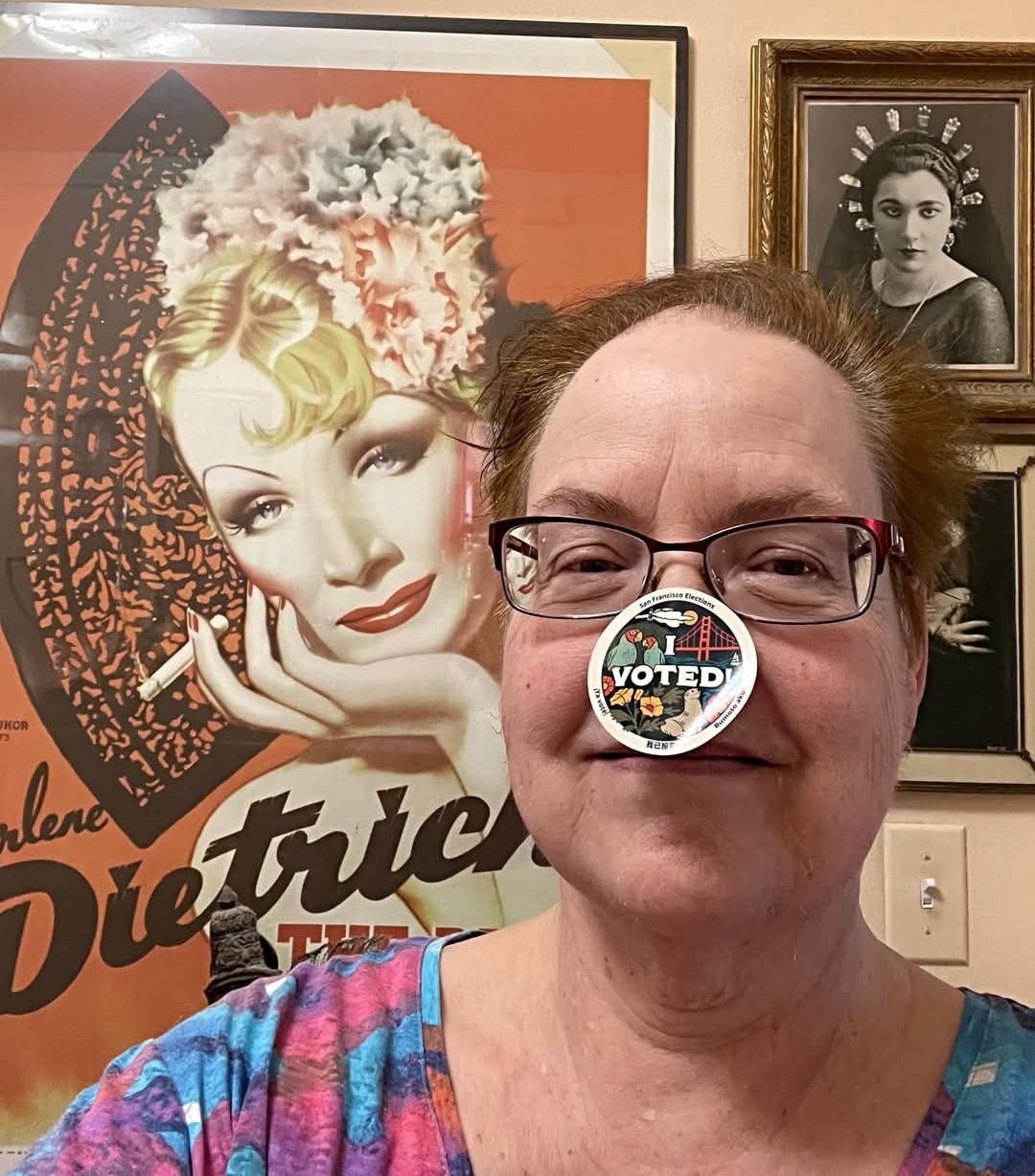
With Donna, I also learned not to admire anything out loud, lest she send it off to me. I swooned when she posted a portrait of Robert Montgomery, only to find it on my front porch in a well-padded envelope the following week. When I scoped out the final season of Endeavour—a series we both loved—on a European website months before it was due to air in the US, I sent her the links, and she responded by sending me a full set of Endeavour DVDs. I posted a 1940s brooch my husband had bought for me, and she sent me a lovely celluloid heart pin from the same era.
Very few people on earth are as kind as Donna was. But to find someone that kind who was also funny and goofy is pretty much a miracle. We were both in love with the soapy and fabulous Rome Adventure, being sure to alert each other whenever it was due to show up on television, and we shared a daydream about opening a bookstore in Italy like the one Constance Ford ran, or maybe just going to work at hers since we loved her character. (Donna was thrilled to learn that my Dad had known Ford through his work and that she was just as great a broad in real life.)
We also talked about going to a Giants baseball game with Cari Beauchamp (Cari and I used to count down the days till pitchers and catchers reported to camp), and we cried on the phone together when we lost Cari.
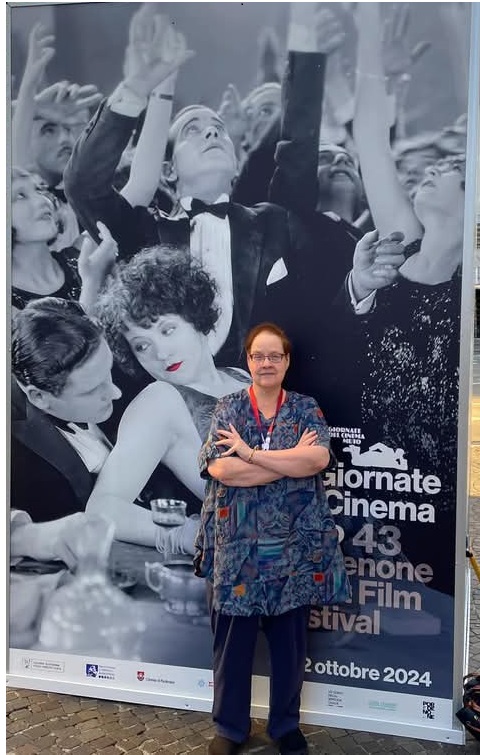

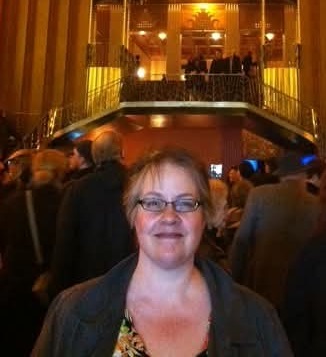
But I’m so glad Donna had so many adventures of her own, including the silent film festival in Pordenone, for which she had saved and planned for so long. By the time her most recent visit rolled around, she of course had already made friends with pretty much all the regular attendees, and half her luggage was taken up with DVDs and other film bits and pieces she was bringing along as gifts. And she had scoped out the best place for gelato.
Her only pang of sadness on the trip was being away from her beloved William, named after William Powell. She asked the pet sitter to send her videos of him, though they only seemed to make her miss him more. From the time she adopted him last February, she posted pictures of him almost daily, and you could feel the love pouring through the screen. Just last month, amid Christmas greetings, she called him the best gift she’d ever received. He is being adopted into a safe, loving home, though it will be hard for anyone to match the mom who adored him so.
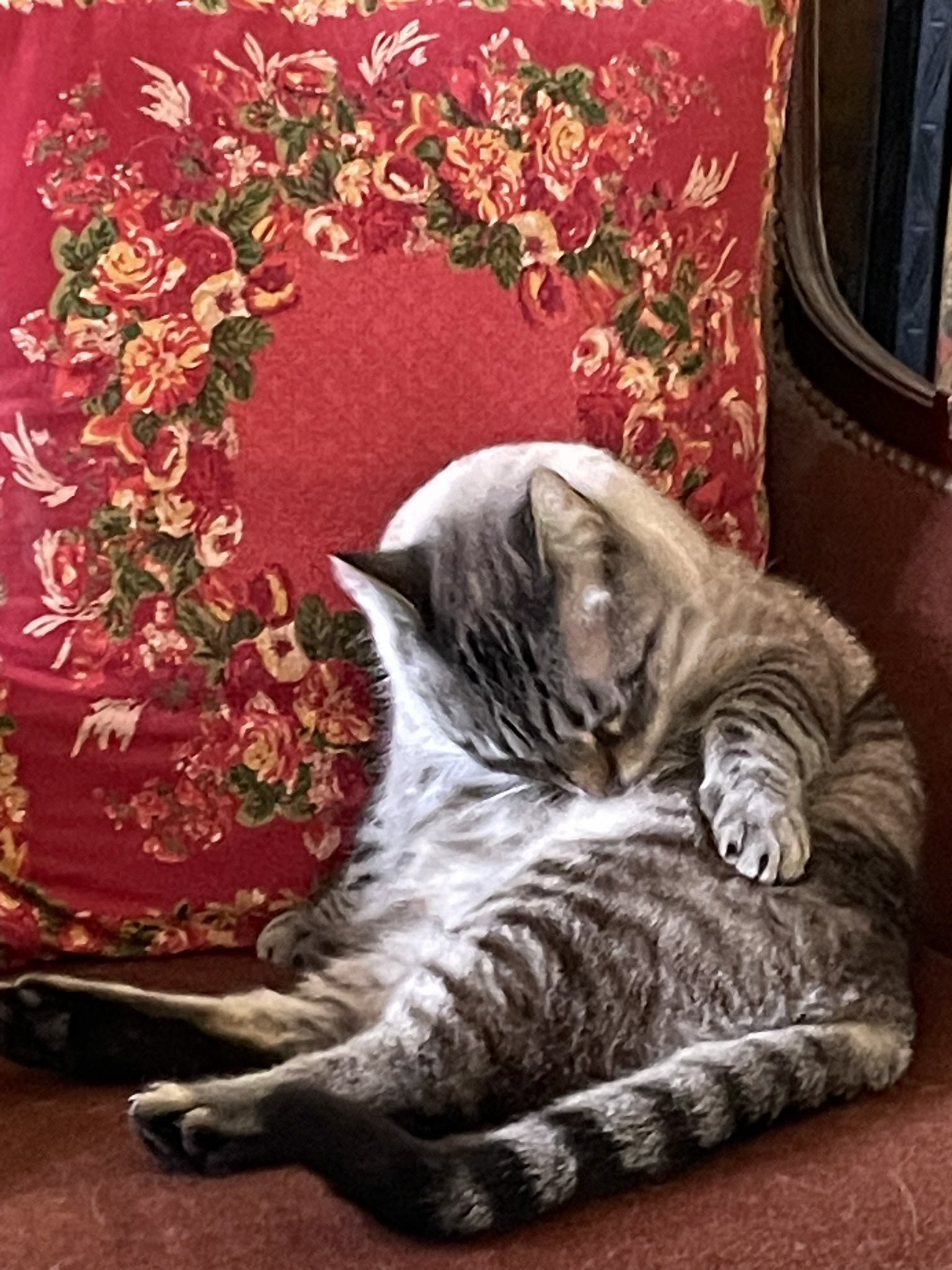
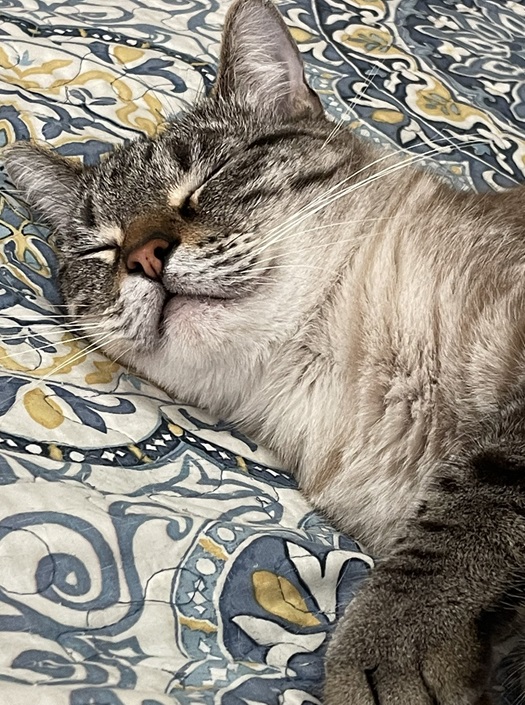
I watched The Bishop’s Wife for the zillionth time last week, and at one point the professor says Julia is one of those rare people who can make a heaven here on earth. So was Donna. To have her as a friend, or to know her at all, in person or otherwise—it just made your life so much better.
As midnight rang in 2025, I cried at the thought of going into the new year without her, and cursed the old year for snatching her away.
I hope all of us who were Donna’s friends try to do a little better, be a little kinder, carry her spirit with us. But I just can’t escape the fact that she should still be here, sharing whatever this year brings, good or bad or scary, and planning and saving for her next trip to Pordenone.
The last time I spoke with Donna, a couple of weeks ago, she mentioned she hadn’t put up a tree for fear it would be too tempting for William. I suggested she put some of her favorite vintage ornaments, which she’d been collecting for decades, into bowls on the table. “I may do that, until I figure out how to make it work with a tree,” she said. “Maybe next year.”
Can We Save TCM? Will This Movie Have a Happy Ending?
You head outside on a winter’s day with 90 percent of your body covered, but suddenly it’s 20 percent. Think you’d notice? You were making $90,000 a year yesterday but $20,000 a year today. Think you’d notice? Your bathroom was 90 square feet yesterday but 20 square feet today. Think you’d notice?
And yet Warner Bros. Discovery pats frantic TCM viewers on the head and says there will be “no discernible difference” after slashing the staff size from 90 to 20 and axing the entire leadership team. The only thing missing was sending us to bed with a warm glass of milk.
“We remain fully committed to this business, the TCM brand, and its purpose to protect and celebrate culture-defining movies,” cooed chairwoman and chief content office Kathleen Finch in a press release. Uh-huh. And Gregory Anton is a loving and devoted husband.

We’ve also been assured that the TCM hub will remain on the Max streaming service. Right now that includes 561 films out of the roughly 130,000 titles TCM has at its fingertips. I feel better already!
CEO David Zaslav has made a great show of his love for film history—claiming he has TCM on in the background all day from his perch behind Jack Warner’s desk, celebrating 100 years of Warner Bros. at the recent TCM Film Festival, and generally saying all the right things to reporters. (One recently banged out a long Twitter thread to claim, with horror and shock, that she now feels she was lied to. Really? A CEO was less than frank with you? You don’t say!)
Zaslav is not only a total corporate weasel but really, really bad at his actual job. WBD’s stock price has nosedived under his “leadership,” and supposed blockbusters like The Flash have bombed. And I’m guessing its CGI line alone probably rivals the entire annual budget for TCM, which is barely a blip of the $37 billion for the company overall. Zaslav slashing TCM’s staff is like a zillionaire losing big at the craps table and deciding to skip his mum’s birthday present this year to make up for it.
He is the classic example of knowing the price of everything and the value of nothing. Here’s a clip of the stunning “Forgotten Man” number that closes Gold Diggers of 1933. Leaving aside the brilliant Joan Blondell and Etta Moten, cast your eyes on any of the extras—the soldiers marching along, the women reaching out to them. Every single one of them has contributed more to our culture in this one scene than Zaslav has in his entire fecking useless life. But not content to merely create nothing, he’s actively destroying, minimizing or rendering invisible the work of others, threatening to erase a critical part of our shared cultural heritage and stored memory bank.
Remember the line in Pygmalion when Eliza is warned to avoid thorny topics and stick to the weather and everyone’s health? My Mom and I, who locked horns often, usually focused on music and old movies—and TCM looms large in my memories of her. Hours and days and years of sitting on the sofa next to her, the glow of the black and white as soft and soothing as Christmas lights.
And when her sister Ruth, who once had a life-changing encounter with Van Johnson, developed dementia, we’d spend long afternoons watching musicals on TCM. By then she’d forgotten who I was but something clicked when she saw Judy Garland. One day she nodded and tapped her knees to the beat as I sang along to “The Trolley Song,” matching Judy’s every sway and swoon in a number I knew by heart. Just then her home aide walked in, and from that day on I was known as “the clang-clang lady.”
TCM is not just a vital keeper of our cultural flame. It’s part of our lives and our most cherished memories, often of those we’ve lost. Zaslav’s duty is to keep the torch burning and pass it along—not to burn bridges with it.
The Buster Keaton Biopic Starring Rami Malek: All the Latest from the Man Who Wrote the Source Material!
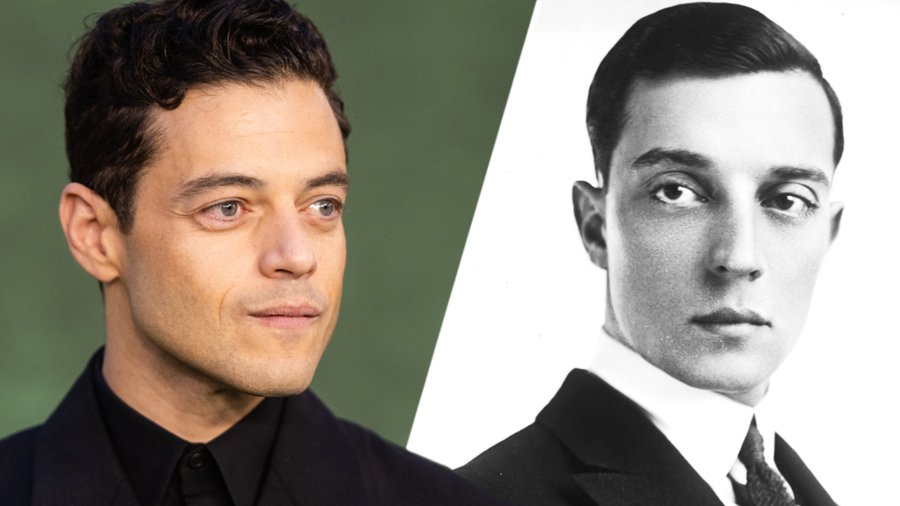
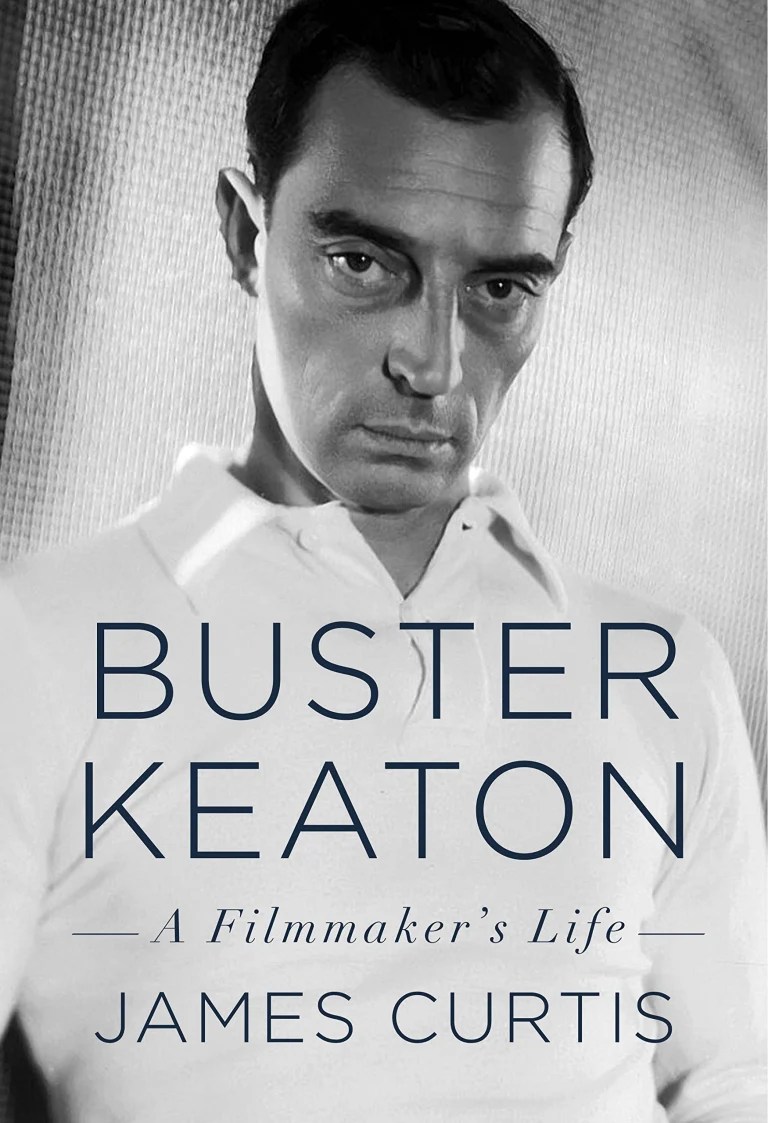
Buster Keaton fans waited decades for the definitive biography of their silent hero, James Curtis’s bestselling Buster Keaton: A Filmmaker’s Life, which was recently named Book of the Year in a readers’ poll conducted by Silent London. But the biopic based on the book is moving along much faster, thanks in part to the passion of its lead actor: it turns out Rami Malek is a huge Buster fan and is already working with the motion coach who guided him through his Oscar-winning portrayal of Freddie Mercury in Bohemian Rhapsody. Warner Bros. is set to produce the miniseries, with Matt Reeves at the helm.
We sat down with Curtis for all the latest on the biopic and more.
So everything’s coming together for this project!
Yeah it seems to be. The final step is for someone to buy it, which could happen fairly soon.
When you were writing the book were you thinking at all about who might play Buster?
I never think about those things. I’ve got to think about putting the book across, and all the other stuff is someone else’s worry. It’s like writing a book and expecting an award. I think that’s foolish. If you enter into something like this with an expectation like that, it’s guaranteed it’s not to happen! <laughs>
I was surprised, even before the book came out, at all the inquiries we got in terms of film rights. I’ve gotten nibbles in the past but never anything like this. A lot of the inquiries come through third parties so you don’t even know who’s interested. “We have a client…” That sort of thing.
I was getting ready to go to New York to do some promotional things, and I’d been working with writer-producer David Weddle, whose current series on Apple+ is the terrific For All Mankind, He took the meetings, and it just started to get more and more solid as an idea. So I’ve just been watching with a certain amount of amazement because it seems to have taken on a life of its own. [Editor’s note: Both Curtis and Weddle are members of the Buster Keaton Society, also known as the Damfinos, so the project is in loving hands all around!]
Could you tell when you were researching and writing the book that there seems to be this sort of groundswell of interest in Buster?
Yeah, I was aware of that, and I knew there was going to be a readership for it.

What was your approach to the subject?
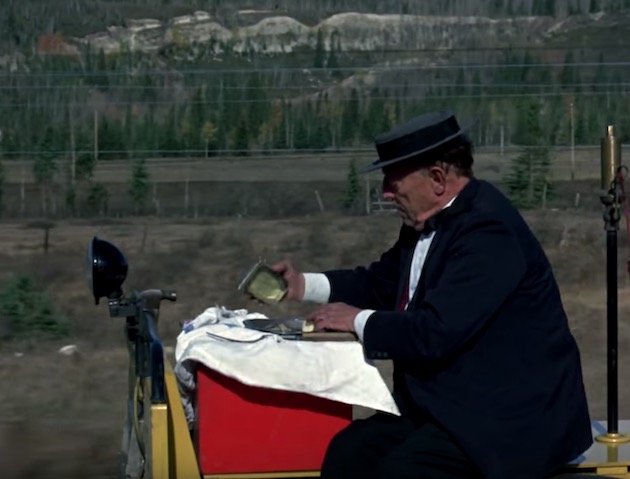
I always play around with a lot of ideas, and one thing I did not know if I was going to keep was the idea of having episodes of the making of The Railrodder at various points in the story. The first person to read anything I write is my wife Kim. When I get finished drafting a chapter and it’s been done and dusted to some degree, I hand it over to her. As we were going through it I said, “Do you think I should cut that structural element?” And she said, “No, it works fine!” Also, I figured my no-nonsense editor would tell me to cut it if she disliked it. So I just barreled forth with a certain amount of trepidation, and no one said, “Jeez this is awful, get rid of it!” So that’s how it stayed in.
I think it works great!
Well thank you. The thing I was trying to do was to tell the reader that Buster got through everything he faced in life, however horrible, and here he is near pretty much the end of his life and he’s back co-directing a silent comedy again. So it all comes full circle in a way.
Right, and you get rid of the sort of tragic veil over Buster, which has always kind of irritated me.
Yes, I agree. That’s the cheap, easy sort of conclusion, and I know there are certain readers who want to be led around by the nose and told what to think and what to feel, but I’m not suited to that sort of sledgehammer approach. The people who are missing that are going to say, “Well, he just didn’t ring the bell for me on that one,” and my reaction to that is, “Good!”

What kind of choices do you make as an author, writing about a life like his?
Really the research is your guide. I recently saw the documentary about Robert Caro and Bob Gottlieb, and one thing Caro said really struck me: “Writing is hard but I love the research.” I feel exactly the same way. I love doing the library work, I love talking to the people.
Often the most interesting things are not always the things you have lots of material on, so you really have to dig. Some authors might say, well, I have a lot of material on this so that gets the emphasis.
Yes and then that availability ends up being the engine that drives the whole project.
Right, right! I’ll use an example from the Spencer Tracy book: The most documented of all of his features was The Old Man and the Sea. Every major player on that film left papers behind, so there was just scads and scads of material. The problem is, it’s not a very good or significant film. And so I could not use that material to the extent that I might have. But there were other important films that deserved greater emphasis but for which I didn’t have the material I wish I did. As the great John McPhee said, “Creative nonfiction is not making things up. It’s making the most of what you have to work with.”
I’m a really tough audience for biographies anyway, and frankly I’m appalled at some of the stuff I see out there—especially the stuff that gets good reviews! There are a lot of reviewers who really don’t know what they’re talking about but they say it with authority and the authority of their medium.
How about regular readers? Have you enjoyed being out there with Buster fans?
Oh yes. My favorite environment when promoting the bio is when I’m paired with one of his films and you’ve got people there who are really serious about him. People come up to me after a film like Go West and thank me for programming it. It’s their first time seeing it on a big screen, or their first time period.


Now that you’re about to venture into the world of biopics, what are some of your favorites?
I’m a difficult audience for biographical films, but there are some I love. I tend to put them in different categories. There are some that are wildly off base factually but are very entertaining. In that category I would certainly put Yankee Doodle Dandy and maybe a few of those that Paul Muni did in the thirties. In the fifties it was a real trend for a while, and that’s when you got films like the The Buster Keaton Story with Donald O’Connor and Man of a Thousand Faces and I’ll Cry Tomorrow and The Helen Morgan Story.
The second category is for slice-of-life films where they focus on a narrow period in the person’s life, like Patton, which is one of my favorite films of all time. So it’s more of a character study that masquerades as a biography, and some of those are awfully good.
The ones that are toughest to pull off are those hat cover entire lives, or those, in other words, belonging to the cradle-to-grave category. I thought the Ray Charles movie was very good, as was the Clint Eastwood film Bird, which, in my opinion, is the best thing he’s ever done. It’s an example of a film where he’s not telling you what to feel, he’s showing you so that you can muster your own reaction, which to my way of thinking is the essence of good filmmaking.
The problem with a feature film is that you only have a hundred twenty minutes or so to put the whole life across.
Which won’t be an issue with the miniseries!
Right! In this case, we’ll probably have eight to ten hours to tell the story.


So they’ll be able to start with his childhood?
It’s not my decision to make, of course, but I think they’ve got to start with his childhood because that’s where Buster learned comedy. He was on stage from the time he was four or thereabouts.
And his childhood was fascinating! So much in the book about how successful the family act was, even though they had the Gerry Society chasing them around Manhattan.
They were one of the standard acts in vaudeville, and that’s the period of time when Joe Keaton gets to shine. Joe would be a helluva role for the right actor. And this is where Buster learns how to engage an audience, and how to fall and take tumbles without injuring himself.
And not to sort of milk scenes for sympathy, which is huge.
Right, and there’s just so much that happens there, it’s probably at least one episode, I’d guess, and it’s the sort of thing that really sets up the character so when the grown Buster appears later on, he’s got all that background informing his actions. So I really think you have to cover his whole life, and we’ve got the time to do it.
There are all sorts of great characters in the Keaton story. Imagine an actress taking on Mae Scriven. That would’ve been a Shelley Winters role at one time.
Or Gloria Grahame!
Yeah right! And Fatty Arbuckle is a great role. And Al St. John in his way. And Joe Schenk is a great character part.


How familiar are you with Rami Malek? Did you see Bohemian Rhapsody?
I did and I thought he was awfully good. That’s a good biopic.
It was almost like an old-time musical where we’re gonna form a band and put on a show!
Yeah if you go back to Judy Garland and Mickey Rooney, taking over the garage or the barn or something and putting on a show.
I was really excited to find out that Rami Malek was such a big Buster fan!
It’s wonderful in that respect. He’s the perfect choice. He’s got the feeling for it, I think he’s got the intensity for it. My take on him as an actor, based upon the very little I know about him, is he’s got the same obsessive qualities as an artist that Buster had and I think he’d understand someone with that fierce dedication to his art. I think when Buster was at work, especially during his prime period, he was laser focused on that to the exclusion of all else. I think someone like Rami Malek would be able to understand and get into that very deeply and show us things that you wouldn’t necessarily expect.

It seems like this is going to be a real labor of love all around.
Yes. I think they’ve got the opportunity to do a really bang-up job with it. They’ve got the time and the wherewithal and they’ve got the right actor, they’ve got the right team. There are a lot of things that are right about this, and I’m very happy about it.
With streaming there’s so much more freedom, you’re not boxed into a two-hour format and you can really run with something if it’s a project that’s important to you.
These days in terms of streaming series like The Queen’s Gambit and Succession and the like, they really have the time to give you first-rate quality. It’s an embarrassment of riches, and I don’t know how it will all play out but for the time being we’re in a golden age of content—and a new way of experiencing it.


How involved will you be in the actual production?
I don’t know. They probably would like me to stay as far away as possible. <laughs> And I certainly wouldn’t blame them. If they do figure out there’s a role for me to some minor extent, I’d be happy to pitch in.
With a traditional film you can pretty much guess how the process is going to go when they want to option something you’ve written. Streaming hasn’t been around that long and it’s almost like they’re figuring things out as they go along. So it’s been interesting to observe how this whole process has gone down. It’s been a real education and a nice one. I think the goal is to make something that’s really good and memorable, and I’m looking forward to observing even from a respectful distance.
Well I couldn’t wait for your book to come out, and now I can’t wait for the miniseries!
Stay tuned!
STREAMING SATURDAYS! A Once-Annual Staple Returns with THE HOUSE WITHOUT A CHRISTMAS TREE
Welcome to another edition of Streaming Saturdays, were we embed a free, fabulous movie for you to watch right here! This week, Jason Robards, Mildred Natwick and Lisa Lucas star in The House Without a Christmas Tree.
“Did your Dad get you a tree yet?”
“We don’t want a tree.”
“Why not?!?”
“They’re a waste of money. They dry up in a week. A tree’s no fun—it stands in a corner. It doesn’t do anything.”
“Yeah but you can look at it!”
“I can look at the one at school. Or at my Uncle Will’s. Like my Dad says, ‘What do I need a tree for?'”
Uh-huh.
Thus begins Addie Mills’ annual litany of excuses, this time to her new friend Carla, in The House Without a Christmas Tree.


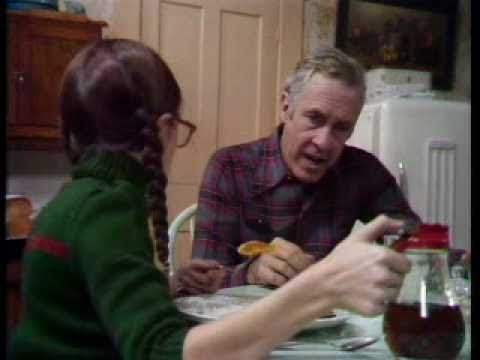
It’s 1946 in Clear River, Nebraska, where 10-year-old Addie (Lucas) lives with her grandmother (Natwick), Sarah, and her father, James (Robards), an embittered widower who lost his wife just after Addie was born—and who’s shuttered himself away from any source of joy, including his daughter, ever since.
Ironically, using a guessing technique her father taught her, Addie wins the class Christmas tree, and trundles it home with a sense of dread that rarely accompanies such journeys. James orders the painful reminder of Christmases past out of the house, but Sarah, Addie’s only real source of warmth and comfort, fights in vain to let her keep it. Defeated, Addie spirits the tree out of the house in the middle of the night, leaving it on the doorstep of her only treeless friend.
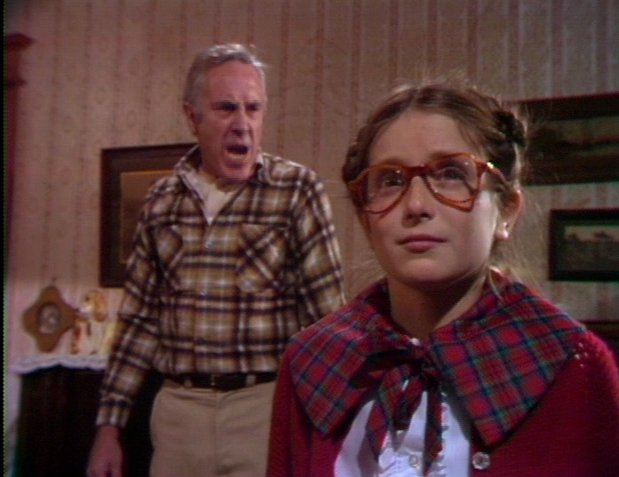
The rest of the story, you can watch for yourself at the bottom of this post.
The House Without a Christmas Tree used to be something of an annual TV tradition, but for some reason, it disappeared under the flotsam of new Christmas specials years ago. Eleanor Perry (The Swimmer, Diary of a Mad Housewife, The Man Who Loved Cat Dancing) won an Emmy for her adaptation of Gail Rock’s memoir and also wrote the sequel, The Thanksgiving Treasure, which reunited the wonderful cast a year later.
Lucas went on to roles in The Turning Point and An Unmarried Woman, and then did a bit of television before turning her hand to journalism; in the true spirit of dear, nerdly Addie, whose glasses comprised roughly half her body weight, her books include The Research Game in Academic Life, which explores “the implications of an increasingly competitive global system of higher education research.”
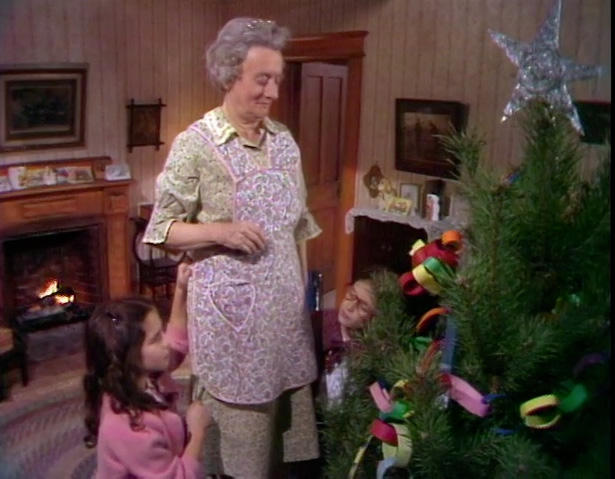


For some reason the onscreen text is backwards, but other than the credits, it’s not really noticeable, and this is a pretty decent print. Here’s wishing you the happiest of holidays and armloads of joy in the new year. If I could, I’d send each one of you Mildred Natwick. But short of that, I hope you enjoy this Christmas gift.
If you’re craving a few more helpings of Christmas, you’re just a click away from the full movies The Holly and the Ivy and I’ll Be Seeing You, as well as a Christmas tribute to the fabulous men of classic film and Bette Davis’s Christmas war bond message!
In the meantime, STREAMING SATURDAYS is a semi-regular feature on Sister Celluloid! You can catch up on movies you may have missed by clicking here. And why not bookmark the page to make sure you never miss another?
.
HOLLYWOOD PRIEST: How Father Bud Brought God to Television—And Vice Versa
Quick! Name the longest-running anthology show in television history. The Twilight Zone? Alfred Hitchcock Presents? The Outer Limits? Nope—it was a modest, low-budget series launched by a Catholic priest, who wrangled some serious stars into working for scale. And even then, some were guilted into giving their checks back.


Created by Paulist Productions, Insight ran in syndication from October 1960 to January 1985, with guest stars such as Jack Albertson, Ed Begley Sr. and Jr., John Astin, Elizabeth Ashley, Albert Brooks, Martin Sheen, Efrem Zimbalist Jr., Bill Bixby, Louis Gossett Jr., Celeste Holm, Ron Howard, June Lockhart, Joseph Campanella, Carol Burnett, Ann B. Davis, Marty Feldman, Vincent Gardenia, Peter Fonda, Michael Learned, Jack Klugman, Mark Hamill, Irene Dunne, Anne Francis, Bob Newhart, Barbara Hale, Walter Matthau, Juanita Moore, Carroll O’Connor, Ricardo Montalban, William Shatner, Cicely Tyson, Jane Wyman, Nichelle Nichols, Keenan Wynn, Marion Ross, Jane Wyman, Dick York, Tim Matheson, Ed Asner, John Amos, Brian Keith, Elisha Cook Jr., Catherine Hicks, Harvey Korman, James Cromwell, Vera Miles, Jerry Lewis, and Ann Sothern. At the helm were directors like Lamont Johnson, Arthur Hiller, Norman Lloyd, Delbert Mann, and Jay Sandrich.
Now Paulist’s founder, Father Ellwood “Bud” Kieser, is the subject of a fascinating new documentary by the company he launched: Hollywood Priest airs on PBS stations August 8 and 9 and streams at frbudfilm.com/bustedhalo through January 6.

In the film, those who knew Father Bud attest to his good-natured tenacity. “He was fearless—he knew how to ask for things he had no business asking for,” recalls Father Eric Andrews, CSP, president of the Paulist Fathers. “People were afraid when they saw his name on their call sheets in Hollywood!”
“Ed Asner had forewarned me,” laughs John Amos. “I said I got a call from a Father Kieser, and he said ‘Oh, he’s got you!’”
Father Bud seized on the FCC’s requirement for public-interest programming to gain a coast-to-coast foothold for Insight, which featured half-hour plays centering on love, compassion and the search for meaning through drama, comedy and even fantasy. But the message went down gently. “He didn’t beat people over the head with how they should react or how they ought to feel,” recalled Martin Sheen.
“Insight was wonderful because they had none of the problems the major studios had—they could write about what was important, universal topics that are still relevant today,” said Christine Avila, who starred in three episodes covering issues such as immigration, the treatment of rape victims, and the loss of a child. “And everyone really cared about the show—there was a great desire for quality actors, writers, and directors. They gave creative people free rein, without having the burden of producers or the corporate world on their backs.”


Father Bud saw writers as the driving creative force behind both television and film, and in 1973, he galvanized a group of artists and producers to launch the Humanitas Prizes, honoring writers whose work inspired and enhanced the lives of viewers. “Whatever we can do to empower, enrich, and support writers, we should do because it is writers who show us where we’ve been and where we are going as a culture,” he said.
But as the 1980s closed in, the television landscape became harder to navigate. During the Reagan era, FCC public-access rules were decimated, and in many markets, huckster-style TV evangelists paid for airtime that had previously been donated to Insight. By the time the show folded in 1985, Father Bud was already using his media clout to shine a light on global issues such as the starvation crisis in Central Africa, making numerous trips to the region and reporting widely on the horrors he found. “He was a trailblazer in efforts that culminated in worldwide efforts like USA for Africa,” said Father Tom Gibbons, co-producer of Hollywood Priest, who ministers to Father Bud’s old parish in Los Angeles. “He understood that we serve the Church by serving those outside the Church.”
That included the plight of those living under a violent military regime in El Salvador, which would ultimately take the lives of more than 75,000 people. In 1980, agents of the government assassinated Cardinal Oscar Romero, who had led peaceful protests against the brutality. As a priest with strong ties to the entertainment community, Father Bud was in a unique position to tell the cardinal’s story and call attention to the cause he gave his life for. In 1989, Paulist became the first Catholic company ever to co-produce a major film when it released Romero, starring Raul Julia in the title role.


“Father Bud’s life seemed to be one of those perfect confluences of the right person for the right era, to help open up the Church and use his natural curiosity and passion to inspire that in others,” said Father Gibbons. “It was very much a case of a seeker and a church that was open to seeking, and they pushed each other further.”
Having explored the life of this much-loved priest, Paulist Productions is now taking on a more controversial one: Statue of Limitations will examine the issues surrounding the canonization of Father Junipero Serra. “People on all sides feel very passionate about it, and we’re going to really dig deeply,” said Maria-Elena Pineda, who also co-produced Hollywood Priest. “It think Father Bud would approve of that approach.”
In the meantime, if you’d like to delve further into Insight, here’s the archive.
 Sister Celluloid
Recent Comments