“At thirty-two, I can see tell-tale marks in the mirror, but the ravages of time no longer terrify me. I am told that when surface beauty is gone, the real woman emerges.” —Linda Darnell
She never lived long enough for her beauty to fade. But a real woman—and a real actress—did emerge, and deserve to be remembered.
Linda Darnell had a stage mother straight out of Gypsy. A monstrous woman who dominated her fearful family, Mama Pearl first pushed her daughter onto the pageant and modeling circuit when she was just 11, fudging her age by two or three years. And of course she sent the shy girl to drama and diction classes. “She didn’t stand out particularly, except that she was so sweet and considerate,” recalled one teacher. “But her mother was right behind her everywhere she went.” In 1937, at a local Dallas pageant, Darnell was discovered by a 20th Century Fox scout and sent straight to California—only to be shipped back home when the studio discovered she was 14.
Undaunted, Pearl then entered Linda in RKO’s “Gateway to Hollywood” contest, which dangled a short-term contract as first prize. She used Linda’s victory as leverage with Fox, which signed the girl as soon as she was free from her brief RKO stint. Now a whopping 15 years old, Darnell once again headed for Hollywood, with her pet rooster under one arm and her mother tightly grasping the other—never letting go until she was banned from the studio lot several years later.
“Mother really shoved me along, spotting me in one contest after another,” Darnell later recalled. “I had no great talent, and I didn’t want to be a movie star particularly. But Mother had always wanted it for herself, and I guess she attained it through me.”
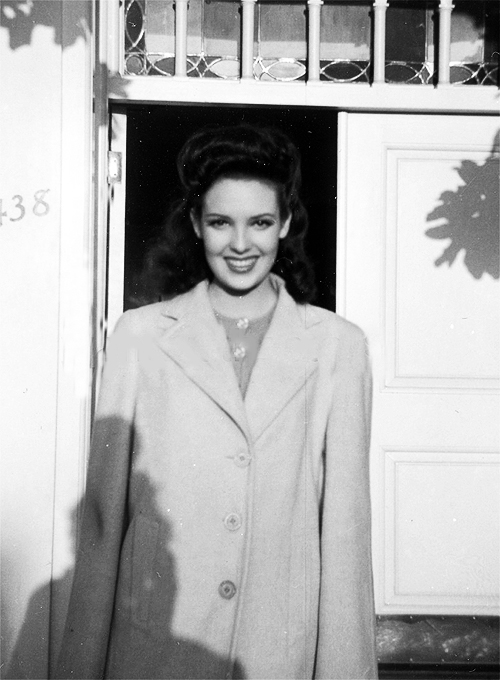
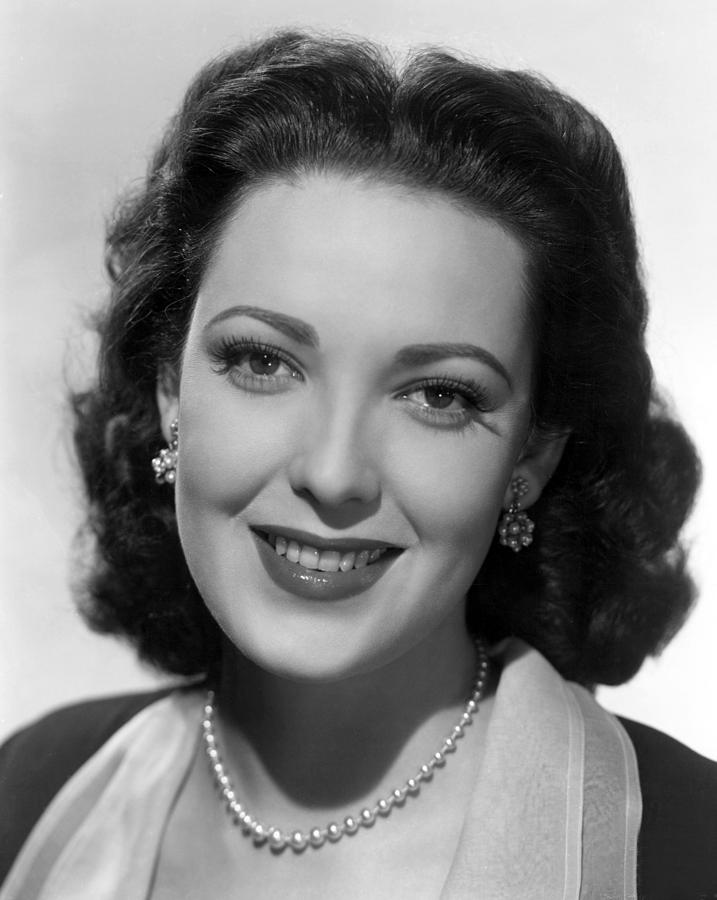
In less than a year, Darnell snagged her first starring role, in 1939’s Day-Time Wife. “Despite her apparent youth, [Darnell] turns in an outstanding performance when playing with popular players,” cooed one reviewer. No less an authority than Life magazine, sounding creepily eugenic, dubbed her “the most physically perfect girl in Hollywood.”
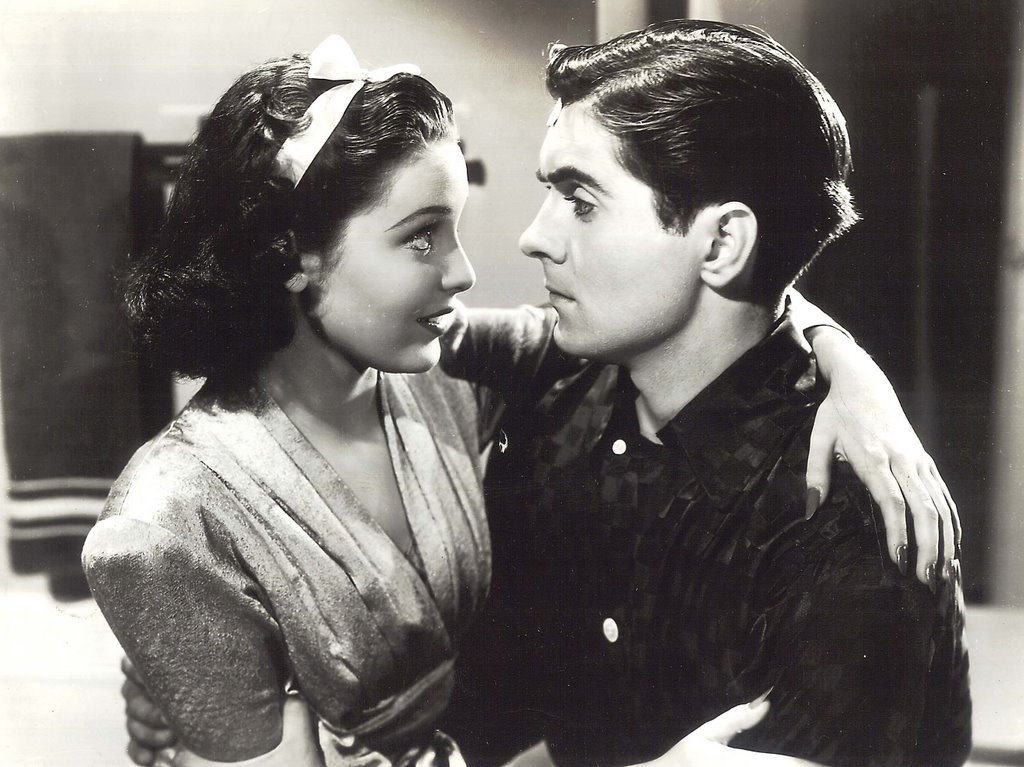
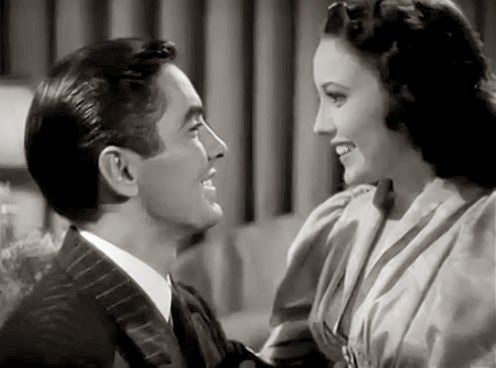
Utterly un-self-conscious and natural, the 16-year-oldheld her own with old pros like Tyrone Power and Warren William before she would have been old enough to date them. And when she occasionally froze up, Power deliberately blew his lines to take the pressure off her. Their easy, playful chemistry was so strong that they were quickly cast in three more films: Brigham Young, the most expensive movie Fox had ever made; the box office sensation The Mark of Zorro; and Blood and Sand, which a confident Darryl Zanuck premiered uncut, without previews, at Grauman’s Chinese Theatre in 1941. Years later, the hard-bitten Henry Hathaway, who directed Darnell in Brigham Young, recalled wistfully, “A sweeter girl never lived.”
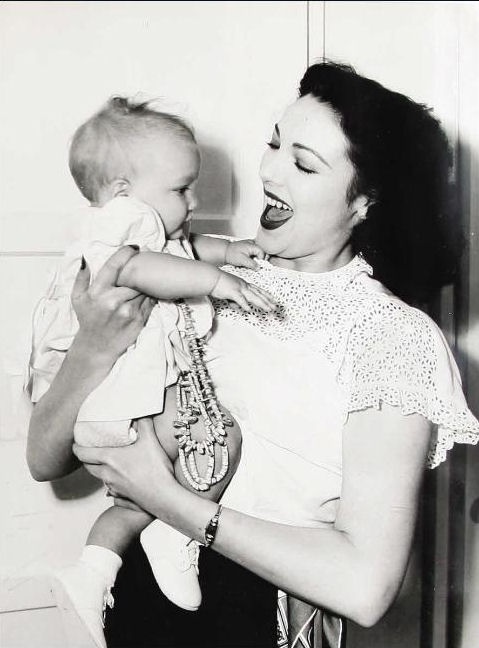
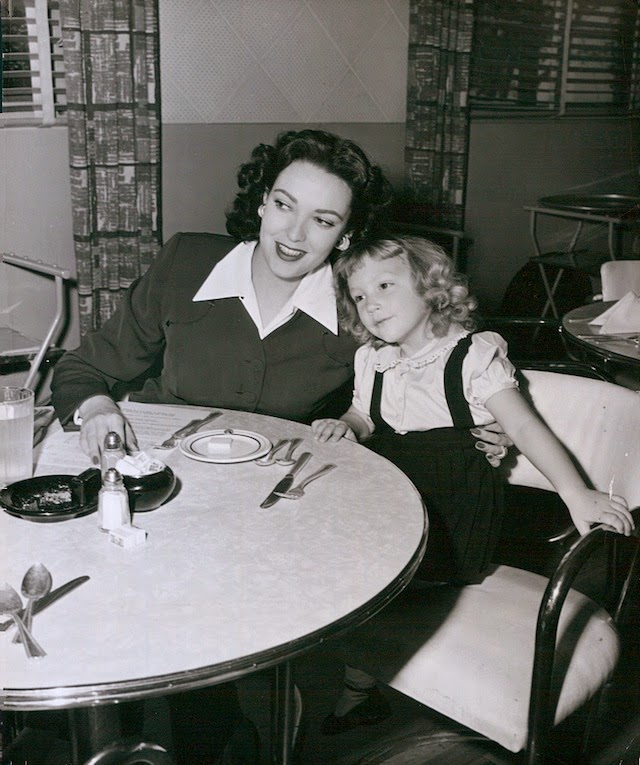
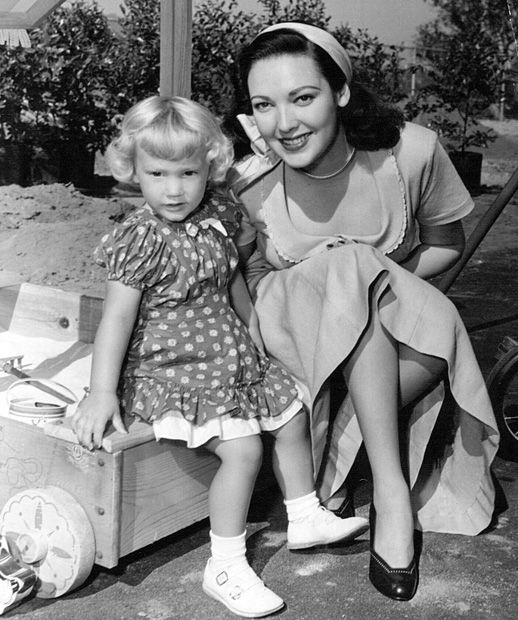
Offscreen, her life was running less smoothly. Perhaps seeking a stronger father figure than the one she’d grown up with (a mild-mannered postal worker steamrolled by Pearl), the 19-year-old eloped with Peverell Marley, a cameraman 23 years her senior, much to the horror of her friends. Marley drank heavily and after a while, his impressionable bride—needing a release from the pressures of the studio and her increasingly unhinged mother—picked up the habit, which would eventually prove disastrous. The couple adopted a baby, Lola, whom Darnell doted on; pictures of her with her daughter provide the only glimpse of real happiness she seems to have ever known.
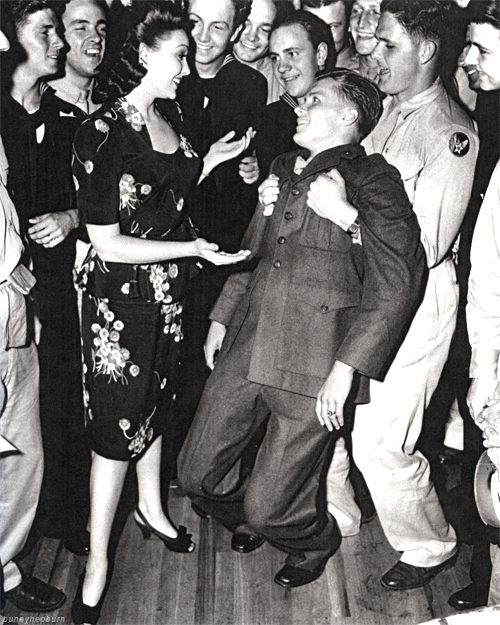
The married Zanuck, who had pursued the actress without success, was furious about her elopement and quickly turned his attentions to other proteges. And just months after Pearl Harbor, her favorite co-star, Power, joined the Marines. With her career suddenly adrift, Darnell threw herself into the war effort, selling bonds, working for the Red Cross, and taking frequent shifts at the Hollywood Canteen. She also studied to become a nurse’s aide, and with her best friend, Ann Miller, ran a daycare center for women working at the war plants.
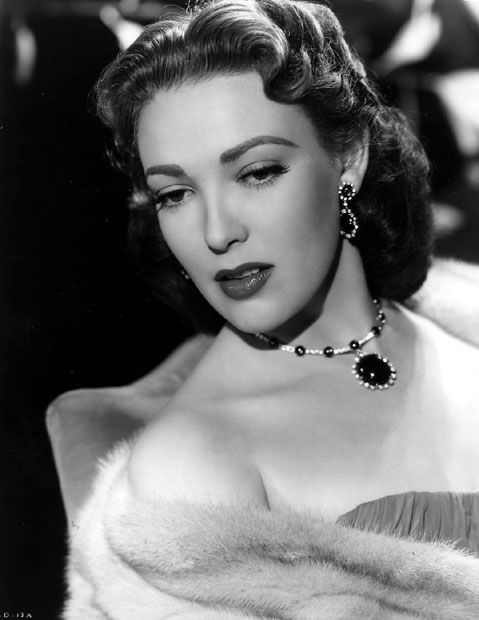
In 1944, Look magazine, on the hunt for popular wartime pin-ups, named Darnell one of the “Four Most Beautiful Women in Hollywood,” along with Ingrid Bergman, Hedy Lamarr and Gene Tierney. Quick to capitalize on the publicity, Fox loaned her out at a premium to Douglas Sirk for Summer Storm. “For eighteen months I did nothing in pictures—I pleaded for something to do, but nothing happened,” she told a reporter. “The character in the Chekov film is a wild sort of she-devil, which any actress would go miles to play. She’s devil mostly—at times angelic—and perfectly fascinating to interpret. I’m counting on my Russian girl to give me a new start.” Ah, yes, a new start. At 21.
Darnell followed up with another bad-girl role in Fallen Angel for Otto Preminger, whom she found “terrifying.” But her fabulous reviews in the noir classic must have soothed her nerves, and she seemed to have found her stride again. A year later, she won the coveted lead in Forever Amber, based on Kathleen Winsor’s wildly popular bodice-ripper. “My first seven years in Hollywood were a series of discouraging struggles for me,” she recalled at a press conference for the film. “For a while it looked as though the ‘Darnell versus Hollywood’ tussle was going to find Darnell coming out second best. The next seven years aren’t going to be the same.”
For the most part, they were much worse.
On Forever Amber, Darnell was again paired with the tyrannical Preminger. She had dieted strenuously for the corset-heavy costume drama, and twice collapsed on the set from hunger as well as nervous exhaustion. And for all the misery she endured, the film fell short of its massive hype: while audiences cheered, the critics mostly yawned, and the film didn’t give Darnell the boost, either in confidence or in clout, that she’d hoped for.
Meanwhile, her marriage to Marley, never all that sturdy to start with, was unraveling; in 1948, they separated for the first time. Alone, afraid and drinking more heavily, Darnell drifted into an affair with the married writer/director Joseph Mankiewicz—her first, his fifteenth or so.
During one of the lowest points in her life, Darnell made two of her finest films.
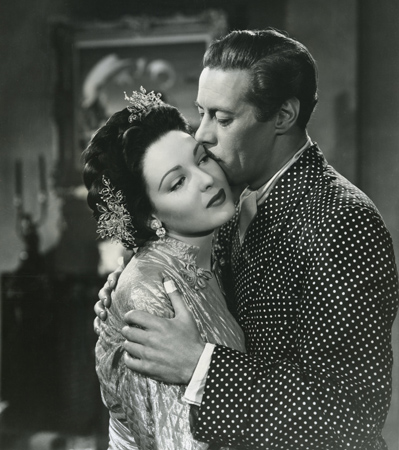
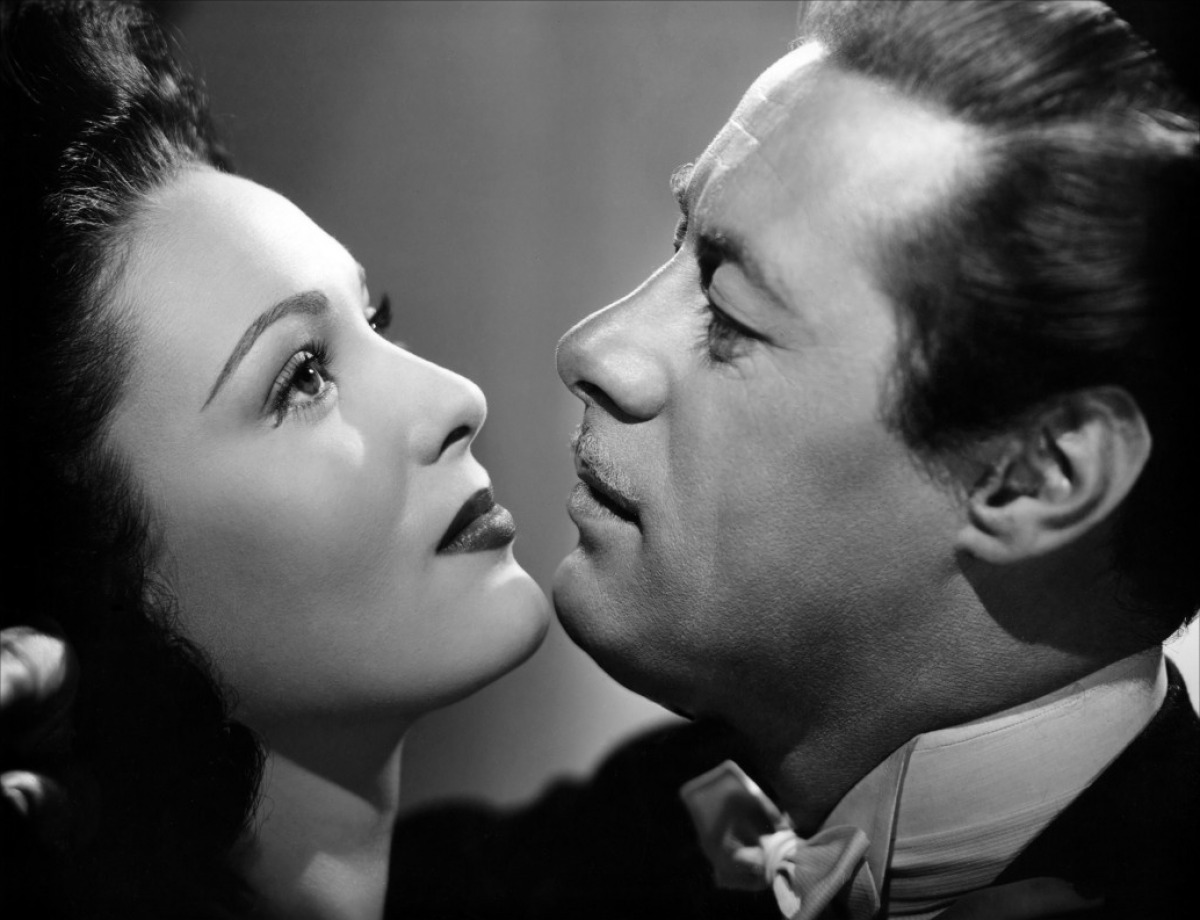
In Unfaithfully Yours, produced, written and directed by Preston Sturges, she’s the wife of an egocentric orchestra conductor (Rex Harrison) who concocts an elaborate revenge fantasy when he suspects she’s cheating on him. She’s so gasp-inducingly gorgeous, you’re almost distracted from how fabulously funny she is—a Sturges heroine who throws away her lines with the ease of a Colbert or a Stanwyck.
Ironically, given Darnell’s situation with Mankiewicz, the movie’s release was delayed after actress Carole Landis took her own life when Harrison, then married to Lilli Palmer, ended their affair. When the film finally did open, audiences and critics rejected its dark, offbeat humor, though it’s since been embraced as Sturges’s last great film.
In 1949’s A Letter to Three Wives, written and directed by Mankiewicz, Darnell earned the best reviews of her life. As Lora Mae Finney, a social-climbing beauty who’s literally from the wrong side of the tracks—the whole house shakes whenever a train roars by—she’s hard-edged, touching and hilarious. She gets some of the best lines in a flawless script, and casually belts every one of them into the stands.
Determined to marry Porter Hollingsway (Paul Douglas), who owns the department store where she and half the town work, Lora Mae wangles a late-night meeting to discuss a promotion, though both she and Porter know it’s a prelude to something more. As she sweeps into the kitchen before the date, her mother’s friend Sadie (Thelma Ritter), who deems her dress much too simple, asks, “Doncha think you should wear something with beads?” And Lora Mae replies matter-of-factly, “Ma, what I got don’t need beads.” She’s not vain, just realistic—but she thinks she’s savvier than she is. She plans to snag Porter by playing the naif, but soon discovers just how out far of her depth, and genuinely innocent, she really is.
That Darnell wasn’t even nominated for an Oscar for her performance was criminal; they should have just dispensed with the ceremony and mailed the thing to her house.
Off the set, Darnell’s life was growing more desperate. In January 1949, she sued former business manager Cy Tanner for fraud, claiming he’d stolen thousands of dollars from her over the years; he eventually went to prison but never repaid a dime. The following year, Marley essentially extorted $125,000—just about all the money his wife had—in return for a quiet divorce with no mention of Mankiewicz. Having broken her own code of honor to steer clear of married men, she had paid dearly for loving and protecting a man who had given her little in return.
Still only 27, Darnell had seen too much and been used too often—and, astonishingly, was already on the downside of both her career and her life. “I’d crammed thirty years into ten,” she recalled ruefully. “I missed out on my girlhood, the fun, little things that now seem important.”
For his part, Mankiewicz never publicly acknowledged their affair; in his memoirs, he referred to Darnell only as “a lovely girl with very terrifying personal problems.” (Which were something of a specialty of his: among his previous paramours was a deeply troubled 20-year-old Judy Garland.)
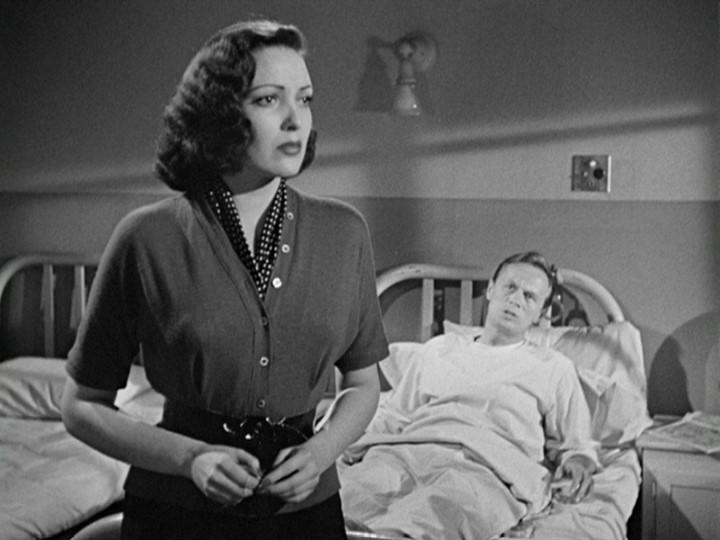
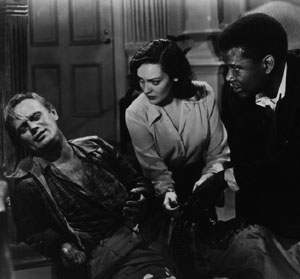
Her last memorable film, in 1950, was Mankiewicz’s No Way Out, with Richard Widmark as a vicious, racist criminal and Sidney Poitier as the doctor who must tend to him. Always her own harshest critic, she called the groundbreaking social drama “the only good picture I ever made.”
As the studio system began to collapse, so did Darnell’s film career; Fox dropped her contract in 1952. She freelanced for a while, with little success. “I thought in a little while I’d get offers from other studios, but not many came along,” she said, more out of confusion than bitterness. “The only thing I knew how to do was be a movie star. No one expects to last forever in this business. You know that sooner or later the studio’s going to let you go. But who wants to be retired at twenty-nine?”
So she turned to television and then the stage, where, to the surprise of skeptics, she thrived in plays as farflung as The Children’s Hour, Critic’s Choice and A Roomful of Roses. In 1956, she took on the daunting role of the compassionate teacher in a Miami production of Robert Anderson’s controversial Tea and Sympathy, opposite a 20-year-old Burt Reynolds. “I’m scared stiff [about the play],” she confided to local reporters. “But this marvelous, magic world of live theater is one of the high spots of my life.” The Miami Herald called it a “sensitive, absorbing presentation” in which “Miss Darnell gives the role a new dimension.”
While TV and theater parts paid the basic bills, she was still forced to give up the last remnant of her film success: in 1962, her modest Hollywood house was foreclosed upon. But even in her darkest days, she was so kind and thoughtful that she went through all the rooms before she left, taping the correct keys to each door, to make things easier on the new owner. (Her reward? The man who bought the house parked in the driveway, blocking the shaken actress’s exit, while shrieking, “I want to meet Linda Darnell!”)
Throughout her last years, Darnell continued to work sporadically. In the spring of 1965, while preparing for a play near Chicago, she stayed at the home of her friend and former secretary, Jeanne Curtis, one of many former Fox staffers who still adored her. Late one night, she turned on the television only to find her 17-year-old self staring back at her in Star Dust, her second big film.
Not long after drifting off to sleep, she was jolted awake by the smell of smoke and the sounds of panic: the house was on fire. While Curtis, her husband and her daughter leapt to safety from a second-floor window, Darnell, too terrified to jump, tried to escape through a downstairs door. But a neighbor had run over and smashed a back window with a shovel, and the inrushing air fed the fire and spread the flames throughout the first floor. Darnell, who had a lifelong fear of fire, was found crouched behind the sofa, burned over almost 90 percent of her body.
She died at the hospital two days later, regaining consciousness only once, briefly, when Lola arrived at her bedside. She was 41 years old. Contrary to persistent rumors, she had not fallen asleep while smoking, nor had she been drinking. She had nothing to do with starting the awful blaze that claimed her life.
In her last interview, just a few weeks before she was killed, Darnell reflected on her chaotic, disappointing career and her efforts to give Lola the kind of home and security she never had. “Life has been rough on me,” she confided. “I hope it doesn’t end in tragedy.”
You’ve seen him a hundred times. Maybe not in the center of the screen, but you always know he’s there.
The shambling menace, just off to the side. Maybe he’s got a score to settle. Or a hurt that won’t heal. Or maybe he’s handed his fate and what’s left of his conscience over to someone who’s stronger and smarter. He may want to give you a break. He may not. He may have to kill you. But he probably won’t be happy about it.
Yeah, that guy.
Thomas Gomez.
By virtue of his bulky frame, deep, slightly hooded eyes and raspy growl, Gomez was usually cast as the heavy. But he was so much more than that—and even his villains covered a lot of terrain. The hulking henchman who kept Bogie at bay in Key Largo was also Conan Doyle’s cunning Professor Moriarty and Shakespeare’s scheming Claudius on Broadway. But the gentle, thoughtful man behind all these masks never packed anything more threatening than a shrimp knife.
Gomez poured almost half a century of great performances into his 65 years—playing peasants and kings, priests and pentitents, victims and thugs, and even one ape. He began his career in heady company and never looked back. In 1923, straight out of high school, he won a scholarship to study with famed Shakespearean actor/director Walter Hampden, often called The Dean of American Theater (who went on to play a string of wise old patriarchs on film, including the father of William Holden and Humphrey Bogart in Sabrina).
By the end of the decade, Gomez was touring with Alfred Lunt and Lynn Fontanne. He spent most of the 1930s criss-crossing the country with their troupe, taking ever-larger roles in productions including Hamlet, Cyrano de Bergerac, Becky Sharp, Idiot’s Delight and The Taming of the Shrew.
His riveting work in two plays, The Sea Gull and There Shall Be No Night (featuring a young Montgomery Clift) caught the interest of Hollywood, where he was first cast as a murderous Nazi spy in 1942’s Sherlock Holmes and the Voice of Terror. Rootless when he arrived, Gomez lived at the Hollywood Roosevelt Hotel. An insatiable reader, he’d hang onto the newspapers left outside his door each morning until he had a chance to catch up on them. Never one to start a story in the middle, when he had an hour to spare, he’d ask the bellboy to lift the stack so he could snatch the oldest papers from the bottom.
When other film offers rolled in, Gomez, a homebody at heart, bought a modest house in the Hollywood Hills where he lived for the rest of his life, creating for himself the same kind of warm, safe cocoon he’d grown up in on Long Island.
Spanish on his father’s side (by way of Gibraltar and Santander, Spain) and French-Irish on his mother’s (courtesy of Alsace and County Cork), Gomez’s family migrated to New York from the Spanish Creole south shortly before he was born in 1905. With the Spanish-American War a recent memory and The Great War looming, jingoism was running hot and high, and blending in was the buzzword. But for Gomez, assimilation never meant capitulation: All his life, he legally kept the name he was born with: Sabino Tomas Gomez. And he vowed to take Hispanic roles only if he could play them “with sympathy, or at least humanity.”
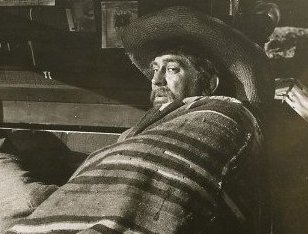
That chance arrived in 1947, with Ride the Pink Horse. In lesser hands, the role of Pancho in Robert Montgomery’s classic film noir could have turned into exactly the kind of role Gomez despised. Universal’s own publicity department described the character as “a big, greasy, tequila-swilling slob, who has one brief glow of nobility.” (Okay the first half of that sentence is blatantly racist, and the second half makes no sense whatsoever. Nice going, Universal flack!) Gomez seized the chance to blow away every cliche—even those perpetrated by his own studio.
In Ben Hecht’s taut, terrific story, disillusioned war veteran Lucky Gagin (Montgomery) arrives in a Mexican border town to avenge the murder of a comrade. Pancho, who operates the local merry-go-round, risks his life to help him—and very nearly loses it when he’s brutally beaten by thugs as children watch helplessly, captive on the spinning carousel. You get the feeling that while this may be the worst beating he’s endured, Pancho has been knocked around all his life. He’s resigned to expecting the worst while still lifting his eyes in search of something better.
The final scene, when he and Gagin say goodbye, likely never to meet again, is just heartwrenching. Honestly you’ll never see a sadder parting. I half-expected Gagin to say, “We’ll always have San Pablo.”
Gomez’s vivid, compassionate portrayal of a man who could easily have been reduced to a stereotype brought him his only Oscar nomination—the first ever for an American-born Hispanic actor. But in a stroke of bad luck to rival any of those found in his darkest films, he was up against Santa Claus. He lost the Oscar race to Edmund Gwenn for Miracle on 34th Street.
The late 1940s brought Gomez many of the best noir roles of his career. To each, he brought a deep, soulful sense of weary resignation, a feeling that life is gonna do to you what it’s gonna do to you, and you gotta do what you gotta do, and you’ll probably lose anyway.
In 1947’s Johnny O’Clock, directed by Robert Rossen from his own screenplay, Gomez plays a casino owner whose wife (Ellen Drew) had once been involved with his partner (Dick Powell). “Thomas Gomez is oily as the villain,” sniffed New York Times critic Bosley Crowther at the time. Really? Because to me he seemed pitiable.
“You can give me a kiss—it’ll make you look good in front of people,” Drew sneers at him on the balcony, as his workers—the only people over whom he has any control—play cards inside. Like a wounded lion, he lashes out and paws her roughly, but his face softens as he kisses her. Then he turns away in shame and limps, broken, back into the casino.
If you’ve never seen the movie (or even if you have), drop everything and click this link; the whole film is here.
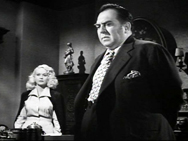
Of course Gomez’s most famous noir role was Curly Hoff, Edward G. Robinson’s sweaty right-hand man in John Huston’s Key Largo. He doesn’t seem to like his boss any more than the people he’s terrorizing do. He knows what kind of guy he’s thrown his lot in with, and he’s not proud of it. But he’ll do whatever it takes to hang onto what little he has, including denying Claire Trevor that damn drink. Oh and killing people. The guy who has long since sold his soul is somehow creepier than the guy who never had one.
Humphrey Bogart summed up Gomez’s work as Curly—and a good chunk of his career—when he told him, after shooting wrapped,”That was the essential heavy, pal.”
Gomez turned from bloodless predator in Key Largo to desperate, hunted prey in Abraham Polonsky’s violent and disturbing Force ofEvil. Leo Morse is a small-time, “honorable” numbers runner, who’s managed to steer clear of the mob until his brother Joe (John Garfield), a charming, arrogant and completely amoral lawyer (redundancy alert!), goes to work for them—tasked with the job of either bringing operations like Leo’s into the fold or rubbing them out entirely.
Leo feels the walls closing in on all sides, bitter and sick with the knowledge that his own brother is doing most of the pushing. His fear and suffocation are palpable as he sees the little world he’s built for himself being slowly destroyed. I watched this film again last winter, when it was about 5 degrees outside, and I had to open a window. Somehow I thought that might help Leo a little. Gomez is that heartbreaking. (And you want to strangle Garfield. He’s a lot like Goff in Out of the Fog—only now he’s armed with a law degree.)
As the busy decade closed, Gomez even added a little touch of noir to the Christmas classic Come to the Stable, playing mobster Luigi Rossi, whom the good sisters (Celeste Holm and Loretta Young) are sure they can reform and hit up for a sizeable donation of property. Hmm, I wonder if they’ll succeed…
When he wasn’t holding Bogie and Bacall hostage, gunning for Dick Powell or fighting off adorable nuns, Gomez, a passionate progressive and union man, was serving on the board of directors of the Screen Actors Guild. He never married, and lived quietly and simply. His only nod to indulgence was a love of fine dining, with predictable results to his waistline.
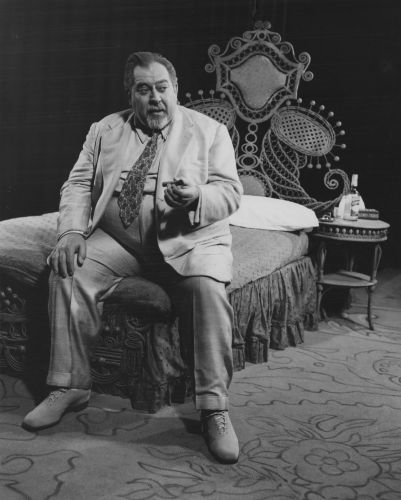
And in the midst of racking up roughly 60 movie credits, Gomez shuttled back to Broadway whenever a great role came calling: Claudius in Hamlet, Professor Moriarty in Sherlock Holmes. and perhaps the ultimate villain, Oliver Cromwell in A Man for All Seasons. He followed Burl Ives as Big Daddy in the original run of Cat on a Hot Tin Roof, winning superior reviews from Tennessee Williams (who later tapped him to play Papa Zacharias in the film version of Summer and Smoke).
Throughout the late 1950s and 1960s, Gomez also guested on TV shows, including The Twilight Zone (in a memorable turn as Satan—the role he’d been building up to all his life), Route 66, Dr. Kildare, Burke’s Law, The Virginian, It Takes a Thief, Bewitched and The Rifleman. But if you really want to see him as never before, watch his fabulous turn as pool shark Chicago Chubby on this 1965 episode of Mr. Ed. (Spoiler alert: Ed beats him.)
In his last film appearance, Gomez played The Minister in 1970’s Beneath the Planet of the Apes. His last role ever was on Gunsmoke as Agustin, a Mexican farmer who risks his life to save a wounded Matt Dillon. In May 1971, Gomez was grievously injured in a car accident in Santa Monica, and succumbed to his injuries a month later. He was 65 years old.
Thomas Gomez once said that no matter how flat a role may have appeared on paper, he tried to infuse it with “some rascality, warmth and dimension.” Sleep well, Sabino. You met your own high standards a thousand times over.
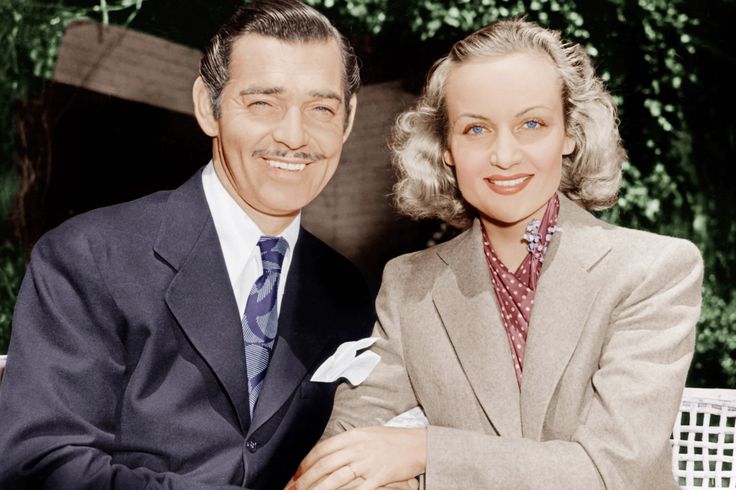
Remembering Carole Lombard on her birthday, through the eyes of some of the many who loved her:
“You can trust that little screwball with your life or your hopes and your weaknesses, and she wouldn’t even know how to think about letting you down. She’s more fun than anybody, but she’ll take a poke at you if you have it coming and make you like it. If that adds up to love, then I love her.” — Clark Gable
“There were many things about Carole that were oh-boy-out-of-this-world wonderful. She was class. She was a good actress, and she always looked great. More important, she had a lot of heart…. When I’m weighing a particularly difficult decision, sometimes I ask myself what Carole would have said, and it helps.” — Lucille Ball
“She was so alive, modern, frank, and natural that she stands out like a beacon on a lightship in this odd place called Hollywood.” — Barbara Stanwyck
“Marvelous girl. Crazy as a bedbug” — Howard Hawks
“I remember that I looked at her and marvelled. For to me- and to all Hollywood- Lombard spilled humaness with every step- like a man carrying a brimming pail. She just couldn’t hold back her gaiety; laughter, friendliness, and camaraderie got out of hand to drench unsuspecting bystanders. For Carole was inclusive, not exclusive. Her tempo was a perpetual challenge to gloom.” — Journalist William F. French
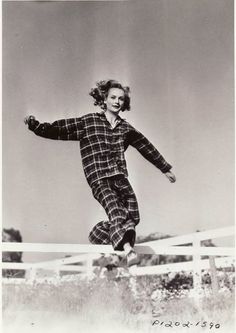
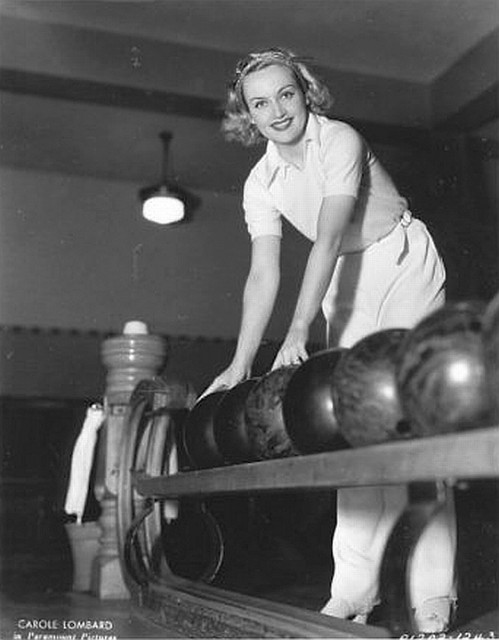
“She gets up too early, plays tennis too hard, wastes time and feeling on trifles and drinks Coca-Colas the way Samuel Johnson used to drink tea. She is a scribbler on telephone pads, inhibited nail-nibbler, toe-puller, pillow-grabber, head-and-elbow scratcher, and chain cigarette smoker. When Carole Lombard talks, her conversation, often brilliant, is punctuated by screeches, laughs, growls, gesticulations and the expletives of a sailor’s parrot.” — Life Magazine, 1937
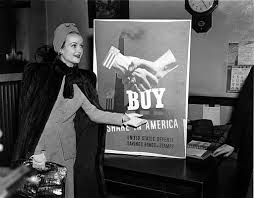
“She brought great joy to all who knew her and to millions who knew her only as a great artist… She is and always will be a star, one we shall never forget, nor cease to be grateful to.” — President Franklin D. Roosevelt, awarding Lombard the Medal of Freedom, as the first American woman killed in the line of duty during World War II.
“Clark adored her—she was the light in his eyes,” actress Elaine Barrie once recalled. “He admitted to me that he had always loved the company of ladies and he knew he had a reputation of being a ladies man, but with her it was different. He really was in love. To have her taken from him was like someone ripped out his soul. I saw him periodically for years afterward. The light in his eyes was gone. Even when he smiled. That light never returned.”
For the definitive tribute to Carole Lombard, on her birthday and every day, be sure to follow Carole & Co. at http://carole-and-co.livejournal.com
“We became devoted to each other. We weren’t lovers, we eventually became more like siblings. Our relationship was unique. Oh, he sometimes gave me the macho routine when people were watching, but he changed when we were alone.
“We always used to celebrate together at the end of a picture. Clark insisted on it. Maybe we’d include the director, maybe not. It was just a kind of ritual that the two of us had. We would share a bottle of champagne while he read poetry to me, usually the sonnets of Shakespeare. He loved poetry, and read beautifully, with great sensitivity, but he wouldn’t dare let anyone else know it. He was afraid people would think him weak or effeminate and not the tough guy who liked to fish and hunt. I was the only one he trusted. He never wanted me to tell about this, and here I am giving him away, but I never mentioned it while he was alive.”
—Myrna Loy, lovingly recalling her friend Clark Gable
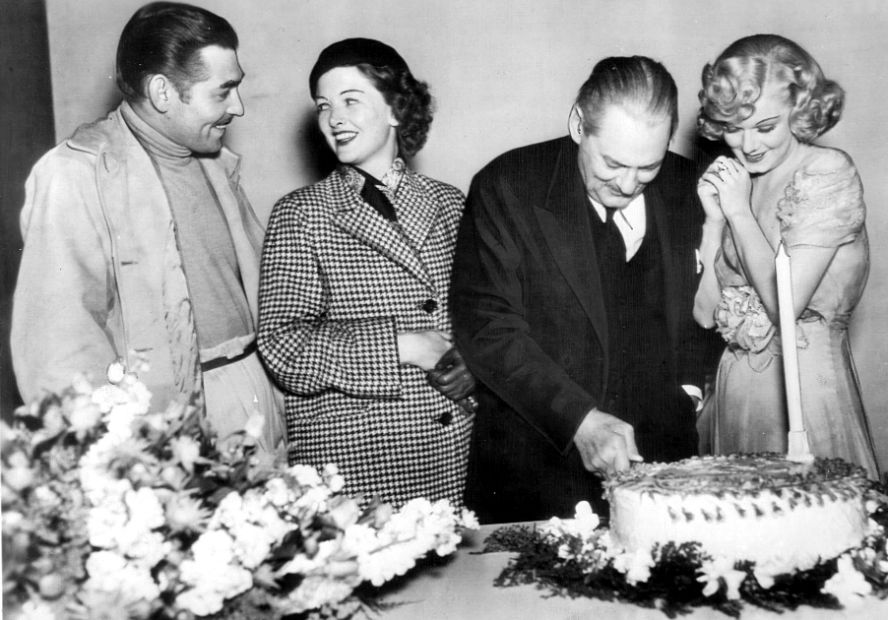
Gable and Loy—whom 20 million fans voted King and Queen of Hollywood in 1937—co-starred in seven films: Night Flight, Manhattan Melodrama (the movie that drove John Dillinger, a huge fan of the actress, out of hiding—which Loy said she always felt guilty about), Men in White, Wife Vs. Secretary, Parnell, Too Hot to Handle and Test Pilot. But this luminous pair is rarely mentioned when the talk turns to classic Hollywood screen pairings. Maybe that’s because, as Loy pointed out, their chemistry was more platonic than passionate. Perhaps that’s why it endured while so many others flamed out.
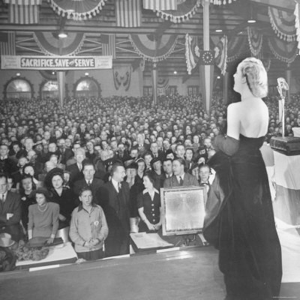
Here are a couple of off-the-set shots of Loy and Gable among friends. The first is from a 1941 benefit for Greek war relief, with Charles Laughton, Gable’s wife Carole Lombard and Melvyn Douglas. The second is from a birthday party for Lionel Barrymore, with Jean Harlow. Check out the way Gable looks at Loy in these pictures. He clearly adores her. And these are no lascivious leers; it’s more like, “God, I just love that dame.”
Thinking of Gail Russell today, on what would have been her 90th birthday. She had only 36 of them.
If Marilyn Monroe was a candle in the wind, Gail Russell was a matchstick in a hailstorm. That she became an actress at all was due to a twist of fate usually found only in bad movies, along with her mother’s fierce ambition. It seems that one day, Paramount’s head of casting, William Mieklejohn, picked up a couple of hitchhiking teenagers, who, upon learning who he was, began raving about a former classmate, comparing her to Hedy Lamarr. By then, Russell was enrolled in a technical college, pursuing painting, which provided the only sanctuary to the shy, often terrified girl.
“I was possessed with an agonizing kind of self-consciousness where I felt my insides tightening into a knot, where my face and hands grew clammy, where I couldn’t open my mouth, where I felt impelled to turn and run if I had to meet new people,” she would later recall in a fan magazine. “When my parents had guests, I would run, get under the piano and hide there.”
So it’s not surprising that when Mieklejohn finally tracked Russell down with the offer of a movie career, the prospect sickened her more than it thrilled her. Enter her mother Gladys, stage left. Gladys, it seemed, had once turned down a screen test herself, and was determined that her gorgeous daughter not make the same mistake. Moreover, the family was broke—even selling off the furniture to make the monthly mortgage payment.
“When I was discovered for the movies I was sleeping on the living room floor on newspapers,” Russell told one reporter. “I went for my first interview with paint all over my face—I’d been helping paint a room at the technical school. Paramount offered me a minimum salary, $50 a week, and Mom said, ‘Take it, we need the money.'”
After making it through a couple of small roles with her nerves barely intact, Russell—who had just turned 20—was cast as the ethereal Stella Meredith opposite Ray Milland in The Uninvited, a prestige picture that Paramount was placing almost entirely on her slender shoulders. She was sometimes so frightened she literally could not speak, and when she did find her gentle voice, the words were often the wrong ones. Director Lewis Allen recalled having to cobble together many scenes from single line readings. However it came to be, Russell’s performance as a fragile young woman who is tormented by family ghosts is heartbreaking and unforgettable, and she deserves far more credit than any skillful director or editor.
But her triumph came at a cost she would pay for the rest of her short life. During filming, Russell began to rely on alcohol to steady her nerves. And while she made a few more memorable films during the 1940s, including Our Hearts Were Young and Gay and The Angel and the Badman, by the time the decade was over, so, for the most part, was her career. She was 25.
In 1950, Paramount declined to renew Russell’s contract, largely due to her worsening drinking problem, which had become impossible to conceal; she had already been convicted of one DUI. Then, in 1957, she drove her convertible through the window of a coffee shop on Beverly Boulevard, injuring a night janitor. Voyeuristic photos of the actress, looking scared, dazed, and much older than her 33 years, were smeared all over the tabloids.
On August 27, 1961, Russell was found on the floor of her studio apartment in Hollywood. It is believed she’d been there for at least a day, having succumbed to alcohol-related heart and liver disease.
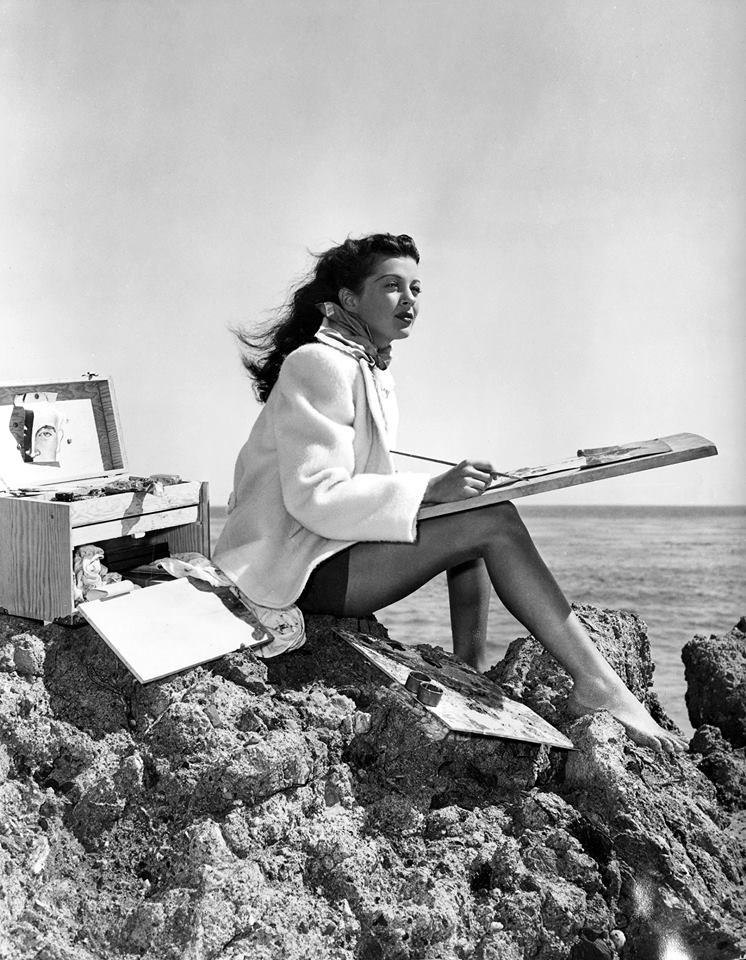
Even in her studio pin-up shots, her sadness is impossible to miss. She looks truly happy only when she’s painting, or playing with her dogs, or walking along the water. In other words, when she’s free. I hope she is free now, and at peace.
Lauren Bacall left us last month, just shy of her 90th birthday. She lost Bogie in 1957, and he waited another 57 years to be reunited with the love of his life. Here, Betty makes use of the gold-whistle charm her husband gave her, which paraphrases the famous line in the film on which they met, To Have and Have Not: the inscription reads, “If you want anything, just whistle.” When Bogie was laid to rest, Betty gave the charm back to him to take on his way. I wonder if he’s returned it to her now…
During one of the most shameful periods in Hollywood history, what could have been James Whale’s finest hour instead became his downfall.
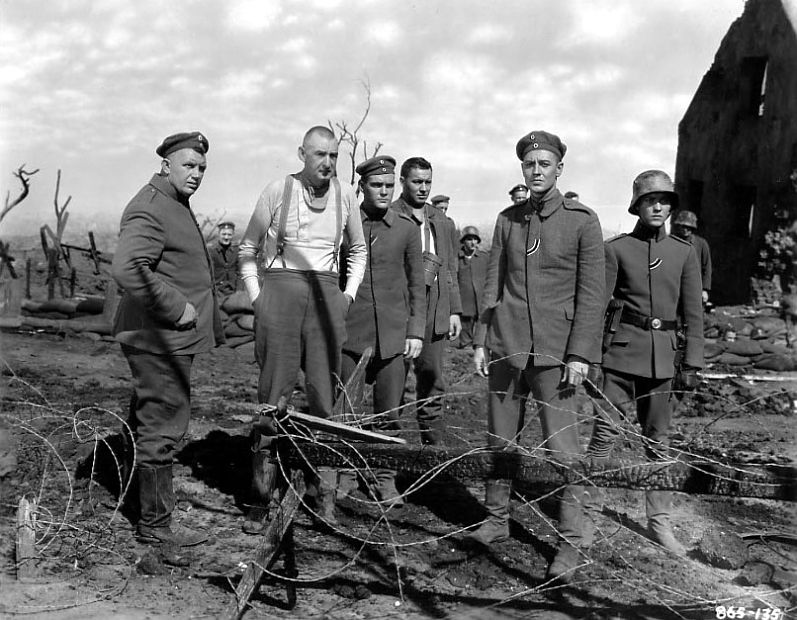
As 1937 dawned, the director was huddled with writers R.C. Sherriff and Charles Kenyon in a back office at Universal, working on a film adaptation of Erich Maria Remarque’s novel, The Road Back. A sequel to his All Quiet on the Western Front, the book follows a group of emotionally battered ex-soldiers back to their homeland, a Germany wracked by widespread violence, hunger and misery in the years following the Great War.
Both Whale and Sherriff had survived brutal action on the Western Front—Sherriff was severely wounded and Whale was captured and held prisoner for more than a year—and they were eager to paint a realistic portrait of the war’s bleak and grim consequences, even for those lucky enough to have lived through it. They hoped the film would carry a powerful message of peace and a warning not to make the same catastrophic mistake twice.
After the success of the Oscar-winning All Quiet, Universal had optioned the rights to the second novel before it was even completed. But when the book fizzled out commercially, the studio set the film project aside. When it finally went ahead, the timing could not have been worse: As Whale and his writers toiled away on their cautionary tale, the German war machine, under Adolf Hitler, was already groaning and cranking to life once more. And the film would soon be in the hands of one of Hitler’s minions.
As a novel, The Road Back had already been banned by the Nazis, and they were none too eager to see it writ large on the big screen. In the book, Remarque describes the horrors on the homefront just as vividly as he had laid out those on the battlefield: Former comrades turn on one another in a village wracked by starvation, a returning hero’s fiancee betrays him with a profiteer, and a political activist is gunned down by his former commanding officer during a food riot. This was the very antithesis of the kind of propaganda and pablum the Nazis were feeding the faithful back home.
The movie marked the third collaboration between Whale and Sherriff, who also worked together on the film version of Sherriff’s Journey’s End, a powerful portrait of terrified, trench-bound soldiers bracing themselves for one final assault, and One More River, a searing social commentary based on John Galsworthy’s popular novel.
Echoing a practice from his London stage days, Whale cast a group of relative unknowns in key roles, with mixed results. John “Dusty” King, known mostly for his work in Westerns, fails to come fully alive. But Richard Cromwell—a gentle, sensitive actor perhaps most famous as the young man who duels with George Brent in Jezebel—picks up the emotional slack. Also featured are Andy Devine, who is truly touching even in his shtickier moments, and Slim Summerville, reprising his role as Tjaden from All Quiet. Having experienced more horror in a few short years than those back home could imagine in a lifetime, these men return from the battlefield more closely bound to one another than to their own families. And far from being welcomed as heroes, they are treated as little more than unwelcome reminders of a monstrous mistake that has left their country in ruins and its people bereft of hope or sympathy.
Having helmed such classics as Waterloo Bridge, Frankenstein, The Invisible Man, The Bride of Frankenstein, and Show Boat, Whale was Universal’s top director. And with its $1 million budget, The Road Back was expected to be the crowning achievement of his career—a prestige project that would garner serious attention.
And did it ever. But not the kind Whale or the studio were looking for.
Georg Gyssling, the Third Reich’s consul in Los Angeles, had just one real job: to bully Hollywood into portraying Germany and its political regime in the best possible light. The main weapon in his arsenal was Article 15 of his country’s film regulations, which stated that producers whose work cast aspersions on Germany, its government or its people could have their permits to show films in Germany revoked—not just for their “offending” films, but for all their films. This sent shudders through the studio bosses, who feared the loss of this highly lucrative market.
Doughy, bland and balding but supremely confident, Gyssling (below, gazing rapturously at the notorious Leni Riefenstahl) had competed for his country in the Four-Man Bobsled event at the 1932 Olympics. (Now there’s a business card: “Nazi Henchman/Bobsledder.”) He felt very much at home in his rarified surroundings, and he had reason to: Hollywood had proven to be quite pliable in the face of German threats to pull the plug on profits.
And Universal was no exception. In 1930, shortly before the studio released All Quiet in Germany, the Nazis had strengthened their political foothold. And they hated the film’s anti-war tone and its portrayal of German soldiers as human beings rather than supermen. Joseph Goebbels himself railed against the movie from a theater balcony, and at later showings, Nazis released stink bombs in the aisles. Shortly after this uproar, the movie was banned in Germany.
Panic-stricken, studio chief Carl Laemmle, himself a German Jew, agreed to make extensive cuts to the film—not just for the German market, but for worldwide distribution. He even took out ads in the German newspapers proclaiming, “I yield to no one in my love for the Fatherland.” After the government approved the new, whitewashed version, the film and Universal were welcomed back into the country.
Then came the sequel.
Having already banned The Road Back in novel form, the Nazis sent their boy Gyssling to go after the film, which was due out in the spring of 1937.His first stop: the executive offices of Charles Rogers, who had recently replaced Laemmle as head of Universal following a corporate takeover. Rogers believed he could talk Gyssling down (that’s how new he was) and suggested that the consul meet with Whale, who then invited him to his Santa Monica home to discuss the film.
One can only imagine how much it galled the director, a former POW and a passionate progressive, to serve tea on the patio to a Nazi goon while pleading for the life of his film. But for the sake of his cherished project, he did. During the meeting, Whale stressed that the screenplay was not a mirror image of the book and that the consul should reserve judgment on the film for the time being.
Gyssling lay low for a few weeks, until he saw a rough cut of the movie. Then, furious, he made a move even more thuggish than any he had made before. On April 1, 1937, he sent out letters to virtually everyone connected with the film—more than 60 people, from Whale and Rogers right on down to the wardrobe assistants—threatening to invoke the dreaded Article 15 and warning them that any future film on which they worked might be banned from the German market.
Universal’s reaction was nauseatingly predictable. After some token resistance, the studio caved in to the Nazi government’s demands, “to cultivate the good will of Germany.” Rogers yanked Whale from the project and ordered parts of the film re-shot. The remainder was extensively re-edited, with a total of 21 deep and devastating cuts. Into the ashcan went all direct or even implied references to the Nazis—including the original ending, where, much to their horror, King and Cromwell come across a group of children being schooled in dogma that could have been lifted straight out of Mein Kampf.
And here’s the kicker: After all of the studio’s appalling attempts to appease the Nazis, the film was banned in Germany anyway.
Whale was disgusted by Universal’s utter spinelessness, and his relationship with Rogers was permanently poisoned. Spitefully squandering the studio’s greatest talent, the boss banished Whale to mostly B-films for the remainder of his contract. The director enjoyed just one more major success, with 1939’s The Man in the Iron Mask. Two years later, following the failure of They Dare Not Love, a romantic drama set, ironically, against the Nazi occupation of Austria, the one-time set designer retired from films and returned to painting, one of his earlier loves. No one could force him to slash anything from his canvases.
All prints of Whale’s original cut of The Road Back were apparently destroyed. But critics and others who viewed it in previews generally liked what they saw. And even in its bastardized state, it has some striking Whale touches. The depth-of-field shots early on, where the battlefield seems to loom out endlessly before the soldiers. The delicate patterns of light and shadow. The long, fluid tracking shots that eventually peer in curiously for a closer look.
At one point in the film, those who’ve miraculously made it through the war march side by side with their ghostly comrades. That’s the image that stays with me. Because the whole movie feels a bit like a ghost—a faint, mournful reminder of Whale, of what was, and of what might have been had his career not been derailed by a studio’s craven cowardice and greed.
In the end, it doesn’t really matter whether Hollywood’s capitulation to the Third Reich is called collaboration—a word some people find inflammatory—or appeasement. The result was the same: the German government wielded significant power over many of the major studios for a good part of the 1930s. Fearing the loss of this lucrative market, a great number of studio bosses, to their everlasting shame, handed the editing shears over to this monstrous regime with disturbing regularity. Only later in the decade, when they were faced with the greater loss of film markets in England and France, did these studios summon the “courage” to shake off the German censors and take the battle directly to the Nazis.
For many classic film fans and even some historians, this dark period in Hollywood is tough to face unflinchingly. It’s tempting to launch into denial mode and to shoot the admittedly imperfect messengers who’ve written books about it. But the archival evidence in both Germany and the U.S.—the only completely factual information we have—is overwhelming and indisputable. And the truth it reveals is an ugly one.
For much more on the life and career of James Whale, read James Curtis’s extraordinary biography, James Whale: A New World of Gods and Monsters.
Happy Birthday, Charles Boyer! I love you beyond all reason and sanity.
This photo, taken during one of his many shifts at the Hollywood Canteen, really seems to capture him: warm, real, and totally un-movie-star-ish. Absent are the silly studio-mandated shoe lifts and toupee, which he never wore off camera—and you can see how hideously disappointed Claudette Colbert is about that. She’s like, “Oh, yeah, Gary Cooper’s here too? Whatever!”
Charles Boyer was the perfect leading man—insanely attractive, wildly romantic, with deep, limpid eyes and a voice like honey pouring over a hot toddy. Maybe too perfect for his own good, as he often wasn’t appreciated for the brilliant actor he was. Criminally overlooked at Oscar time, he was nominated for four films and went home empty-handed every time.
The year he was up for Gaslight, he lost to Bing Crosby, for God’s sake, in Going My Way. I mean, that was a sweet and touching performance, and I love me some Toora Loora Loora as much as the next Irish girl. But really? It’s like picking one color crayon instead of the box of 128. To cast Charles Boyer, who was pretty much every sane woman’s romantic ideal, as a murderous sociopath was pure genius, as was his performance—which shifted slowly and seamlessly from ardent suitor to seemingly doting husband to cruel, abusive tyrant to desperate, pleading criminal. But even as he sits helplessly tied to a chair, exposed as a murderer, a glint of arrogance still flickers across his face: he really believes he still has a shot at wooing his wife into helping him escape.
It’s just astonishing. I mean, did the Oscar voters even see his performance? Is it too late to send them the DVD?
And could this monster possibly be the bon vivant who succumbed to a shipboard romance in Love Affair just a couple of years earlier? Again, Boyer was perfect, softening the somewhat brittle Irene Dunne in a way no other actor could, without ever diminishing her. In fact she shines all the more, and they’re just fabulous together. If I could have studied this kind of chemistry in school, I would have majored in science. But there’s nothing gooey about them—they’re smart and witty and grown-up and a bit surprised at how completely besotted they are. They’re painfully aware of the hurdles they face and the risk of great heartache. But they plunge in anyway because really, what choice do they have?
But I especially love him in a slightly more obscure film, Frank Borzage’s History Is Made At Night. Mystery, melodrama, romantic comedy, this one’s got it all—even a lovely number where Jean Arthur kicks off her evening slippers while dancing with Boyer to I Get Ideas. (I’m right there with you, Jean.) Colin Clive plays a deeply crazed shipping magnate whose creepy scheme to frame his wife drives her straight into Boyer’s arms—and understandably, he’s curious as to why she married such a man. But rather than ask her directly and risk scaring her off, he playfully interrogates her by painting a little face on his hand and calling it Coco, and then cooing his questions at her in a high-pitched puppet voice.
Okay I’ll pause a moment while you read that last bit again. Suffice to say that Charles Boyer is one of about five people on the planet who could pull that off without the woman smiling awkwardly while slowly reaching for her purse and backing up toward the door. Or maybe just saying to hell with the purse and running. Honest to God, the man could do anything.
But Boyer’s best love story was the one he lived offscreen. He fell in love with his wife, Pat Paterson, at first sight. And despite his dashing reputation, he was a happy homebody who was more content curling up with a book than cuddling with a co-star. Their only, much-cherished child, Michael, lost his life when he was just 21, playing Russian roulette after breaking with his girlfriend. Heartbroken and devastated, Boyer somehow forged ahead with filming on How to Steal a Million, with a resolve that left his co-stars in awe. But when he lost Pat after 44 years together, it was one blow too many. He took his own life just two days later.
Below are a couple of pictures from my own Charles Boyer collection.
Here he is looking terribly kind and dapper as he arrives at an airport sometime in the 1950s. See the woman in the back, staring as if mesmerized? That would have been me, except I wouldn’t be in the frame because I would be unconscious on the floor.
And here he is (toupee-less as usual) treating Ingrid Bergman to lunch at the Brown Derby, in between bouts of terrorizing her and trying to drive her insane. What a guy!
Finally, if you want to see the ultimate example of a movie star entirely comfortable with himself, poking fun at his Hollywood image, here’s his classic appearance on I Love Lucy: www.hulu.com/watch/438083 Yes, Mrs. Ricardo, I would’ve stalked him too…
Happy Birthday to the fabulous and insanely underrated Van Johnson, the light, romantic leading man with hidden depths. Though actually they weren’t hidden at all—they were pretty much right there, even in his breezier roles, but especially in weightier films such as Battleground, The End of the Affair, Miracle in the Rain and A Guy Named Joe. If you’re not familiar with that Van, treat yourself to a binge some rainy Saturday.
Or ask my Aunt Ruth about him. And then get ready to catch her.
My aunt is terrified of doctors, and every year, when she has to go get her physical, she treats herself to a trip to Bloomingdale’s afterward, to pick up a perfume or a pillow, something fabulous and frivolous to smooth away the memory of cold tables and cotton hospital gowns. And one year, a miracle happened. There she was in the Linens section, fondling the fancy sheets, when she looked up and straight into the eyes of… Van Johnson, her favorite actor from the time she was 14. He was starring on Broadway in La Cage Aux Folles.
Well, oh my God. From everything she told us later, it was clear they talked for quite a while. I have this wonderful image of tall, dashing Van regaling Ruth with tales of old Hollywood. And Ruth, all five feet of her plus a few inches of bun, teetering in her pumps and hanging onto a rack of blankets to keep from fainting.
When she got home that day, she made straight for our house. She walked, or kind of wobbled, into the living room, all woozy, and threw herself across the sofa like Greta Garbo in Camille. She had just come from the doctor, so we were like, “Oh my God! It must be something horrible!”
My mother ran and got the Harvey’s Bristol Cream, pretty much the elixir of life in our house, and Ruth clung to her glass and composed herself. “What? What is it?” we asked her, as she still struggled to catch her breath. Finally she told us.
I’m a noir girl, so when I fall, I fall hard. Luckily, the objects of my affection never end up crumpled in a heap on the bedroom floor.
Well, almost never.
By the time I got through with Noir City Annual 2013, its pages were pawed, its corners were dog-eared (sometimes in both directions), and its spine was bent this way and that, utterly broken beyond repair. I loved this book to pieces.
The sixth in a series, Noir City Annual 2013 pulls together the best stories produced last year for the Film Noir Foundation’s (FNF) online magazine. And if you’ve ever dropped by their website, at http://www.filmnoirfoundation.org, you know that must have been a tough choice for FNF founder Eddie Muller, who published the book, and Donald Malcolm, who edited it. The group puts out some of the best noir writing—no, movie writing—no, just plain writing—that you’re likely to find anywhere. Crazy-smart but not pretentious, elegant but not fussy, passionate but not gooey, insanely well informed but not stuck up about it.
The latest limited-edition volume features gorgeously illustrated stories on a huge array of noir films, actors, directors, writers and even singers, including Richard Fleischer, Dan Duryea, Peter Lorre, Julie London, Peggie Castle and Jean Gabin. For some, their lives were even darker and sadder than their films. Here’s just a sampling of the articles (noirticles?) you’ll find inside:
In “The Girl They Loved to Kill,” Jake Hinkson comes to the rescue of Peggie Castle, which few people ever did in her films or her life. After taking us through her scant and mostly miserable 45 years, he closes with her pleading, desperate speech from Finger Man, a B-movie she made with Frank Lovejoy: “All my life, I’ve had dreams. Not big ones, just my share of the little things—that someone would like me, really like me, maybe even respect me… I know I’m no bargain. I’ve been around, plenty. I don’t feel sorry for myself. Only, sometimes, I get the feeling there isn’t any more time, like there isn’t going to be any tomorrow. Be nice to me. Please.”
Steve Kronenberg’s “Wandering Star” delves into the story behind the only film Peter Lorre both directed and co-wrote, Der Verlorene (The Lost One), in which he plays “a cynical Nazi physician on the run from the authorities, his former identity, and his own guilt-ridden conscience” who finally becomes his own executioner. “Lorre specialized in playing men who had lost their way in life, forced to hide behind masks, unable to control their compulsions,” notes Kronenberg. “By 1951, Lorre, too, was lost—facing bankuptcy, irrelevance in Hollywood, and an unfulfilled dream of directing his own film.” Perhaps because Germany was not yet ready to face up to the enormity of its wartime sins, Der Verlorene was a devastating failure when it opened there, and Lorre never even attempted to release it in the United States. He “returned to Hollywood disenchanted and relegated to typecasting.” But he also retained a 35mm nitrate print of his film, which cries out for restoration and recognition.
In “Her Name Was Julie,” Carl Steward celebrates the sultry stylings of Julie London and even offers a discography of her 50 best noir songs. He also reflects on the noir film career that could have been, had she not been lured away from the soundstage by her seductive set of pipes, returning years later for a handful of westerns and some wholesome family television. (I mean come on, was I the only one who slogged through reruns of “Emergency!” just hoping she’d burst into a chorus or two of “Cry Me a River”? I think not!)
Jason Ney’s “The Forgotten Man” makes a compelling case that Richard Fleischer, underrated and overlooked in his own time, should finally take his place on anyone’s list of top-tier noir directors. Covering Fleischer’s brilliant but frustrating stint at RKO, Ney points out that his breakthrough film, The Narrow Margin, was almost scrapped entirely (okay I fainted a little when I typed that). Howard Hughes loved the movie so much that he wanted to start from scratch with a bigger budget and A-list stars, possibly Robert Mitchum and Jane Russell (who are fabulous, but oh my God no). While the capricious producer dithered over his decision, the film lingered in limbo for two years until it was finally released in 1952.
“Dark Mirrors” compares original noirs with their remakes, with the genuine goods usually winning out. Of the 1993 remake of Night and the City, with Robert DeNiro tackling the role Richard Widmark nailed perfectly in 1950, Vince Keenan notes the “insurmountable gap between the thirty-something Widmark hustling alone far from home and the pushing-fifty DeNiro soaking his friends in Manhattan. The former is plausibly desperate, the latter utterly delusional.” (Then there’s my own fervently held belief that the Richard Widmark version of anything is better.) I’d mercifully forgotten that they remade D.O.A. with Dennis Quaid in 1988: “It would seem impossible not to have fun with one of the greatest set-ups in movie history… but the latest version finds a way, in Bonneville Salt Flats record time.” I would love to forget the remake of The Postman Always Rings Twice, especially the kitchen-table sex scene, which Keenan cheekily describes as “passionless and deeply unpleasant, not to mention unhygienic. (Do not have the bread at the Twin Oaks Tavern.)” But the author is no knee-jerk traditionalist and gives the newer films their due, singling out The Deep End—a 2001 retelling of The Reckless Moment, with Tilda Swinton in the Joan Bennett role—for special praise.
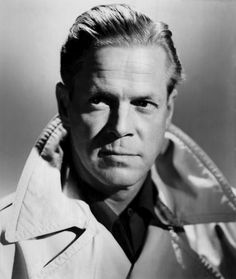
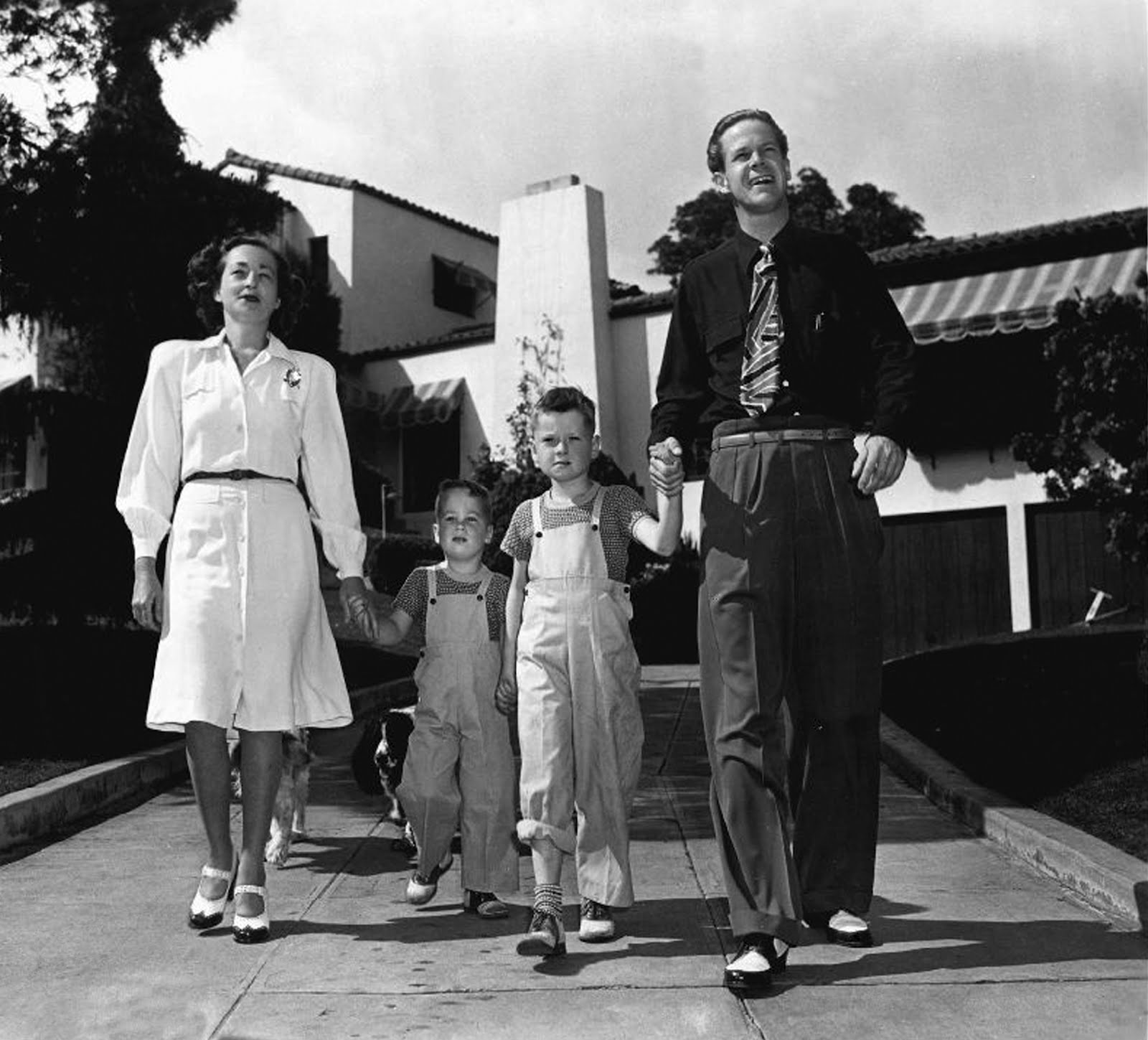
But perhaps the star of Noir City Annual 2013 is Dan Duryea, the subject of a dozen fabulous articles covering pretty much every facet of his career as well as his offscreen life as a faithful, devoted husband and doting Dad to his two boys. (When he wasn’t leading dames to wrack and ruin, he was leading a Boy Scout troop.)
The Duryea stories were were an especially guilty pleasure for me—I read them all straight through in bed one night while my husband was a hundred miles away. I really do adore this man. But finding a dozen articles devoted to Duryea in Noir City Annual 2013 made me feel like slightly less of a misfit…
Four of the six Noir City Annuals, for the years 2008, 2009, 2010 and 2011, are already sold out, but if you act fast, you can get your hands on the volumes covering 2012 and 2013. Here’s the link for purchase: http://www.noircity.com/noircityware.html. They’re also available on Amazon.com; just do a search for Noir City Annual.
Meanwhile, you can access the Film Noir Foundation’s fabulous online magazine for a donation of just $20—the price of a few cups of coffee, with a much better buzz for the buck. Just click the link at http://www.filmnoirfoundation.org/contribute.html. Reading the e-mag will give you a jump on some of the stories that may show up in the 2014 Annual. Which I would pre-order now, sight unseen, if I could. (Hint, hint…)
"Going to the fortune teller's was just as good as going to the opera, and the cost scarcely a trifle more - ergo, I will disguise myself and go again, one of these days, when other amusements fail." - Mark Twain, Letter to Orion Clemens, February 6, 1861





























 Sister Celluloid
Recent Comments