STREAMING SATURDAYS: Celebrating the Armistice Day Centennial with the Anti-War Classic JOURNEY’S END
Welcome to another edition of Streaming Saturdays, where we embed free films for you to watch right here!
In honor of the 100th anniversary of Armistice Day—which marked the close of was to be The War to End All Wars—we bring you Journey’s End. The most powerful war movie I’ve ever seen, it’s also the least bloody—maybe because the writer and director barely escaped the battlefield themselves.
After penning a few drawing-room dramas during the 1920s, playwright R.C. Sherriff decided it was finally time to face down his memories of The Great War. He’d just about made it home in one piece after being wounded on the Western Front, and was awarded the Military Cross—but the images that kept percolating in his mind were of other things entirely. The everyday struggles. Long stretches of boredom edged with constant, simmering fear. Foul smells, lousy food, muddy trenches and wet feet. Damp, cramped dugouts. And friends. Always friends. The ones who listened, who understood, who never judged, who kept you from falling apart.


Sherriff poured all this and more into his play Journey’s End.
And he found the perfect director in James Whale. A former set designer with a great eye for mood and detail, Whale had something even more important going for him: He understood exactly what Sherriff was talking about. Whale had also fought on the Western Front, and had been captured and held prisoner for almost a year and a half.
But while Sherriff and Whale were ready to revist their war years with this powerful story, producers backed away in droves. “Every management in London had turned the play down,” Sherriff recalled later. “They said people didn’t want war plays. They asked, how can I put on a play with no leading lady?” (No Leading Lady later became the title of his autobiography.)
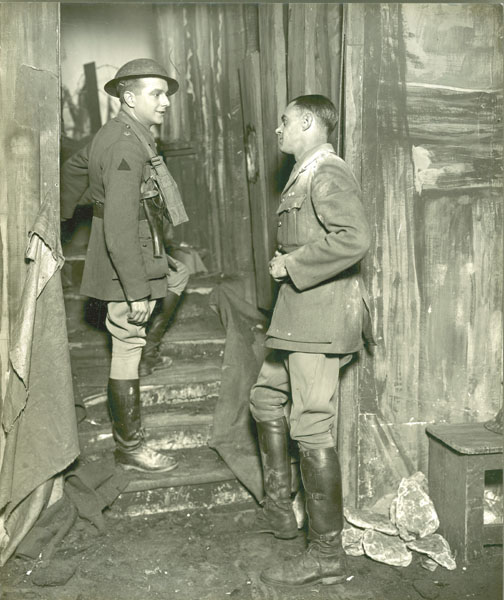
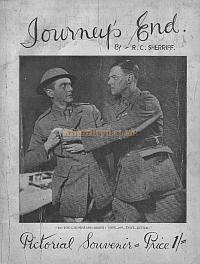
In desperation, the playwright sent a copy of Journey’s End to George Bernard Shaw, asking for his endorsement. Shaw called the play “a useful corrective to the romantic concept of war” and said that as “a ‘slice of life’—horribly abnormal life—it should be produced by all means.” Soon after, in late 1928, Sherriff secured a small London theatre for a showcase, with 21-year-old Laurence Olivier in the lead role of Captain Denis Stanhope. But by the time the play moved up to the West End the following year, Olivier was committed elsewhere.
Sherriff had noticed a young actor named Colin Clive in a variety of smaller stage roles which, in his hands, didn’t seem small at all. He thought Clive had exactly the kind of edgy, brittle intensity needed to capture Stanhope in all his anguish. He was right.
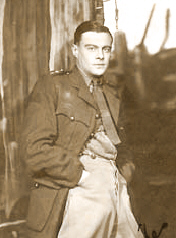

Journey’s End proved to be such a hit that in less than a year, Hollywood came calling for the film rights. Whale signed with Universal to direct the project, but the studio already had its own stable of stars and wasn’t much interested in Clive, despite his stellar stage notices. And Clive, for his part, was more than happy to stay on the London stage. But after a bit of wrangling, the determined director finally sold each side to the other, and Clive sailed for the States.
In his autobiography, Flashback, producer George Pearson recalls that Clive arrived in New York on Thanksgiving Day 1929—and had just 25 minutes to get from the dock to the train station to catch the Twentieth Century Limited to Los Angeles. He then picks up the story in Hollywood: “Colin’s entry on that set, as Stanhope, seemed, in some miraculous way, to turn make-believe into sudden stark reality. Even the stagehands stopped to look: captured, curious, puzzled.”

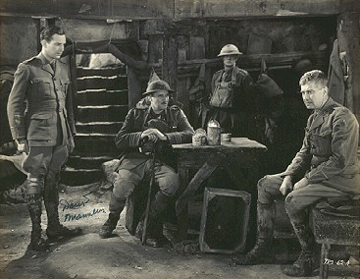
Journey’s End takes place almost entirely in a dugout in St, Quentin, France in March 1918, on the eve of what threatens to be an especially bloody battle. The war may be just months from ending, but the fighting is no less ferocious.
Sherriff often said he never set out to make an anti-war story. But he couldn’t have made a more powerful one if he’d tried. Thanks also to Whale’s sensitive, intimate direction, you feel as if you’re walled in with these men and their fears, their memories, their hopes, and their confusion and anger about why they’re in this hellhole in the first place. You flinch every time you hear a shell explode outside, as the sudden shock punctuates the joking, the drinking, the sharing of stories and photographs, the routines that keep them sane.
You worry yourself sick about the people you meet here: young 2nd Lieutenant Raleigh (David Manners), eager to make good and too new to it all, at least at first, to fully grasp the horror of what he’s been plunged into. Lieutenant Osborne (Ian McLaren), the father figure of this ill-starred family, whom everyone calls Uncle, the man you’d want by your side in a foxhole and even more so if you were forced to climb out of it. And of course Captain Stanhope, breaking under the strain and misery of battle, turning more and more to drink to get him through days that had stretched into years. Deeply ashamed, he’s terrified his men will see his fear—and how he uses liquor to dull the edges of it—and turn away from him in disgust.


How easy it would be to overplay the role of the tortured captain, to milk every ounce of pathos out of it. But Colin Clive is completely natural. There’s nothing “actor-y” about him. He is Stanhope. Everything that’s noble and flawed and terrified and brave about the man is completely laid bare, without technique or artifice. He’s so open, so real, that you feel like you’re intruding on his private misery. Like you’re peering at him through a keyhole or a cracked-open door.
In one scene, when he crumples to the floor in grief, I was actually scared he’d hurt himself. Because it was a real fall. He doesn’t fling himself down dramatically; he collapses under the weight of his pain. And he sobs the way real people do, not the way movie people do.
Later on, when Raleigh is carried in, grievously wounded, he tenderly cradles his head as he eases him onto a cot. As Raleigh turns toward him, desperate for some sign of hope or encouragement, Stanhope’s face softens from dread to reassurance. Soon after, it floods with anguish and sheer disgust at the sickening waste of it all. As the film closes, he climbs the steps of the dugout to face his worst fear, and the fragile, makeshift hut—now under mortar fire—collapses behind him.
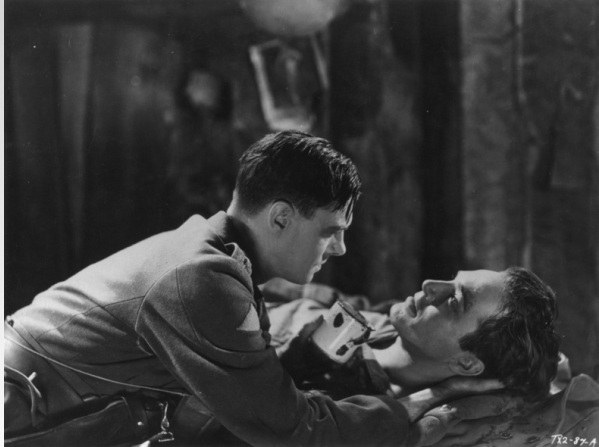
When shooting wrapped on Journey’s End shortly after Christmas 1929, Clive sailed home to England to resume his stage career, little realizing he’d soon be called back to take on the part he’s most famous for: the title role in Whale’s Frankenstein.
Though they share a star and a director, the two films could not be further apart. In fact, there’s a scene in Journey’s End that’s almost the mirror opposite of the famous soliloquy in Frankenstein, when Henry asks, “Have you never wanted to look beyond the clouds and the stars, or to know what causes the trees to bud, or what changes the darkness into light…”
Stanhope is talking to Osborne about how imagination can be a curse, and how he envies the lack of it in the camp’s cook, Mason: “I suppose if Mason were to look up at that sky at night, he’d just see the stars. He wouldn’t see the space beyond the stars that makes you sick and giddy and want to cling on to something…”
Clive beautifully captures a dreamer’s hope in one scene, and a soldier’s terror in the other. He made only 18 films, but that slender volume of work was enough to prove he could do just about anything.
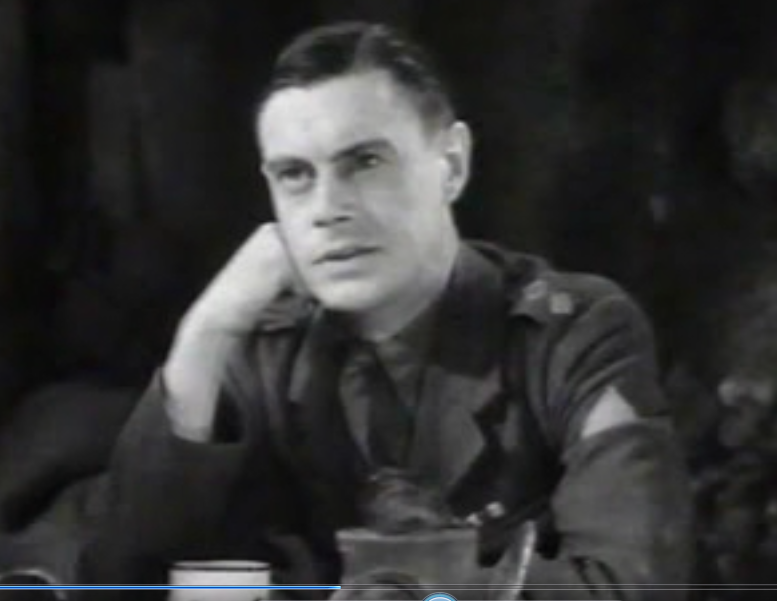

As for Whale and Sherriff, they’d team up twice more—for One More River (also with Clive, as a villainous husband) and for the ill-fated film version of Erich Maria Remarque’s anti-war novel The Road Back, which Universal cravenly cut to ribbons to appease the Nazi regime, thereby retaining access to the German film market (that whole sordid story is here).
But Journey’s End remains their deeply personal masterpiece.
STREAMING SATURDAYS is a regular feature on Sister Celluloid, bringing you free, fabulous films! You can catch up on movies you may have missed by clicking here! And why not bookmark the page to make sure you never miss another?
And for more on the life and work of the undersung James Whale, turn to James Curtis’s terrific biography, James Whale: A New World of Gods and Monsters.
STREAMING SATURDAYS! Leslie Howard and Humphrey Bogart Lighten Up in STAND IN
Welcome to another edition of Streaming Saturdays, where we embed free, fun films for you to watch right here!
This week: from 1937, Tay Garnett’s Stand In, starring Leslie Howard, Joan Blondell and Humphrey Bogart.
Just a year earlier, Bogart and Howard had squared off in the Arizona desert, as the vicious outlaw and doomed drifter in the film version of Robert Sherwood’s The Petrified Forest. Though both originated their roles on Broadway, only Howard was sought after for the screen, as Warner Bros. had its pick of high-profile tough guys for the plum role of Duke Mantee. Furious, Howard issued an ultimatum via telegram to Jack Warner: “Insist Bogart play Mantee. No Bogart, no deal.” Bogart remained forever grateful to him for giving him his big break, and years later, he named his daughter in memory of him.


Stand In gave the two stars a chance to lighten up considerably—in a stiletto-sharp farce that skewers the queasy relationship between the dream factories out West and the money men back East. During the Great Depression, Wall Street had pounced on a number of cash-strapped studios, eager to scoop up their assets for a song. In our film, accountant Atterbury Dodd (Howard) heads to Hollywood to seize the reins of his bank’s newest property, the foundering Colossal Pictures.


But the owlish Dodd’s biggest asset turns out to be Lester Plum (Blondell), a former child star working as a stand-in for Colossal’s fading diva, Thelma Cheri (Marla Shelton). Lester’s studio smarts land her a job as his secretary—and she quickly falls for her hapless boss.
Meanwhile, in a scheme to drive the studio to bankruptcy and help another mogul pick up the pieces, an eccentric director (Alan Mowbray) is conspiring with a predatory press agent (Jack Carson) to run up the costs on Cheri’s latest lurid blockbuster, Sex and Satan, which is being produced by one of the few sane people on the lot (Bogart, accompanied everywhere by his little black Scottie—who’s never explained, which would have ruined it).


Out of breath yet? We’re just getting started. And Garnett—who got his start with Hal Roach and Mack Sennett—never slows up for a second.
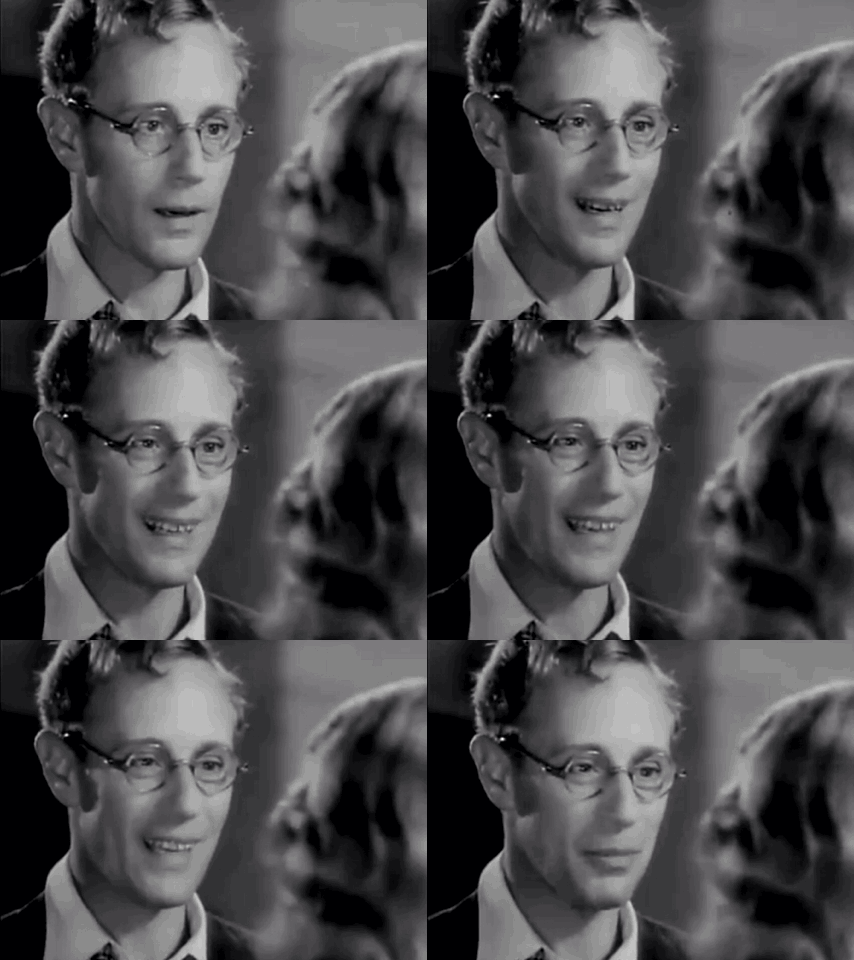
This is a true screwball sleeper that deserves more attention and leaves me wishing Howard and Bogart had teamed up more often—or at least that each had been given more than just an occasional shot at comedy. Enjoy!
STREAMING SATURDAYS is a regular feature on Sister Celluloid, bringing you free, fabulous films! You can catch up on movies you may have missed by clicking here! And why not bookmark the page to make sure you never miss another?
STREAMING SATURDAYS! James Mason Makes an Adorable Screen Debut in LATE EXTRA
Welcome to another edition of Streaming Saturdays, where we embed free, fun films for you to watch right here!
This week we bring you a gaspingly young James Mason in his very first film: a fast-paced British murder mystery from 1935, Albert Parker’s Late Extra.
After several seasons under Tyrone Guthrie at the Old Vic, Mason almost made his film debut the previous year, as Rodrigo in The Private Life of Don Juan—but Alexander Korda sacked him three days into filming. “They had decided that I was miscast,” Mason mused in his memoir, Before I Forget. “I recognized in this case ‘miscast’ was a euphemism for ‘lousy.'”


And at first, his turn in Late Extra threatened to be just as awkward: “As a beginner in this class of work, I was inclined, when making an exit, just to drop out of the side of the frame as if tugged. Al drew attention to the fact that when a person leaves a room he invariably looks where he is going. So on such occasion he would drive this lesson home by repeating, like a military command, ‘Look… Turn… Go!'”
Mason plays Jim Martin, a cub reporter for the London Gazette, who’s assigned to what looks like a routine stolen-car case—but which quickly escalates to bank robbery and murder. Meanwhile his girlfriend, columnist Janet Graham (Virginia Cherrill, best known as the blind flower seller in City Lights), is eager to break out of the paper’s pink ghetto of gossip and girl talk—and jumps into the case on her own.


Mixing it up from the sidelines is the colorful MacPherson, played by Alastair Sim with hair. This was the 30-year-old’s first year in film, following his tenure as an elocution teacher at Edinburgh University. But casting the King’s English aside, he really lets his burr fly here—and it’s glorious. (Also keep an eye out for Michael Wilding, barely out of his teens, as a telephone operator.)
Late Extra was a “quota quickie”—a low-budget film churned out fast to satisfy the Cinematograph Films Act of 1927, which required British movie houses to show a certain percentage of domestically produced films, with largely British casts. Though sometimes dismissed as trivial, many featured variety, music hall or other popular entertainment that otherwise would never have been captured on film, while others gave young theatre actors like Mason their first crack at the movies. And that alone would be enough to earn them a special place in my heart.
This is not as good a print as I usually post, but it’s the best I could find. And I think it’s worth giving a go anyway! I hope you enjoy it.
STREAMING SATURDAYS is a regular feature on Sister Celluloid, bringing you free, fabulous films! You can catch up on movies you may have missed by clicking here! And why not bookmark the page to make sure you never miss another?
STREAMING SATURDAYS! Fairy Tales Can Come True for THE YOUNG IN HEART
Welcome to another edition of Streaming Saturdays, where we embed free, fun films for you to watch right here!
These days, the last thing you might want to see on your screen is another family of grifters. But fear not: these folks are smart, funny, charming and have nothing to do with Russia. And deep down—okay way deep down—they’re decent.
We first meet the Carletons in Monte Carlo (“Coney Island with a monocle”), where son Richard (Douglas Fairbanks, Jr.) is trying to snooker a dumpy American heiress, pulling snippets of classic poetry out of his pocket and passing it off as his own. His sister George-Anne (Janet Gaynor) is throwing over her beloved Duncan (Richard Carlson), an adorable Scotsman, after learning—by way of a comically modest engagement ring—that he’s broke. Their father “Sahib” (Roland Young, one of my movie husbands) is fleecing a few suckers at cards. And in the midst of all this, Marmy (Billie Burke at her Billie Burke-est) is bragging about her brood (“‘Sahib’ is Indian for genteel!”).
But alas, before long, they’re literally run out of town on a rail. After one of their scams blows up, a local gendarme presses train tickets into their greasy palms and tells them not to darken his sunny shores again.


Convinced she’s not as shallow as she seems, the persistent Duncan high-tails it onto the train after George-Anne, and as she pulls away from him, she literally falls into the car of Miss Fortune, a lonely—and wealthy—old woman (Minnie Dupree, who’s kind of an elderly Marian Marsh). Even before she can catch her breath, she’s spinning a sob story. When Miss Fortune says she seems troubled, she sputters, “Yes, it’s my mother… she needs to have an operation…”
Later that night, when the train derails, Richard and George-Anne pull Miss Fortune from the wreckage, saving her life—and giving us a glimpse of who they really are. Richard tenderly rests the old woman on a soft patch of grass, and George-Anne swaddles her in her last luxe possession, her fur coat. Grateful and eager for company, she invites the family to share her mansion. They leap at the chance—but George-Anne reminds them that simply lolling around the fabulous old house would give the game away: “All we have to do is keep being what she thinks we are: decent, honest, sober and hard-working.” Yikes.


Richard and Sahib reluctantly trundle out in search of jobs—only to discover they enjoy them. Richard falls in love with his boss (Paulette Goddard) at an engineering firm, and Sahib finally puts his charm to semi-honest use selling the futuristic Flying Wombat, “the car that thinks for you.” Meanwhile, all of them have fallen in love with Miss Fortune. And none of them could be more ashamed of their newfound morality.
That’s all I’ll tell you, except to add that this was Carlson’s first credited role and Gaynor’s last before retiring at the height of her fame (she returned just once, decades later, for Bernadine).
The film also looks and sounds gorgeous, earning Franz Waxman his first Oscar nods, for Scoring and Original Score (which were separate categories back then), and cinematographer Leon Shamroy one of his 18 nominations (tying him with Charles Lane for the record in that category). The legendary William Cameron Menzies, fresh off a little number called Gone with the Wind, was the production designer.


Oh, and the Flying Wombat, which cost $24,000 to build, was played by the stunning 1938 Phantom Corsair, a six-passenger coupe designed by Rust Heinz of ketchup-family fame. He planned to put it into limited production priced at roughly $12,000, but was killed in a road accident in July 1939, and no one followed through on his dream.
STREAMING SATURDAYS is a regular feature on Sister Celluloid, bringing you free, fabulous films! You can catch up on movies you may have missed by clicking here! And why not bookmark the page to make sure you never miss another?
Remembering Buster Keaton, with Love and Gratitude
Sharing again in honor of Buster’s birthday…thank you, Buster, for just about saving my life.

Squonk. Squonk. Squonk. The walk to school from my house was five blocks long, and my crepe-soled shoes squeaked more slowly with each passing street. Squonk. Squonk. Stop. Squonk. Stop again. Root around in my bookbag. Maybe I forgot something. Maybe I should go home.
When I was in the third grade, I developed a duodenal ulcer. Not a typical ailment for an 8-year-old, but then my home life wasn’t typical. And all the fear and misery literally ate away at me.
I would miss days, sometimes weeks of school at a time, from sheer pain or from being queasy and dizzy and off-balance, the side effects of my big orange pills. Returning to the classroom, I was always terrified of not being able to catch up, of being made fun of and even left back. I’d slink into my seat, unbundle my pencils and books, and rifle through my reader to find the…
View original post 550 more words
TINTYPE TUESDAY: Hollywood Knits!
Not long ago, while nursing an ankle I managed to break in three places during one fall down the stairs, I took up knitting. This was my first effort:

“Oh, my,” you may be thinking. “What a lovely… um, collar… thing?”
It was supposed to be a scarf. I still don’t know how it got that way. I only know that once it started wrapping itself around my thigh, I thought it wise to stop before it either cut off the circulation or had to buy me dinner. (Happy ending, though! In a rare non-judgmental moment, the cat decided he loved it.)
If only one of Hollywood’s classic stars had been there to rescue me. Because those babes knitted like fiends.


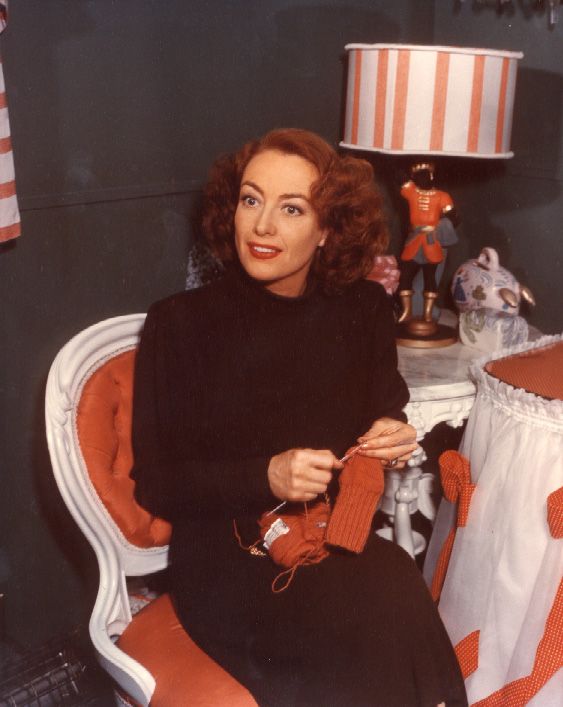
Joan Crawford was so adept she could wield her knitting needles as weapons. As George Cukor was shooting Norma Shearer’s close-ups for the dramatic dressing-room scene in The Women, Crawford was running lines with her off-camera. And clacking away on an enormous afghan throw. When Shearer asked the director to “kindly tell Miss Crawford her knitting needles are distracting,” he asked her to cut it out and apologize—but she only half-complied. Setting aside her mountains of yarn, she quipped, “I’ll send her a telegram.”


But usually it was nerves that got her needles going. In 1949, a reporter for Motion Picture magazine noted that, during his visit to her home, Crawford “knitted furiously and distractedly”: “Because she was knitting, her left foot did not jiggle—an old nervous reflex—a carry-over from the shyness with strangers she has never quite overcome. Later, when she stopped her work, it would. Her hands, also subject to small nervous mannerisms, she controls by three simple expedients: the knitting, folding them under her arms, or sitting on them.”


“I took my knitting along to the set so I could keep my hands busy,” Crawford once recalled, “because I was so nervous.” She said while filming What Ever Happened to Baby Jane? with Bette Davis, she “knitted a scarf that stretched clear to Malibu.”
Though if knitting relaxed her, it was sometimes hard to tell.
Bette was no slouch with a needle either.


Sometimes one knitting Bette wasn’t enough: Here she is with Audrey Scott, her double on Now, Voyager.
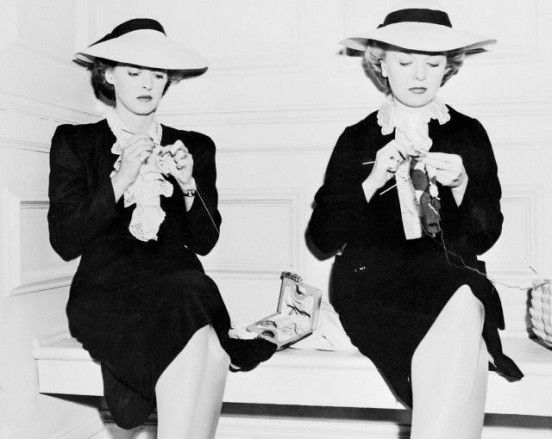
Davis even got to show off her needle skills in that film, as well as others like The Letter and Phone Call from a Stranger.


She and other actresses also knitted up a storm for the troops during World War II, as Mary Pickford had during the Great War.


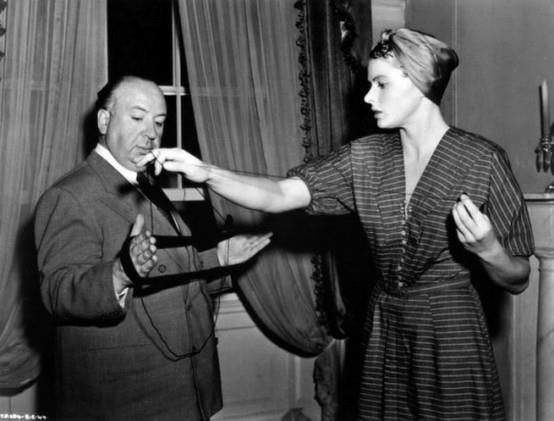
Ingrid Bergman was another star who carried her knitting basket everywhere from her earliest days in Hollywood—and didn’t stop for primping.


Here she is using Hitchcock as a human yarn rack…
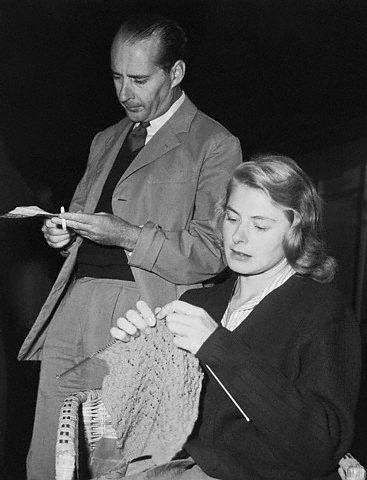
…and calmly purling away while working on her last film with husband Roberto Rossellini—in the midst of their divorce.
Meanwhile, from the looks of that yarn bowl, Greer Garson enjoyed knitting two-bedroom apartments.


Those pesky costumes didn’t slow these ladies down…


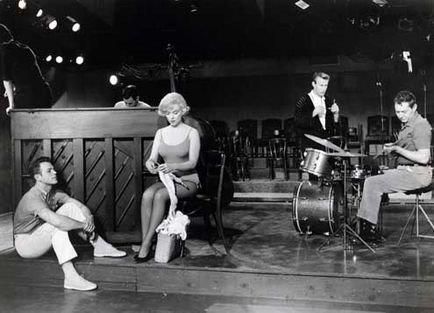
…nor did nosy leading men.


Some co-stars clacked away together between takes…


…or took a few tips from the pros.


Judy was in a class of her own, though, knitting while performing.
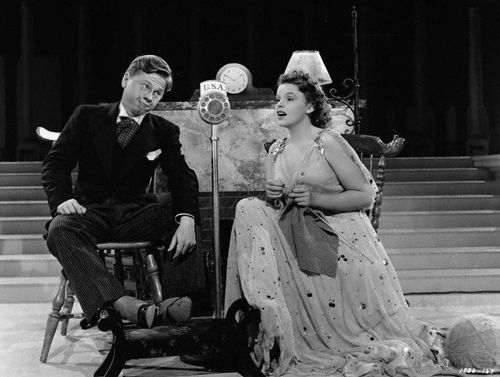
Here’s to all the Hollywood ladies who wove fabulous yarns off the screen as well as on!


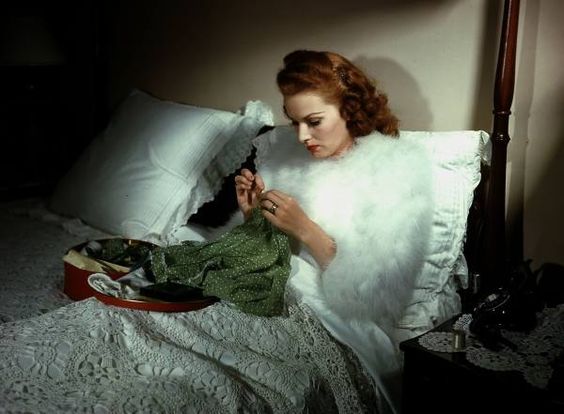
TINTYPE TUESDAY is a regular feature on Sister Celluloid, with fabulous classic movie pix (and often a bit of backstory!) to help you make it to Hump Day! For previous editions, just click here—and why not bookmark the page, to make sure you never miss one?
STREAMING SATURDAYS! Film Noir Meets the French Revolution in THE BLACK BOOK
Welcome to another edition of Streaming Saturdays, where we embed free, fun movies for you to watch right here!
“We’ll always have Paris.”
In this case, the Paris of powdered wigs and guillotines. The Black Book (also called Reign of Terror) may be the only film noir set during the French Revolution—and if that sounds odd, it’s no more peculiar than the film’s origins.

“In 1949, [they] had just made Joan of Arc with Ingrid Bergman, which was not very successful,” explained co-star Norman Lloyd (then a mere slip of a boy at 100) when he introduced the film at the 2015 TCM Classic Film Festival. “But the lavish sets for the picture remained. [They] kept staring at those expensive sets, grumbling, and proposed to art director William Cameron Menzies that they make use of them.
“[It was essentially] ‘Here is all this pricey wood and canvas—let’s make some money on it! Let’s find a script!’ So this may have been the first set-driven movie,” Lloyd laughed. “So if any of you have ideas about crashing into motion pictures, build a good set! And if they ask me my inspiration working on the film, I’d say, ‘They used the most beautiful wood I’ve ever seen!


“But we [also] had Menzies, a spectacular cinematographer in John Alton, and Anthony Mann directing,”he added, “so we were good.”
Alton’s stark interplay of shadow and light and canted camera angles would easily suit the dark, rain-slicked streets of 1940s Los Angeles, but somehow work just as well in 18th-century France, where the villainous Robespierre (Richard Basehart) seeks to retrieve his “black book,” a long list of political enemies he hopes to send to the chopping block. Enter Charles D’Aubigny (Robert Cummings), a French spy who, with the help of his former lover Madelon (Arlene Dahl in lusty-wench-wear), goes undercover to seize the book and bring the bloody reign of terror to an end.


Alton, Menzies (who also co-produced) and Mann are pretty much a Murderer’s Row of moodiness, and their gifts are on full display here.
“They didn’t have all the money in the world that Metro had for sets and so on,” Dahl told author James Curtis in his superb book, William Cameron Menzies: The Shape of Films to Come. “But they had Menzies, who could take two walls and make it look like a great ballroom by hanging a chandelier just right, and John by getting the camera angle just right, they could make twelve people look like millions of people. And also because of the design of the sets, they could make it look lavish because of the camera angles and the way the set had been designed. I mean, it really looked like a much bigger picture than it was.”


Add to that Mann’s legendary visual sense, and you have a nifty little film worth watching.
STREAMING SATURDAYS is a regular feature on Sister Celluloid, bringing you free, fabulous films and a bit of backstory besides! You can catch up on movies you may have missed by clicking here! And why not bookmark that page to make sure you never miss another?
STREAMING SATURDAYS! Linda Darnell and Dana Andrews Steam Up the Screen in FALLEN ANGEL
After a long hiatus, the Sister Celluloid website is back on a semi-regular basis, which I hope will be even steadier soon. That includes the return of our Streaming Saturdays feature, where we embed free, fabulous films! So fasten your seatbelts, we’re starting with a doozy…
If you ever run into Alice Faye, for God’s sake don’t mention Fallen Angel. What she thought would be her big dramatic breakthrough turned into a minor breakdown—and pretty much the end of her movie career.


By the mid-1940s, Faye was one of 20th Century Fox’s most bankable leading ladies, thanks to a series of wildly popular musicals—exactly the kind of cotton-candy confection she was now hoping to escape. Lucky for her—or so she thought—Otto Preminger was starting a new film right on the heels of the legendary Laura. Faye pounced on the project, and, hoping she could step in where Gene Tierney left off, wielded her studio clout to land Dana Andrews as her co-star.
But, as it has a way of doing in the world of noir, fate stepped in. And in this case it looked a lot like Linda Darnell.


The shy 22-year-old stunner had already made 18 films, thanks in part to a brutal stage mother who all but frog-marched her onto the Fox lot when she was just 16. Eager to move beyond ingenue roles, she’d just played her first genuine bad girl in Douglas Sirk’s Summer Storm, an adaptation of Chekov’s The Shooting Party. Like Faye, Darnell leapt at the chance to work on a dark new drama.
In fact just about the only one who wasn’t excited about Fallen Angel was Preminger. Salivating over the success of Laura—and honoring the studio creed that nothing succeeds like doing the same thing over and over—Fox chief Darryl F. Zanuck rushed the director into production on another moody mystery. Grudgingly, Preminger reassembled most of his Laura crew, including cinematographer Joseph LaShelle, and reported to work.


In a gritty departure from the elegantly angst-ridden detective in Laura, Andrews plays Eric Stanton, a luckless drifter who’s stranded in a backwater berg after he’s thrown off the bus to San Francisco because he can’t scrounge up the two-buck fare. In a greasy little dive called Pop’s Eats (where, in giant letters, the word BEER bedecks both sides of the front door), he runs up against the sullen, sultry Stella (Darnell), who’s long on dreams and short on plans or patience.
The two quickly fall in love, but Stella comes with a pricetag: she wants money and a home, and Eric has neither, in spades. So he takes up with a traveling con man, Professor Madley (John Carradine), and goes in search of a mark. That’s where June Mills (Faye), who’s inherited a house and a tidy fortune from her father, comes in.


Originally, the film was to focus on Eric and June, and how the love of a good woman saves him from a life of sin <sniffle>. Then Preminger got a gander at the rushes of Darnell and Andrews—and suddenly sin didn’t look like something any man in his right mind would want to be saved from. Either of the two stars alone could generate chemistry with a potted plant, and together, they made everything and everyone else disappear. Including poor Alice Faye.
By the time the director put down his scissors, many of Faye’s best scenes were on the scrap heap and the ill-fated love affair between Eric and Stella had smoldered its way to center stage.


When Faye saw a rough cut of the film, she was so angry she bolted from the screening room and drove off the lot, tossing her dressing-room key to a security guard as she flew past the gate. She returned only once, 17 years later, to play the mother in the plodding remake of State Fair. (Ironically, she’d turned down the much more glamorous role of chanteuse Emily Edwards, eventually played by Vivian Blaine, in the 1945 version, which starred—wait for it—Dana Andrews.)
Little did she know, Darnell wasn’t having much fun either; she later recalled that Preminger was “terrifying” to work with. And by the 1950s, her career was largely over as well. (Much more on her desperately sad life, and tragic death at 41, here.) But she would team once more with Andrews, in the unintentionally hilarious Zero Hour, which was the basis for Airplane!.
RECIPES: Cleopatra Made Caramel Custard? You Bet Your Asp She Did!
Looking for a sweet ending to summer? How about cooking up some caramel custard with Claudette Colbert? Unlike many “recipes of the stars” that were churned out by studio flacks, this one actually does come from Claudette. She really did whip up things like this sugar-and-fat extravaganza and still look fabulous. She was French, people!
And she looked great well into her 80s.


Back in 1985, Claudette starred on Broadway with Rex Harrison in Aren’t We All, a bonbon of a play by Frederic Lonsdale. I remember nothing of the plot but everything about the star’s arrival at the Brooks Atkinson Theatre. As I stood waiting on West 47th Street, she breezed out of a taxi in a pink-and-white-checked bouclé suit, likely Chanel. Such was her power that those who had gathered instinctively parted to let her sweep by, and suddenly she was Cleopatra gliding down the Nile again. She smiled, nodded, gave a little queenly wave, and disappeared inside.


She did not look like a lady who’d spent eight decades scarfing down decadent desserts. Still, her custard sounds pretty delish. So here goes:
Ingredients:
3 cups of half-and-half
1/2 cup of sugar
1/4 cup boiling water
3 eggs, slightly beaten
1/4 teaspoon of salt
1/2 teaspoon vanilla
Scald the half-and-half. Melt the sugar in a cast iron frying pan and stir constantly until it’s light brown. Add the boiling water and stir until the sugar is dissolved. Now add the half-and-half. Pour the hot mixture over the eggs, fold very gently, and place in the top of a double boiler. Cook over hot (not boiling) water until the mixture coats the spoon, stirring constantly. Add the salt and vanilla. Chill and serve ice cold in small glass dishes. Maybe some nice pink depression glass!
Enjoy! And then summon the spirit of Claudette to keep those pesky pounds at bay. (I hear milk baths help.)

Happy 90th Birthday, Ann Blyth!
The glorious Ann Blyth turned 90 today, conjuring up visions of her in stunning silk, leaning over her cake without putting a hair out of place, and blowing out every candle flawlessly—that is, if my memories of her at the the 2013 TCM Film Festival provide any clue. On opening night—an especially sultry one even for Hollywood—she strolled the red carpet in a mauve shantung gown, following just behind Jane Withers, who’d mentioned in passing that it was her birthday. Watching it all from the bleachers, I led everyone in a rousing chorus of Happy Birthday, which actually made her burst into tears.


Then the divine Miss Blyth stepped to the mike and said she wished it were her birthday too—hint, hint!—so of course we let loose with another verse, and she raised her hands in applause.


I had a chance to sit with her for a bit at the opening night party, and she talked mostly about Joan Crawford. I told her I was grateful she always defended her legacy, in light of the lurid tales people were spreading. And she took my hand in both of hers, looked hard into my eyes, and said, “One person.” (Run, Christina, run!) She struck me as someone who would upend mountains for you if you were her friend, but if you were her enemy, you’d best move to some remote region of South America…
I asked her if she had any favorites among her own movies, though I said that might be like picking a favorite child. She said she loved working on Mildred Pierce, and also Kismet, which was like spending time in a fantasy land. She tilted her head, her face softened, and in that moment, she looked just as she did when she was back in Baghdad with Howard Keel.


Later that weekend, she introduced the screening of Mildred Pierce at the Egyptian Theatre. Clad in coral from head to high-heeled toe, she was very impish with Robert Osborne, who clearly adored her. When he pressed her to name her favorite leading man, she turned to the audience with mock indignation, and then, with a sort of “just between us girls” look, said, “I have to pick just one? Why can’t I have them all?”


Once again she spoke lovingly of Crawford. And when asked if she was still in touch with any of the old crowd, she said she had regular girlfriend lunches with Joan Leslie. Which totally fed into my fantasy that old-movie folks basically spent their entire post-film lives hanging out at each other’s houses having barbecues and sleepovers.


Thank you, Miss Blyth, for all your wonderful work, for fiercely protecting the films and colleagues you love, and for the memories of that fabulous weekend. Wishing you a deliriously happy 90th Birthday, and many more.
 Sister Celluloid
Recent Comments