TINTYPE TUESDAY: HOLLYWOOD CELEBRATES THE HOLIDAYS Hits the Bookshelves!
Welcome to another edition of TINTYPE TUESDAY!
Still searching for that last-minute gift for a classic movie fan? Or maybe you’ve run your tootsies ragged and you deserve a little something yourself? Look no further than the gorgeous new book, Hollywood Celebrates the Holidays: 1920-1970!

Lovingly written and researched by film historians Karie Bible and Mary Mallory, this hardcover passport to classic movie heaven takes you through every holiday from New Year’s Day through Christmas, as only Old Hollywood could. These fabulous photos span the spectrum from naughty to nice, from high glamour to wholesome, and from holy to hilarious.


Take, for instance, the Christmas chapter. Tucked among the more heartwarming pix are W.C. Fields as Old Saint Nick, surrounded by much leggier elves than any I remember, and Peter Lorre sneaking up on a Santa-clad Sidney Greenstreet with a baseball bat. Oh and don’t look now, but Joan Crawford is perched on the chimney with a shotgun—and she doesn’t look happy. But Carole Lombard does, in one of many lovely shots beautifully reproduced in this volume. Suddenly your holiday won’t seem complete until you have a glow just like that…

Mallory and Bible, both lifelong old-movie addicts, happily plundered their own photo treasures, and then scoured auction sites, paper shows, and film archives such as the famed Margaret Herrick Library in Los Angeles, where you just want to hide out until closing time and wander the stacks all night long. “We were also very fortunate to have the support of some really great collectors who generously opened their vaults to us,” said Bible, who was born on Halloween, which is lavishly represented in the glossy pages of the book.


Amidst all the major holidays (and some minor ones) is a chapter on Hollywood’s all-out effort to rally the nation and sell bonds during World War II, featuring some of the same imagery you’ll find in the section devoted to Independence Day. And yes, that’s Mae West as Lady Liberty (Libertine?).


Then there are the “What were they thinking?” photos, like the one of Charlie McCarthy’s head superimposed on an actual toddler’s body, with butterfly wings attached because, hey, why not? “When I first saw it, I said ‘Wow! This is so wrong, we must include it!'” Bible laughed. If Cupid actually looked like this, we’d all be begging for the sweet mercy of solitude. Much like Dorothy Hart, who’d really like to shake the pervy bunny peering over her shoulder. “I wondered why in the world the studio would employ a life-size man in an Easter photo, especially one that objectifies her on so many levels,” mused Mallory. “How did the Production Code even approve it?”


Many of the photo captions feature the original verso text that was typed on the back by the studio publicists. (Because—duh!—these pix were, of course, promotional tools!) Ironically, the leering Easter bunny was touting one of the most innocent films ever made: “The rabbit’s visit to Hollywood served a dual purpose, as he was doing a bit of technical advising on Harvey, which will star Jimmy Stewart with an invisible rabbit.”


As of today, this fabulous book was available at some online booksellers, including Barnes & Noble, but out of stock at others, such Amazon. If you have trouble tracking it down, you can order it directly from the publisher. And really, if you’re buying it as a gift, pick one up for yourself too. Because once you peruse its pages, it’ll be awfully hard to part with!
Full disclosure: While Mary and I know each other only online, I’m lucky enough to call Karie a friend. But I bought my own book; friends don’t let friends give them free review copies! This was a labor of love for these two, who poured in tons of research hours and their own money, buying up photos and paying for publishing rights. I know there are lots of classic film writers and bloggers who scarf down every freebie in sight, but after all the time and expense the authors put into this, I would’ve felt like a heel mooching a free copy. So when I suggest you buy this book, rest assured that I bought it too!
TINTYPE TUESDAY is a weekly feature on Sister Celluloid, with fabulous classic movie pix (and usually some backstory!) to help you make it to Hump Day! For previous editions, just click here—and why not bookmark the page, to make sure you never miss a week?
STREAMING SATURDAY!! The Best Classic Christmas Movie You May Never Have Heard of: THE CHEATERS
Welcome to another edition of Streaming Saturdays, where we embed a free, fun movie for you to watch right here every week!
Okay, my dears! Gather round the Yule log for The Cheaters, the heartwarming tale of a high-society family that exploits a homeless man at Christmastime while trying to cheat a starving actress out of her inheritance!
Okay maybe it’s not heartwarming right away… but it gets there. Oh and did I mention it’s a screwball comedy?
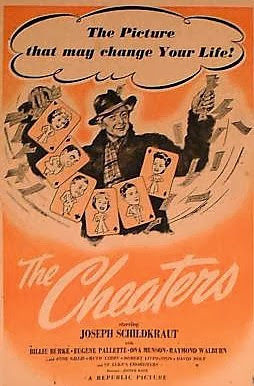 The clan’s matriarch and patriarch are played by Billie Burke and Eugene Pallette, because that was the law. (Though sometimes Walter Connolly or Edward Arnold stepped as head of the haughty household.) House-rich and cash-poor, the family hatches a scheme to shore up its shaky social standing by taking in a down-and-out actor who’d recently attempted suicide (Joseph Schildkraut)—and making sure anyone within a mile of a printing press knows about it.


Meanwhile, they discover their last hope of regaining their fortune—inheriting from a rich uncle—has all but vanished, as he left his estate to a struggling actress (Ona Munson, who brings some of the same jaded good-heartedness to this role that she brought to Belle Watling in Gone With the Wind).


Maybe if a major studio had made The Cheaters, it would have become one of those movies that turns up every Christmas in the classic-film lineup. But it was churned out by Republic Pictures, more famous for its low-budget Westerns and adventure serials (as well as the occasional gem, such as The Quiet Man) than screwballs. It didn’t help matters that—shades of Miracle on 34th Street—the studio released the film in July.


The story was originally bought in 1941 by Paramount, which planned to re-team Carole Lombard and John Barrymore seven years after their smash, Twentieth Century. It would have been sort of a mash-up of two of their most famous roles—Lombard reviving her My Man Godfrey turn as the wacky socialite who brings home a “lost man,” and Barrymore reprising his Dinner at Eight role as a washed-up actor. But when both actors died within months of each other the following year, Paramount’s heart went out of project, and the studio sold the story to Republic. Which actually did a crackerjack job with it, for all the good it did anybody.
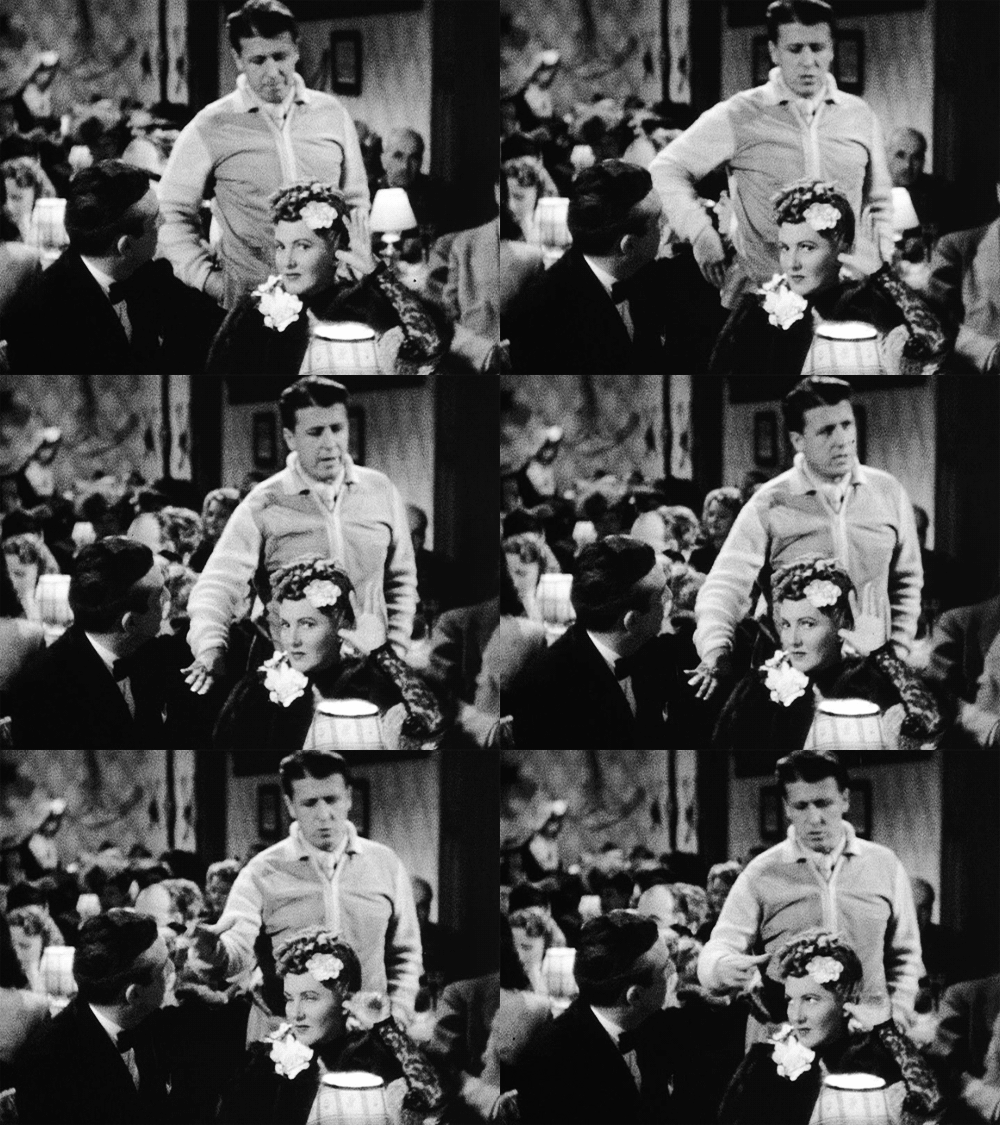
It’s now in the public domain, and this was the best copy I could find; try to ignore the little “bug” in the upper left-hand corner. It’s worth it. And may all your holidays be happy, healthy, and grifter-free!
STREAMING SATURDAYS is a regular feature on Sister Celluloid, bringing you a free, fabulous film every weekend! You can catch up on movies you may have missed by clicking here! And why not bookmark the page to make sure you never miss another?
Joel McCrea and Jean Arthur “Stoop” to Conquer in THE MORE THE MERRIER
In Sullivan’s Travels, Preston Sturges made a convincing case that comedy is often the best balm for tragedy. But for his friend and colleague George Stevens, the horrors of World War II left him with little capacity for comedy when he returned home from the front lines.


From 1943 to 1946, Stevens covered the war in Europe for the Army Signal Corps—and insisted on shooting the worst of it himself rather than delegating the more gruesome or dangerous jobs to the men in his unit. He captured the only Allied color footage of D-Day, and also filmed the liberation of Paris, the Elbe River meeting of U.S. and Soviet forces, and the nightmarish conditions at the Duben and Dachau concentration camps, which served as evidence at the Nuremberg trials. The Library of Congress deemed his work “an essential visual record” of the war.


Because he was fundamentally changed by the horrors he’d borne witness to, there’s a bright line between Stevens’ pre-war films and those he made when he came home, which were more somber and in some cases deeply personal. But his last comedy—and the last film he made before joining the Army—is one of the best anyone ever made: The More the Merrier.
Actually, the movie feels a little like Sturges, as he and Stevens shared a deep affection for the absurd, including characters who could spout total nonsense with absolute conviction, eventually wearing down all comers with their righteous refusal to cave in to anything as mundane as reality.


In this case, the prime suspect is Benjamin Dingle (Charles Coburn), a retired millionaire who comes to the capitol to advise the government on the housing shortage—and immediately becomes its next victim. His hotel has no record of his reservation, so he takes to the streets in search of that rarest of all species, a Room for Rent.
After bluffing (okay, lying) his way past all the other hopefuls, Dingle presents himself to the highly resistant, somewhat starchy Constance Milligan (Jean Arthur) as the perfect tenant to share her flat. And the battle is on, though the winner is clear from the outset:
Connie: I’ve made up my mind to rent to nobody but a woman.
Dingle: So, let me ask you something. Would I ever want to wear your stockings?
Connie: No…
Dingle: Well, all right. Would I ever want to borrow your girdle, or your red and yellow dancing slippers?
Connie: Of course not!
Dingle: Well, any woman, no matter who, would insist upon borrowing that dress you got on right now. You know why? Because it’s so pretty.
Connie [softening]: I made it myself.
Dingle: And how would you like it if she spilled a cocktail all over it—at a party you couldn’t go with her to because she borrowed it to go to it—in?
Connie [totally caught up in the story now]: She might have something that I could wear…
Dingle: Not her.
Connie: Why not?
Dingle: Because she’s so dumpy-looking. Never has anything clean. That’s why she’s always borrowing your dresses.
Connie: How do I know you’d be any better?
Dingle [whirling around and proudly patting his belly]: Well, look at me. I’m neat, like a pin. Ah, let me stay.
Connie [not yet realizing she’s completely defeated]: Well, look, I…
Dingle: I tell you what. We’ll try it out for a week. End of the week comes, if you’re not happy, we’ll flip a coin to see who moves out.


Almost immediately after she consents—on a trial basis, mind you—Dingle leases out half his room to Joe Carter (Joel McCrea), a foreign-service officer headed overseas—and headed to the altar with Connie, if Dingle has anything to say about it. Never mind that they haven’t even met yet. Or that Connie is engaged to an uber-respectable bureaucrat, Charles J. Pendergast (poor Richard Gaines, who, up against McCrea, seems not only overmatched but like a totally different species).
Get any two fans of this film together and they’ll launch into a scene-by-scene lovefest: the part where Connie explains her insanely regimented morning routine and Dingle asks, “Do we do all this railroad time or Eastern war time?” The break-neck breakfast scene, where his enormous pants get sling-shot out the window by their suspenders. The part where Connie and Joe are frantically racing to escape before her fiancé calls—only to be held hostage by the whiny teen who lives downstairs, whom you want to strangle. The scene where Connie and Joe, in separate rooms, are rhumba-ing in perfect rhythm to What Is This Thing Called Love, before Connie even knows he’s moved in. (I’ve lived in apartments most of my life and have stumbled across lots of surprises. None of them was Joel McCrea shimmying in a bathrobe just down the hall.)


And then there’s one of the sweetest, sexiest, funniest love scenes ever—ranking right up there with the telephone scene in It’s A Wonderful Life for spectacularly failed attempts to thwart the inevitable:
The Stoop Scene.
Joe walks Connie home, and they park on the front steps before heading inside. Almost the second they sit down, his intentions are clear, as he gently nuzzles her neck, her bare shoulder, the top of her lacy sleeve… but Connie somehow manages to prattle on frantically about the sober Mr. Pendergast, stamp collecting, and the joys of budgeting as Joe keeps his mind fixed firmly on the mission at hand (or hands).
“Take my engagement ring,” Connie blurts. “Don’t you think it’s nice—not gaudy, I mean?”
“You bet,” Joe murmurs, seizing the chance to caress and kiss her sensibly clad fingers.
And long after any mortal woman would have surrendered, she stumbles onward: “You know, with those older men like Mr. Pendergast… a girl gets to appreciate their more mature…” <Joe goes in for a full-on kiss> “…viewpoint.”
And that’s when she finally just gives up, grabs his face and kisses him back. But then, reaching back for that one last pesky shred of common sense, she pulls away. “I’d better go,” she says unconvincingly, as her knees buckle beneath her.
Oh my God. This is one of the most sizzling scenes ever filmed, and almost all of it happens above the collarbone.


Aside from being just plain fabulous, the stoop scene, as well as earlier ones of her sunning on a rooftop and dancing around the living room in a midriff top, show what a criminally underappreciated hottie Arthur was. In fact, before this film, she was feeling overlooked in general—turning down sub-par scripts at a rate that made Columbia boss Harry Cohn even crankier than he already was.
So she and her husband, producer Frank Ross, hired their friend Garson Kanin to whip up a vehicle for her. And Two’s a Crowd, co-written with Robert Russell and Ross, eventually morphed into The More the Merrier.
Stevens loved the script and, as usual, reveled in the chance to ruffle the suits in the Breen Office—skittering along the edges of Production Code propriety. The stoop scene, where you really should light a cigarette afterward, is Exhibit A. In another head-swimmingly tender scene, Joe and Connie, side by side in separate bedrooms, finally confess their love for each other—but somehow the wall between seems a bit, well, blurry. Meanwhile Dingle’s favorite word is “damn” (gasp!), but always in the context of quoting Admiral Farragut’s oath about torpedoes.


One of the Breen Office’s oddest demands was that bachelors McCrea and Coburn never be seen using the bathroom together. (No really.) Stevens found this homophobia so hilarious that during the nightclub scene, he made a point of putting several female couples on the dancefloor, which allowed him to poke fun at the wartime shortage of eligible males—another running theme in the film—and tweak the censors at the same time. (The band is also all-girl.)


As you might expect, this was a very merry film set, even though, astonishingly, McCrea felt miscast at first, telling anyone within earshot that Cary Grant could’ve carried it off better. (Ironically, poor Cary got saddled with the Dingle role in the highly missable remake, Walk Don’t Run.) He’d just belted it out of the park in two of the best screwballs ever —Sturges’s Sullivan’s Travels and The Palm Beach Story—but still didn’t feel comfortable in this trip to the plate.
Which is pretty much what made him perfect. Because the last person you want in a screwball comedy is someone who wants to make a screwball comedy. In his work with Sturges, McCrea was the relatively sane, benevolent linchpin for all the screwy goings-on around him, much as he is in The More the Merrier. And with a little help from a sensitive director and a generous leading lady, McCrea quickly loosened up and settled in on the set. To no one’s surprise but his own, he was perfect again.
Stevens, who called Arthur “one of the greatest comediennes the screen has ever seen,” had just seen her with Coburn in The Devil and Miss Jones—where she played the dreamer and he was the starchy one with all the answers. That they could flip roles so completely and still crackle with the same quirky chemistry is testament to what a great “screen couple” they were.
Arthur, Stevens, the screenwriters and the producers all snagged Oscar nods for The More The Merrier—but McCrea, who went his entire career without so much as a nomination, was overlooked as usual. Coburn went home with the Supporting Actor trophy, back in the days when the Academy occasionally rewarded comedy. This was one of several films, including Together Again and Heaven Can Wait, where he impishly played the busybody who helps clueless couples get out of their own way, which became something of a mini-specialty for him.
On the opposite coast, the New York Film Critics tapped Stevens as Best Director. Truer words, never spoken. Though his reasons were unassailable, I wish he’d never made a last comedy. But if he had to say goodbye, there could not have been a higher note to go out on than this brilliant, lovely, loopy, tender film.
TINTYPE TUESDAY: A STREETCAR NAMED DESIRE Debuts on Broadway
Welcome to another edition of TINTYPE TUESDAY!
Four years before it made its way into celluloid history, A Streetcar Named Desire opened on Broadway 68 years ago this week, on December 3, 1947. Three of the four principals—Marlon Brando, Kim Hunter and Karl Malden—followed the play to Hollywood, but Jessica Tandy lost the role of Blanche DuBois to Vivien Leigh, who earned an Oscar for her haunting portrayal of the fragile, faded Southern belle.
Tandy, whose performance was lauded by Brooks Atkinson in New York Times as “superb” and “almost incredibly true,” won a Tony for the role—sharing the award that year with Katharine Cornell for Antony and Cleopatra and Judith Anderson for Medea, the only three-way tie in Tony’s long and storied history. Tennessee Williams won the Pulitzer Prize.
Later on, Anthony Quinn and Ralph Meeker would take to the boards as the iconic Stanley, and Uta Hagen would play Blanche. Oh and during Brando’s run, Jack Palance subbed for him when he broke his nose in a pre-show sparring match with a stagehand. (“You bloody fool!” Tandy is said to have cried—which was literally true, as he held a soaked handkerchief to his face.)
By the way, Brando wasn’t producer Irene Mayer Selznick’s first choice for the role or even her second. Her top pick, John Garfield, fell out of the running when he demanded a percentage of the profits, and her back-up, Burt Lancaster, couldn’t break free of film commitments.
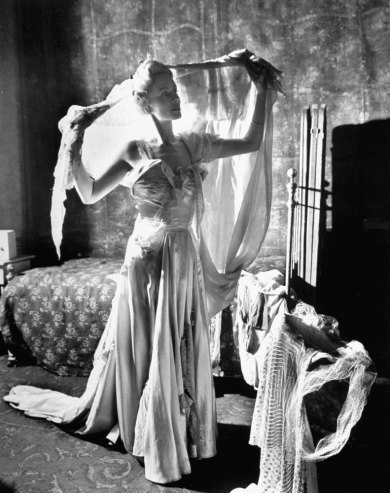
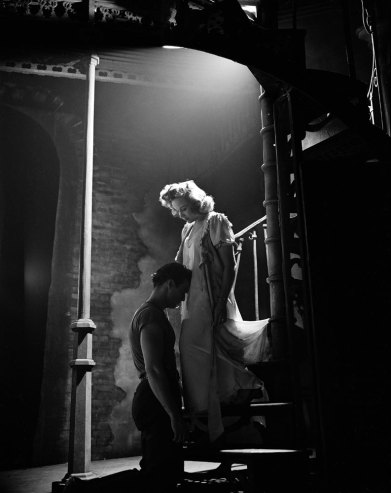
Here are a few fabulous candids from the rehearsals of the original stage production:


TINTYPE TUESDAY is a weekly feature on Sister Celluloid, with fabulous classic movie pix (and usually a bit of backstory!) to help you make it to Hump Day! For previous editions, just click here—and why not bookmark the page, to make sure you never miss a week?
STREAMING SATURDAY! Stanwyck Is a Stripper Turned Sleuth in LADY OF BURLESQUE
Welcome to another edition of Streaming Saturdays, where we embed a free, fun movie for you to watch right here every week!
Ah, Thanksgiving weekend—full of food, family and folksy fare. With that I give you… Lady of Burlesque!


This little confection was the last of five films pairing Barbara Stanwyck with one of her favorite directors, William Wellman. It was based on Gypsy Rose Lee’s novel The G-String Murders, which was ghost-written by Craig Rice, sometimes called the Dorothy Parker of detective novels—whose book sales once rivaled Agatha Christie’s. Oh and it’s probably the only film where Edith Head’s fabulous frocks and fripperies were merrily flung to the floor from the opening scene to the closing credits.
When two striptease dancers in her burlesque troupe are murdered, headliner Dixie Daisy (Stanwyck) becomes the prime suspect—so of course, she has to solve the crime just to save herself from the hoosegow. (I hate when that happens!) Helping her in the hunt are comic Biff Brannigan (Michael O’Shea) and her best pal, fellow stripper Gee Gee (Iris Adrian). While weak-link O’Shea is Dixie’s alleged love interest, the really snappy chemistry is between Stanwyck and the hilarious Adrian (who went on to enliven any number of Disney films, including The Love Bug, Freaky Friday, The Shaggy D.A., and The Apple Dumpling Gang).


At first glance, it may be hard to see what drew Stanwyck or Wellman to this little backstage bonbon. She was fresh off top-drawer fare like The Lady Eve, Meet John Doe and Ball of Fire. And he’d just done The Ox-Bow Incident, which is practically the Mount Rushmore of westerns. But that stop-and-start shoot stretched over three grueling years, and the director was ready to lighten up a little.


Stanwyck’s motives were much more personal: burlesque had been her ticket out of hell. When little Ruby Stevens was just four, her mother died of complications of a miscarriage after a drunk knocked her off a moving streetcar. Less than a month later, her father fled their Brooklyn tenement to hop a freighter and work on the Panama Canal, never to return. That left Ruby and her brother Byron shuttling between foster homes and the tender but unsteady care of their sister, Mildred, who was only five years older than Ruby.
When Mildred became a chorus girl, Ruby eagerly tagged along. And shortly before her 16th birthday, after just a couple of years playing mostly Z-list gigs, she graduated to the Ziegfeld Follies. “I just wanted to survive and eat and have a nice coat,” Stanwyck once recalled.


In 1927, at age 20, Stanwyck conquered Broadway, landing her first lead in a smash called Burlesque, which sent Hollywood producers scrambling to her stage door.
Not surprising, then, that she brings more than a touch of wistful vulnerability to the part of Dixie Daisy, which could easily have turned brittle in lesser hands.


She even does her own singing in this one, suggestively tossing off Sammy Cahn’s Take It Off the E-String, Play It on the G-String as she bumps and grinds for a raucous audience. Her voice isn’t great, but it’s perfect. And dubbing her over with someone more polished would have been like pouring milk of magnesia over bourbon. (Lady of Burlesque was actually nominated for an Oscar for its Arthur Lange score—losing to, of all things, The Song of Bernadette.)
Stanwyck’s friend Oscar Levant, who’d known her since her chorus girl days, once said, “She was always wary of sophisticates and phonies.” And she never forgot where she came from. In a fabulous bit of irony, just a year after she paid loving tribute to her hardscrabble roots in Lady of Burlesque, Stanwyck became the highest-paid woman in America.
STREAMING SATURDAYS is a regular feature on Sister Celluloid, bringing you a free, fabulous film every weekend! You can catch up on movies you may have missed by clicking here! And why not bookmark the page to make sure you never miss another?
TINTYPE TUESDAY: The Cuddly Side of Boris Karloff
Welcome to another edition of TINTYPE TUESDAY, bringing you wonderful movie photos every week!
Shooting the terrifying lake scene in Frankenstein was going to be emotionally fraught enough. But before filming even began, director James Whale faced another problem: Boris Karloff’s makeup required hours to apply, so he needed to be fully “monsterized” by the time the cast and crew drove out to the remote location. Meaning that seven-year-old Marilyn Harris, who played the doomed Maria, would be introduced to her co-star while he was in full green warpaint—lug nuts, stitches and all. How would she react? Would she be too terrified to work that day, or at all?
As it turned out, the sensitive child was a bit kerfuffled: she developed a mad crush on him instantly. Reaching out to him, she asked, “May I ride with you?” And gallantly he replied, “Would you, darling?


“Boris Karloff was a very sweet, wonderful man, and I just loved him,” she recalled. “Immediately from being on the lot and taking his hand, I had no fear of him whatsoever. We seemed to have a rapport together, and it was like magic.”
Clearly she sensed that beneath the fright mask was a gentleman—and a gentle man. Decades before claiming his hold on Christmas as The Grinch, Karloff was regularly playing Santa Claus at a hospital for handicapped children in Baltimore. (The shot below is strictly a Hollywood affair, but you get the idea…) For a while, he even had his own Saturday morning radio show on WNEW-AM in New York, where he read fairy tales and told jokes and riddles. (Plenty of adults tuned in too—just, you know, for the sake of the little ones.)


And in 1948, with storybook in hand, he visited The Children’s Hospital in Brooklyn, leaving us with these wonderful pics:


Karloff himself became a father for the first and only time on his 51st birthday, and it seems fitting to give his daughter, Sara Jane, the last word: “He was an inherently lovely human being—the antithesis of the roles he played.”


TINTYPE TUESDAY is a weekly feature on Sister Celluloid, with fabulous classic movie pix (and usually a bit of backstory!) to help you make it to Hump Day! For previous editions, just click here—and why not bookmark the page, to make sure you never miss a week?
STREAMING SATURDAY! LADIES IN LOVE: A Dream Cast Enlivens a Fun Film
Welcome to another edition of Streaming Saturdays, where we embed a free movie for you to watch right here every weekend!
Is it ever enough just to be fabulous? Yeah, sometimes it is. Which brings us to this week’s movie. Ladies in Love isn’t a great film, but it has a crazy-good cast, brought into beautiful focus by one of the best cameramen in classic Hollywood. It’s also fast-paced and fun. And it’s probably the only movie you’ll ever see where being rescued after swallowing poison qualifies as “meeting cute.”


The ladies in question—who pool their pennies to spring for a more glamorous apartment—are Yoli (Constance Bennett), a gorgeous golddigger; Martha (Janet Gaynor), who simply yearns for a cozy home of her own; and Susie (Loretta Young), the most independent (well, for a minute there) of the bunch. Simone Simon is also on hand, which is always good news.
Yoli is torn between her social ambitions, which steer her toward uber-rich Ben (Wilfred Lawson), and her feelings for poor-but-kindly John (Paul Lukas). Martha must choose between an adorable doctor (Don Ameche) and a bumbling magician. Which sounds like an easy choice, but not for me: the magician is Alan Mowbray, who makes me sigh with joy every time he shows up anywhere—and who adds a bracing bit of tonic to the romantic goings-on here.
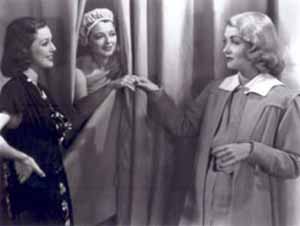

Meanwhile Susie, poor thing, is fighting her feelings for a Count in the person of Tyrone Power. Yeah good luck with that. (Young and Power threw off such sparks that they were paired for another four films in the next two years.)
This was only Power’s sixth movie, and so early in his career that he was still billed as Tyrone Power, Jr. After this, as his star ascended, the studio insisted that he drop the “Jr.”—much to the dismay of the devoted son whose father had died in his arms five years before, and whose legendary career would always inspire his own.


Framing all these fabulous faces is Hal Mohr, the only person ever to win a competitive Academy Award without being nominated—going home with the Oscar for Best Cinematography in 1936 for A Midsummer Night’s Dream on the strength of a write-in campaign. (The huffy Academy then changed its rules about such things.) He later shared an Oscar with W. Howard Greene for The Phantom of the Opera, making him the first person to win in that category for films in both black and white and color. (Take that, Academy…)
Oh and if the whole “girls band together to share a great apartment and snare husbands” thing sounds a bit familiar, it turned up again 17 years later, in How to Marry a Millionaire. Some things never change. No matter how much you wish they would.
STREAMING SATURDAYS is a regular feature on Sister Celluloid, bringing you a free, fun film every week! You can catch up on movies you may have missed by clicking here! And why not bookmark the page to make sure you never miss another?
The Topperesque Adventures of Roland Young
Roland Young almost became Cosmo Topper.
Not in the movies—he did that in spades, all rubber limbs and befuddlement—but in real life. The manor-born, well-educated young man came thisclose to toiling out his days soberly and sensibly in some handsome, wood-paneled office.
Young’s father Keith was the most prominent architect in London, and young Roland was being fast-tracked to follow him into the family business. First stop: Sherborne School in Dorset, which, since its founding in the eighth century, had turned out the likes of King Alfred the Great. Young’s room was an underground monk’s cell carved out in the 13th-century—the better to concentrate his mind on serious pursuits. But he preferred singing in the school choir, where he was paid threepence a week, with another sixpence for singing in the chapel on Sundays. And during study periods, he unleashed dramatic re-enactments and other theatrics on his spellbound classmates.
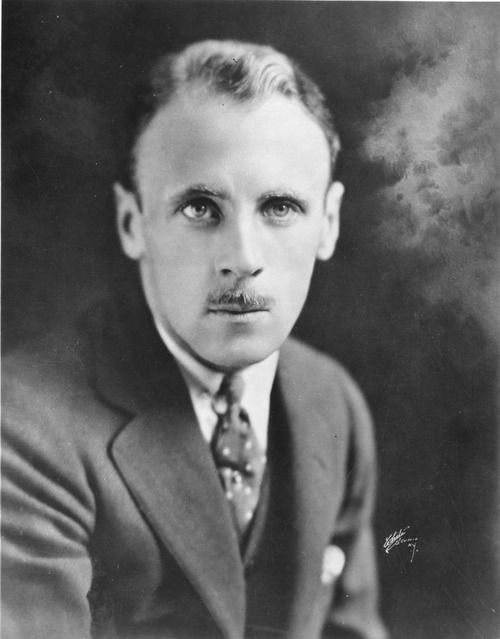
As a teenager, Young saved every cent from jobs and allowances for summer jaunts to France, Switzerland and Italy, later venturing out to the Dalmatian Coast, Gibraltar, Morocco and the Canary Islands. In none of these places did he ever pay much attention to the architecture.
His father hoped when he returned to London and settled into University College, he’d focus his mind on a business career. But Young’s heart lay elsewhere…
…and a common germ helped seal his happy fate. One day when Roland was home from college with an awful cold, he and his father had one of those heart-to-hearts that seem to spring up at the strangest of times. Pater thought this would be a good time to take his son’s future in hand, and began rattling off a list of proper professions: Architect? Banker? Broker? Accountant? Each elicited a gutteral grunt of disinterest from the boy. Finally, ruefully acknowledging his son’s love of performing, he asked, “Would you like to be an actor?” Hoping it wasn’t a trick question, Young answered hesitantly, “Uh.. huh…” Not long after, with his father’s half-hearted blessing, he transferred to the Beerbohm Tree Dramatic School, the precursor of the Royal Academy of Dramatic Art.
Wildly handsome and versatile, Young was already working in the West End by the time he was 23, conquering Broadway a few seasons later. After becoming an American citizen and serving in the U.S. Army in World War I, he continued to shuttle back and forth across the Atlantic, starring in both comic and romantic parts, including that of Sir Arthur Dilling in The Last of Mrs. Cheyney—a role played by no less than Basil Rathbone and Robert Montgomery in the movie versions.
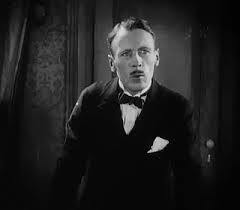
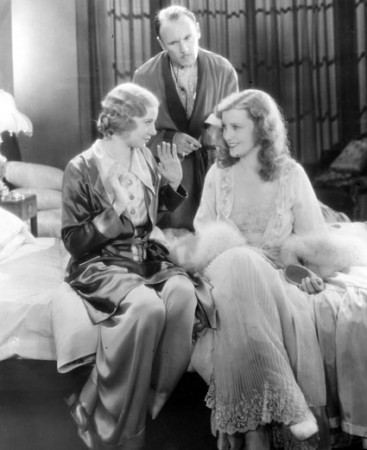
On film, though, he mostly mined his gift for comedy, starting with his witty debut as Watson in 1922’s Sherlock Holmes, opposite John Barrymore, and continuing through films like Don’t Bet on a Woman, where he sparkled as Jeanette MacDonald’s smug, overconfident husband.
It was around this time that Young met his true soulmate, the man who was responsible for his most famous role: Topper author Thorne Smith. In addition to perhaps an overenthusiasm for wine and scotch, the two shared many loves—animals, walking sticks, fountain pens, wordplay, bad jokes and good conversation—as well as a loathing for pretense and hypocrisy. (Young also loved porcelain penguins, but alas, he was alone on that one.) Thorne’s daughter Marion recalled her father and his bosom companion sharing jokes and sipping wine on long afternoons that slid well into evening.

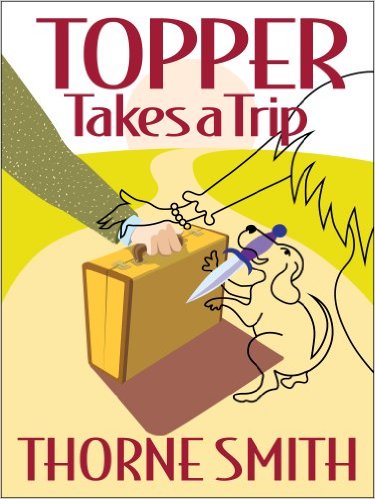
Oh and they had one more thing in common: both were published writers. Granted, Thorne had turned out more than a dozen best-selling novels—one of which, Topper Takes a Trip, was dedicated to his friend—and Young had put out just one slim volume, but that sole effort was very much in keeping with the sense of the ridiculous the two shared.
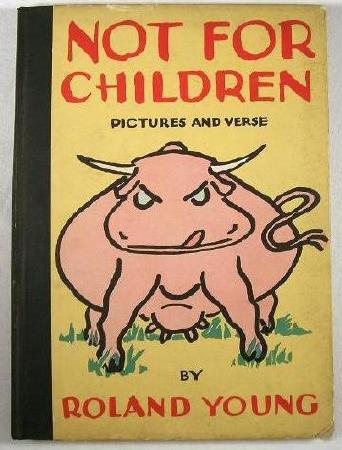
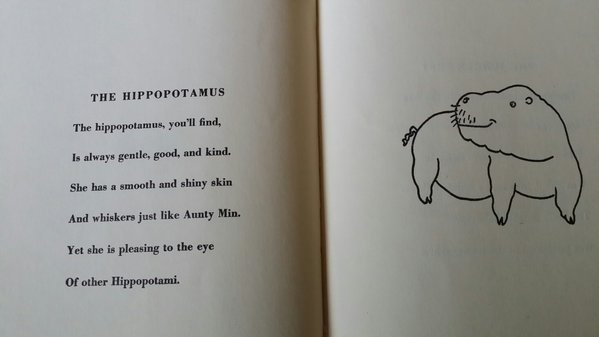
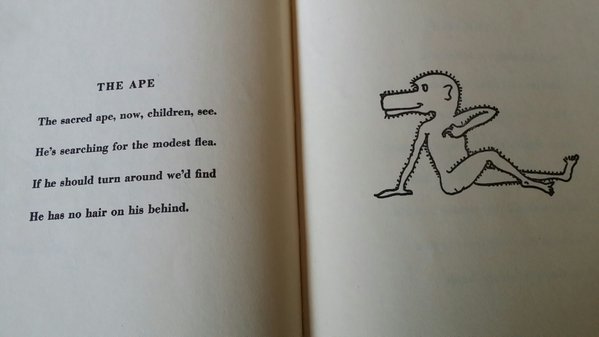
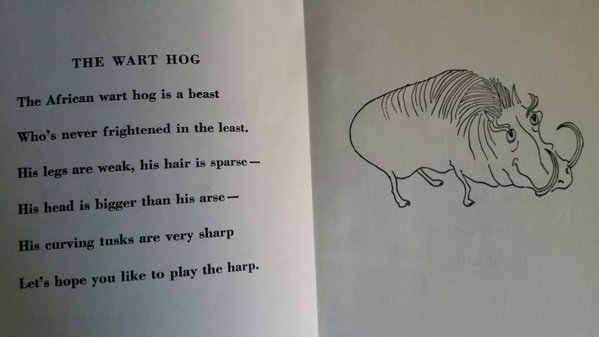
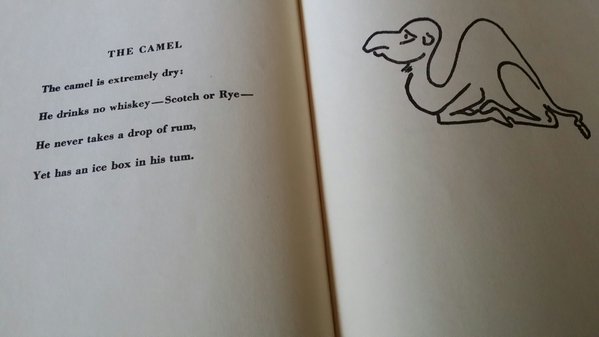
Written and illustrated by Young, Not for Children was a book of poems along the lines of Ogden Nash, describing various members of the animal kingdom (including humans).
 \
\
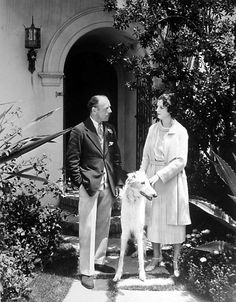
Young’s own household menagerie included a wolfhound named Romanoff, who was half as tall as he was, several rare species of goldfish, and a cat named Unex (for “Unexpected”), who could pop into the dining room at will, via his own little swinging door in the larger one.
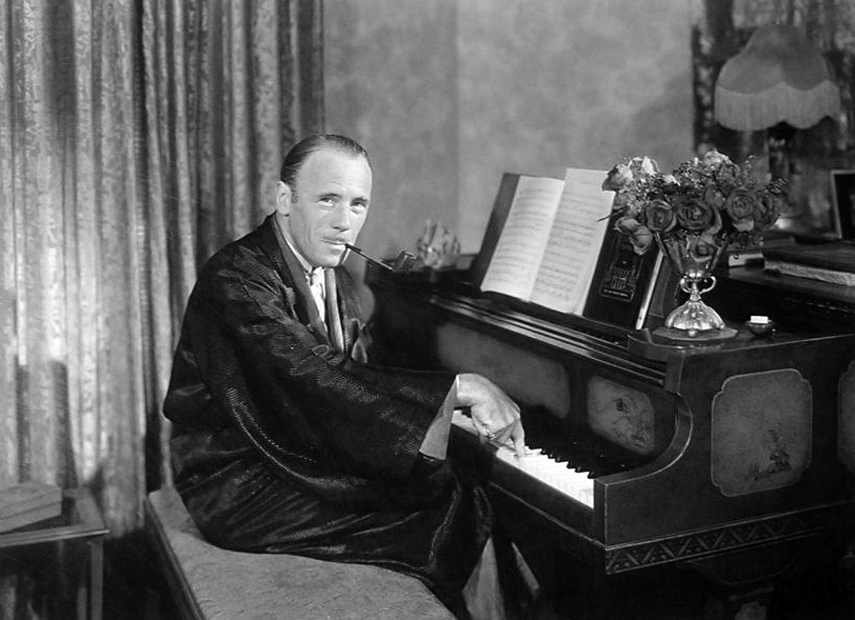
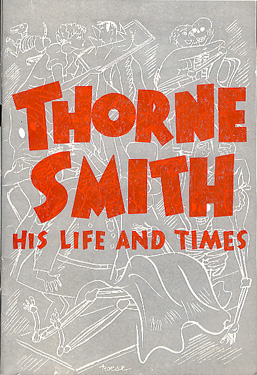
In 1934, inspired by his love of Thorne’s work and of the author himself, Young took up his pen again for a brief biography of his friend, Thorne Smith: His Life and Times, which included this description of his novels:
“They were native fairy tales, but at the same time they were satire of a high order… he has attacked with vehemence every form of hypocrisy, he has examined with sympathy and insight our universal neuroses. He has written about sex without shame and without a leer, and his work has done much to destroy the sham and pretense on that subject.”

He also included a lengthy Q&A with his subject, which was frequently punctuated by one of them ordering another Scotch and soda. Here’s a brief alcohol-free snippet:
Young: Are your books planned or do they just grow?
Smith: My books are planned in stealth, and grow in desperation.
Young: Why do you seem to do your best work while stripped to the buff and gleaming in the hot sun?
Smith: Because I like to write in hot countries, but I don’t know what you mean by buff.
Young: Buff is merely an expression, not a biological term.
Smith: I feel greatly relieved.
Young: Is it because you write in hot countries that your women are so passionate?
Smith: No, they just get that way. I don’t understand women very well who are not passionate.
Young: Your women are the kind every man wants to meet now and then, don’t you think?
Smith: Yes, Mr. Young. I’m afraid I think so. You mean that my women are both carnal and convivial and at the same time straight shooters. That to me is the ideal type.
Young: But your men, Mr. Smith. Do you consider them the kind every woman wants to meet?
Smith. No. My men are rather rare characters and not so good-looking. To like them a woman must be endowed with a sense of humor and an inexhaustible fund of patience.
Young: Your women sort of pity them them?
Smith: Most women pity men at one time or another.
Young: Why don’t you write about great, strong, silent men, Mr. Smith?
Smith: I don’t believe there are any, unless they’re too dumb to be interesting.
Young gave the final word to Smith:
So this is about all. My favorite hobbies are fountain pens, safety razors and not hearing Roland Young talk about goldfish during an earthquake. I also have a fondness for billiards, which I do not play. My chief recreation is making appointments to give little talks and then going away somewhere else. This has greatly endeared me to my publishers. The words have at last been written. I come to an abrupt end.
And in June, Smith succumbed to a heart attack at age 42.
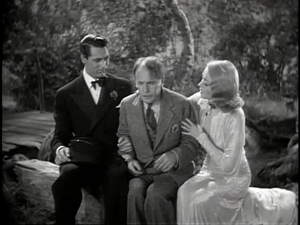
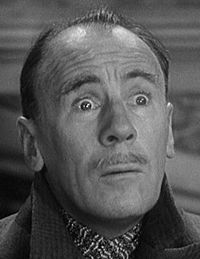
Three years later, Young starred in the first Topper film, which was dedicated to his dearest friend.
TINTYPE TUESDAY: Bette Davis’s Unrequited Love Affair—With Dogs
Welcome to another edition of TINTYPE TUESDAY!
In December 1930, Bette Davis stepped off the Twentieth Century Limited and swanned into Union Station all set to conquer Hollywood, with her mother by her side and her wire-haired terrier, Boojum, in her arms. A rep from Warner Bros. was supposed to meet the happy trio, but no one materialized. When a furious Davis called the studio to find out what happened, she was told he was there, but didn’t recognize anyone who looked like an actress. “How could he not?” she huffed indignantly. “I was carrying a dog!”
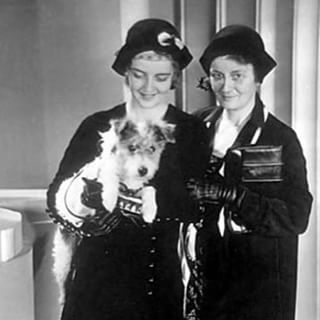
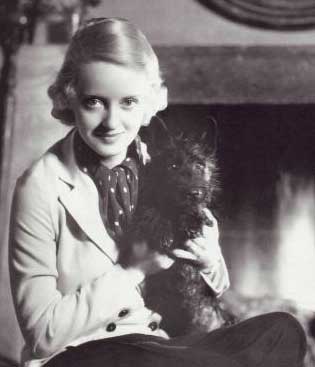
And she pretty much never stopped—either being actressy or carrying dogs. At one point, she had four Scotties, and when she wasn’t tending to her own brood, she was looking after the homeless ones.
Regular readers may recall how half of Hollywood turned out for the fabulous bash that Davis—as lifetime president of the Tailwaggers Society of Southern California—threw in the summer of 1938, to raise money for an animal hospital and training programs for guide dogs.
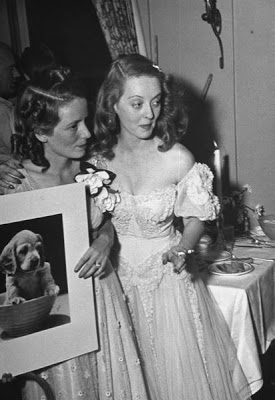

Which just goes to show you what a forgiving woman she could be—toward canines, anyway. Because only two months earlier, Errol Flynn’s dog had bitten her on the ankle after she slapped her co-star during a scene in The Sisters. The dog was trained to protect Flynn, and apparently—like the shnook from Warner’s—he didn’t know she was an actress either.
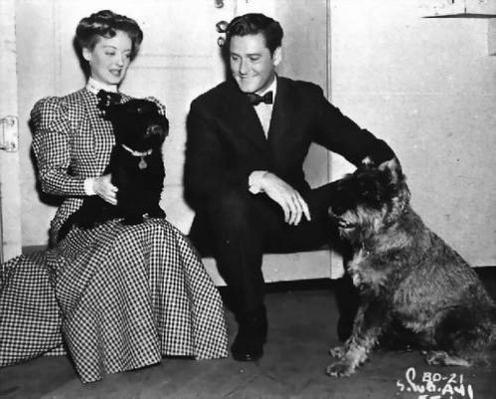
File her next run-in with the species under the category No Good Deed Goes Unpunished. In September 1942, Davis casually bent over to pet Willie, a Scottie she was minding for friends. Suddenly awakened, he reacted by biting her nose. (Thus ending any chance we had of someday hearing a song called Bette Davis Nose.)
“This particular dog wasn’t particular when he singled me out,” Davis recalled crankily, even decades later. “I had always loved dogs, my own, all dogs. Well, after this experience, I still loved dogs, except for the one who bit me. I’m not really a turn-the-other-cheek person, and besides, I didn’t have another nose to turn!”
At the time, she was in the midst of costume fittings for The Man Who Came to Dinner. Just imagine the excitement of Jack Warner and Hal Wallis when they had to shut down production because of this:
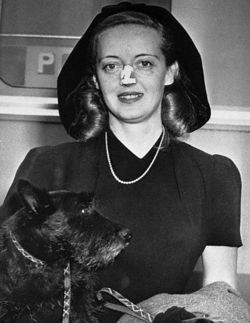
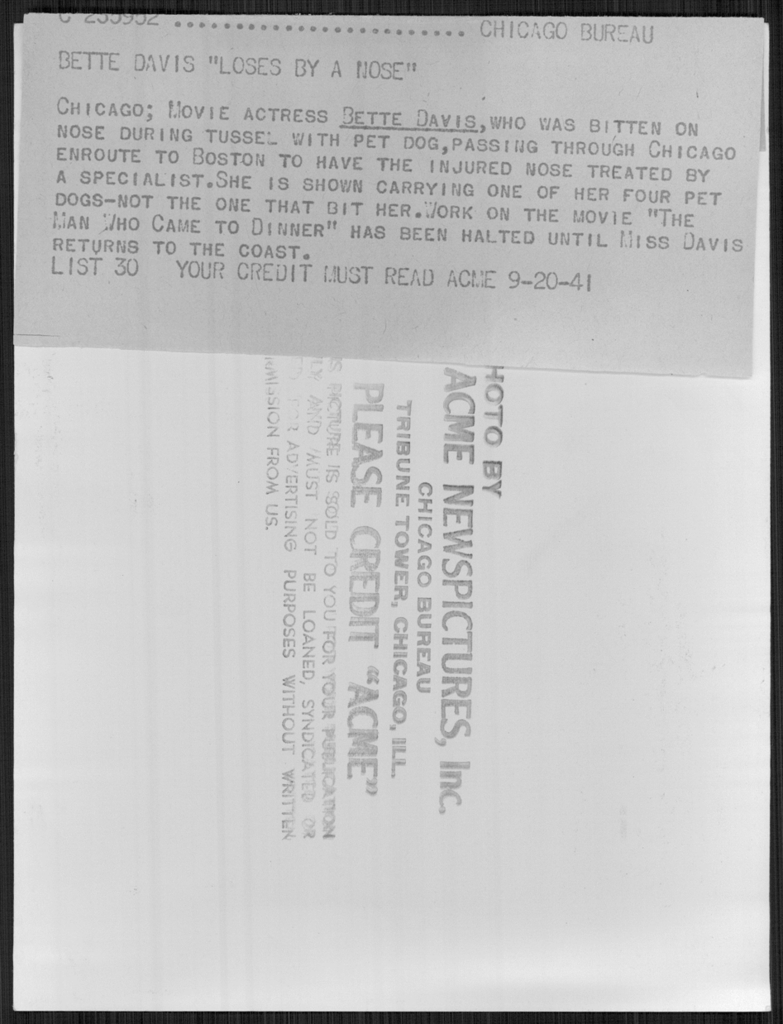
Davis left Hollywood for Butternut, her New England farm, to recuperate, expecting to be back by the end of the month. But by early October, her nose still wasn’t cooperating, leading to some semi-disgusting cable traffic featuring words you don’t normally associate with classic movie divas, like “gross and disfiguring” and “swelling.”
Take, for instance, this lovely note to Wallis: “Scab not off nose yet. And nose still very red. Am hoping it will be alright by Thursday [October 9] when I get in.” Mercifully, it was, and she resumed shooting the next day—with a massive piece of adhesive tape covering her now-healed nose, just to give her co-stars a laugh and her producers a good honest scare.
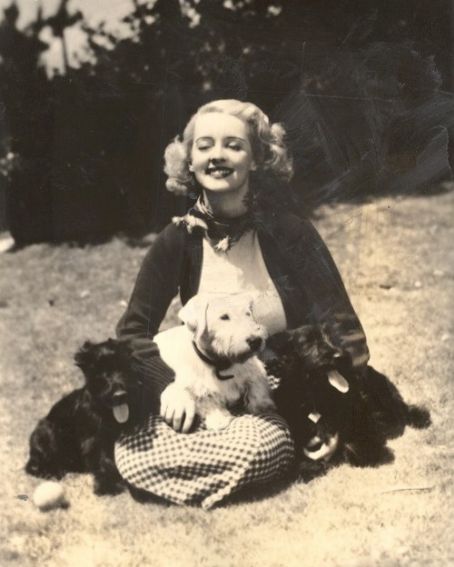

TINTYPE TUESDAY is a regular feature on Sister Celluloid, with fabulous classic movie pix (and usually a bit of backstory!) to help you make it to Hump Day! For previous editions, just click here—and why not bookmark the page, to make sure you never miss a week?
STREAMING SATURDAY: I’LL BE SEEING YOU Finds Christmas in None of the Old Familiar Places
Welcome to another edition of Streaming Saturdays, where we embed free, fabulous movies for you to watch right here!
When people talk about “beautifully told” stories, they usually mean ones that are a bit too beautiful to be real. This one is beautiful and real. William Dieterle’s I’ll Be Seeing You is the story of a fragile love affair between an emotionally damaged soldier who’s just been released from a mental hospital and a woman on furlough from jail for the holidays. What can I say, it’s my idea of the perfect Christmas movie.
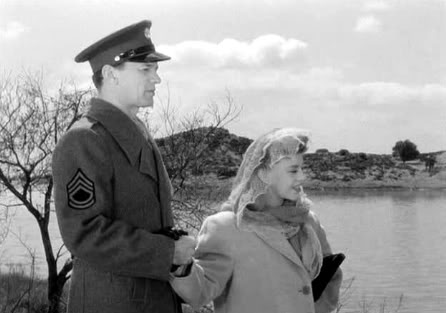
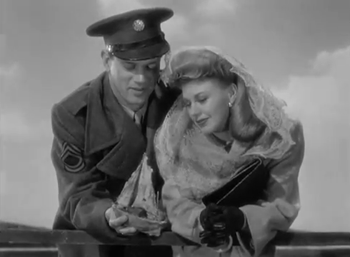
Mary Marshall (Ginger Rogers) is on a painfully brief respite from a six-year prison term when she meets army sergeant Zachary Morgan (Joseph Cotten) on a cross-country train bustling with holiday travelers. When we first see them, we don’t know anything more about them than they do about each other. They’re a little shy, a little hesitant, but a well of instinctive sympathy seems to bubble up between them.
After Mary settles in awkwardly with her well-meaning aunt and uncle (Spring Byington and Tom Tully), it’s this stranger who makes her feel most at home. When Zachary calls the house, you can feel her anxiety start to soften into something resembling relief. And from there, they push past their fears and very real obstacles to find their way closer to each other.

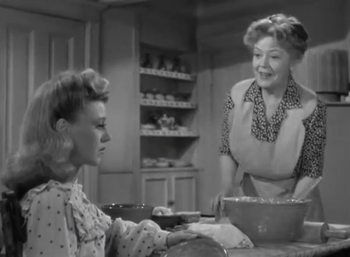
It would be easy to milk this premise for all the pathos you could wring out of it, but Cotten and Rogers never strike a maudlin note. Or a false one. If anyone still needed to be convinced about what a terrific actress Ginger was, this is the film I’d show them. She was great in her Oscar-winning turn in Kitty Foyle, but her character here is much more complicated—a bit brittle, fearful and disillusioned, but still hopeful, and, by movie’s end, very much in love. And of course no one needs convincing about Cotten, though I don’t think he’s ever gotten his due as a romantic leading man.
Shirley Temple has one of her first kind-of-adult roles here, and early on, she’s a bit of a bitch, which must have been a refreshing change for her. But in some ways, she was still our Shirley: she confessed to having a huge crush on Cotten while filming this movie and Since You Went Away earlier in 1944.
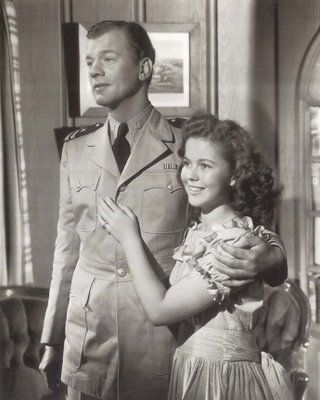

Even after the war, few movies, notably The Best Years of Our Lives, tackled the psychic wounds that returning soldiers struggled with after seeing more horror in a few short months or years than most of us could imagine in a lifetime. Amazingly, though, I’ll Be Seeing You faced that issue head-on while the war was still raging on two continents.
But don’t watch it because it’s brave. Watch it because it’s wonderful.
I love this movie. I hope you do too.
STREAMING SATURDAYS is a regular feature on Sister Celluloid, bringing you free films! You can catch up on movies you may have missed by clicking here! And why not bookmark the page to make sure you never miss another?
 Sister Celluloid
Recent Comments