As W.C. Fields’ Wife, Kathleen Howard Took Henpecking to Operatic Heights
Some movie-loving girls toss around lines by ladies like Lauren Bacall (“You just put your lips together and blow.“), Vivien Leigh (“I’ll think about it tomorrow…”) or Bette Davis (“Fasten your seats belts—it’s going to be a bumpy night!”)
I grew up quoting Kathleen Howard.
“Those were my mother’s feathers!” I’d roar to my Dad, out of nowhere, across the breakfast table on the odd Tuesday morning. That would get us rolling on some routine or other from It’s a Gift—maybe the scene on the porch, or the one at the picnic, where he got to mutter like W.C. Fields and I got to howl like Howard.
When Fields needed an imposing comic foil who could boom and bellow at him from the opening credits to the final fade-out, he wisely tapped a former opera singer he’d first met, and hit it off with, during his days in vaudeville. You see, acting in films wasn’t Howard’s first career, or even her second. It was her third—and it didn’t start until she was 54.
Born in 1880 on the Canadian side of Niagara Falls, Howard had such a spirit of adventure it’s a wonder she didn’t go over them in a barrel. “Nine-tenths of me were the normal characteristics of a well-brought-up, bright, good-looking girl,” she recalled in her 1918 memoir, Confessions of an Opera Singer. “But the last tenth was an unknown quantity, a great big powerful something which I vaguely felt, even then, to be the master of all the other tenths, a force which was capable of having its way with the rest of me if I should ever give it a chance. My voice was the agent of this great power.”
As a teenager, Howard longed to sing opera, but her parents—who had recently “lost all our money in dramatic fashion”—reluctantly discouraged her dreams, lacking the funds to support them. Not one to give up that easily, she left home for New York City, where she lived in a rundown boarding house and took a job as a church singer to pay for her lessons. Eventually she sailed for Europe to study with famed tenor Jean de Reszke and began touring with small companies. Soon the larger ones beckoned: Howard became the top contralto at the Municipal Opera in Metz, Germany, where she sang the lead in Carmen, which won her a personal invitation from the Grand Duke of Hesse to join the Royal Opera at Darmstadt.


Other offers, including London’s Covent Garden, eventually followed, and by the end of 1913, Howard had sung the principal contralto parts in 65 operas in French, German, English and Italian all across the continent. She then returned to New York to join the Century Opera, where she promptly married its president, Edward Kellogg Baird. “I worked with him for the success of the opera, which lay very near our hearts,” she remembered. “But the war and other unfortunate circumstances proved too much to overcome and we were forced to suspend.” Ahem. After running up debts of $18,000, Baird was drummed out of the company and fled the country, resettling in Bermuda.
Following three seasons at the Century, the poor girl from the little Canadian border town “finally attained the Metropolitan Opera, the most absorbingly interesting house with which I have ever been connected, and which is the greatest school of all.” As the Met’s leading character contralto, she sang the kind of roles she’d later create on film, including the pompous and greedy Aunt Zita in the world premiere of Giacomo Puccini’s only outright comedy, Gianni Schicchi, in December 1918. (The New York Times critic James Huneker hailed her portrayal of “the horrid hag.”) She spent 12 seasons at the Met, where her co-stars included a guy named Enrico Caruso, who fondly captured her in caricature:

Howard retired from opera at age 48 to embark on a new adventure. But she left behind more than 30 albums, some of which are archived here.
Her second act began in 1928, at the height of the Art Deco era, when she parlayed her cultural connections into a fashion editorship at Harper’s Bazaar. There she worked daily with designers such as Erté and George Barbier, while also writing pieces for The Saturday Evening Post and The Ladies Home Journal.
Heeding the old adage that if you want something done, you should ask a busy person, Howard’s new colleagues quickly elected her president of the influential Fashion Group, one of the first nonprofits to support professional women. According to its charter, “each member holds a job of consequence in the business of fashion and a belief that fashion needs a forum, a stage, or a force to enhance a widening awareness of the American fashion business and of women’s roles in that business.”
Founding members included Elizabeth Arden, Helena Rubenstein and Edith Head. Oh and Eleanor Roosevelt—who remained active even after becoming First Lady, although she resigned her membership in all other clubs.
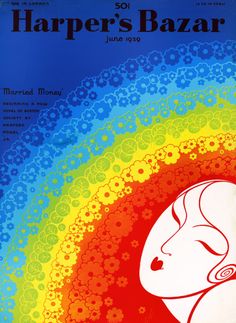
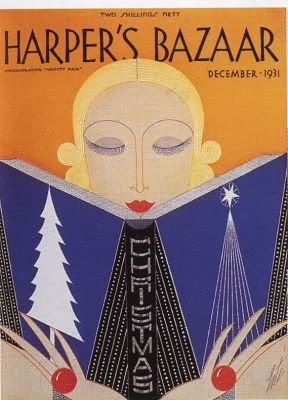
Howard spent most of her spare hours on the group even after her term was up. But by 1934, she was ready for another leap of faith—and hopped a train for Hollywood to try her hand at acting. While making the rounds of the studios, she was spotted by director Mitchell Leisen, who snapped her up for the plum role of Princess Maria in Death Takes a Holiday before she’d even finished unpacking.
“My livelihood is to me a great adventure, and I change my line of work whenever it shows signs of growing dull,” she told an interviewer as she prepped for her film debut at age 54. “Confidence in my ability as an opera singer gave me the courage to write, edit and lecture, and success in those enabled me to try motion pictures without a shade of skepticism as to the outcome.”

She then shifted back to a more sympathetic role as a kindly dowager in James Whale’s One More River. But the white gloves came off for It’s a Gift. Howard plays Amelia Bissonette (“pronounced Bisson-AY,” she says airily), the long and loudly suffering wife of Harold, a grocery store owner (W.C. Fields) who wants nothing more than to be left alone but never is. By anyone. (Click the link for perhaps the funniest scene in movie history, which for some reason WordPress isn’t letting me import.)
While henpecking her husband within an inch of his life, Howard almost never actually yells at him—but with her booming voice rising constantly in exasperation, it feels like she’s yelling at him all the time. And her sarcasm is so withering it could be weaponized. (“Yes, the sun is wrong but your watch is right of course!”) She speaks with such authority that even when she makes no sense (“Norman don’t eat any more sandwiches, you’ve had enough today! Harold give him half of yours.”), her beaten-down better half just reflexively goes along.
But this is no one-dimensional shrew. You can feel her regrets—that nagging sensation that she should have and could have done better—and her frustration at being married to a man with so little ambition. You sense that she almost wishes he’d fight back. When everything works out for these two in the end, you’re just as happy for her as you are for him.

Oddly enough—or maybe not—the actress Howard is most often compared to in these roles, Margaret Dumont of Marx Brothers fame, also trained in opera. (But Fields loved and respected Howard, never suggesting that her skill at playing it straight meant that she didn’t get the joke—a claim Groucho falsely made about Dumont for decades.)

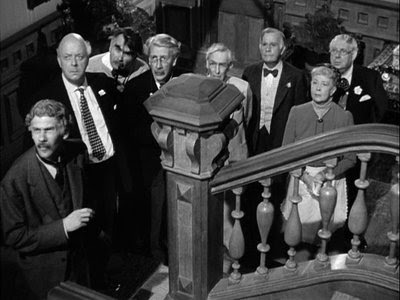
Howard’s other memorable roles include Miss Bragg, the haughty, huffy housekeeper in Howard Hawks’ screwball classic Ball of Fire. And here, for once, her impeccable timing failed her: when Barbara Stanwyck delivered what was supposed to be a mock punch, Howard didn’t bob out of the way quickly enough and wound up flat on the canvas with a fractured jaw. Stanwyck was horrified to have sent her 61-year-old co-star to the hospital.
But Howard bounced back to appear in five films the following year and 27 more movies in all, including Take a Letter Darling, You Were Never Lovelier, Reckless Age, and Laura. She made her last film, Born to Be Bad, in 1950, racking up 52 credits in just 16 years.
Whew. What a life this lady had. And what confidence! “If a person has succeeded in one profession, it takes nothing more than courage and a bit of common sense to succeed in any other calling,” she once told a reporter. “And it makes no difference how remotely related the two lines of endeavor may be.”
If you’d like to read more about this amazing woman, her opera memoir is available here for free on Gutenberg. I only wish she’d written a follow-up covering her film career—perhaps called Those Were My Mother’s Feathers.
And the Winner Is…
…Lindsay Edmunds!
The first (but far from last) Sister Celluloid contest has concluded, and the name pulled out of the vintage hat was lindsayedmunds.com, the home of the fabulous blog Writer’s Rest.

Lindsay wins the sealed DVD of William Wyler’s classic, Dodsworth. Walter Huston will be on his way to your house this week, my dear!
Thank you so much to everyone who took part, and please keep your comments coming! As I’ve said since I started Sister Celluloid, it’s not a website, it’s a conversation!
And by the way, Contest #2 starts very soon…
Finally! Maureen O’Hara Gets Her Oscar
At last.
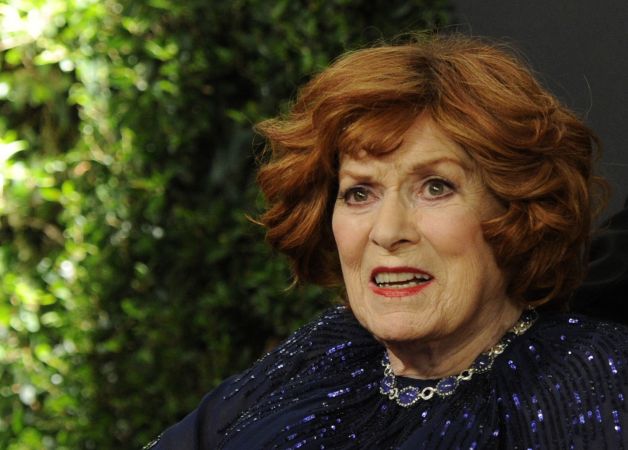
After more than 6o films in eight decades—and thousands of unforgettable moments—actress Maureen O’Hara finally received her Honorary Academy Award last night in Hollywood.
The 94-year-old actress was introduced by Liam Neeson and Clint Eastwood, who both admitted they’d been a bit in love with the Irish beauty since boyhood.
“I’ll never forget the moment… I was 12 years old at home, watching television on a rainy Sunday afternoon, and they were showing John Ford’s The Quiet Man,” recalled Neeson, clearly speaking from the heart. “The first time the Duke’s Sean Thornton saw her in that film was also the first moment I had laid eyes on her. His character had never seen beauty like that, and neither had I.
“For anyone anywhere around the world who loves movies, she is more than just an Irish movie star—she is one of the true legends of cinema,” he went on. “A self-described tomboy, she was a pioneer in doing her own stunts in film after film, mastering complex fencing and fighting routines. Our eyes were riveted to her every moment she was on the silver screen.
“She started out in black and white and later became the Queen of Technicolor, leaving us mesmerized not only by her performances, but by her fiery red hair and gorgeous green eyes…” Then, in one of the evening’s most charming moments, Neeson sighed, paused a moment to catch his breath, and murmured, “Oh God… sorry, just got lost thinking about my first crush…”
“For the entire Academy, tonight is the chance to present her with an honor richly deserved. For me, it is a chance to thank her for giving hope to a kid from the town of Ballymena, County Antrim, that maybe one day, we too could end up in motion pictures,” he said, clearing a catch in his throat. “And it’s a chance to say to the woman who has long had a place in my heart, and in the heart of everyone from our Ireland, six thousand miles across the sea, I love you, Maureen. We all do.”
“Well, I guess everyone is in love with Maureen O’Hara,” agreed Eastwood. “She’s the ultimate Irish lass, and I would love to have been the guy who dragged her across the countryside and got her to the church…”

Then, as everyone in Dolby Ballroom, including many current Hollywood notables, rose to applaud, Neeson gently presented O’Hara with her long-overdue Oscar. “What’s this?” she teased. “I only hope it’s silver or gold and not like a spoon out of the kitchen!”
She fought back tears (and we Irish always lose that fight) as she paid tribute to the three movie men who meant the most to her: Charles Laughton, who tapped her for The Hunchback of Notre Dame while she was still a teenager, whom she called “totally responsible for my career”; John Wayne, one of her dearest friends and her co-star in five films; and “that old divil himself, the great John Ford,” who directed her in five movies, including How Green Was My Valley as well as Rio Grande and The Quiet Man with Wayne. Looking heavenward, she cried, “Pappy, we finally got an Oscar!”
“I’m honored beyond words. Thank you with all my heart,” O’Hara said in closing, as she blinked away tears. “I’ll leave you with an old Irish saying. May the road rise to meet you. The wind be always at your back. And, may the sun shine warm upon your face. Good night.” Swept away by another thunderous standing ovation, O’Hara, now wheelchair-bound, rose and bowed to the crowd, with help from the gallant Neeson. (And look at his face, and Eastwood’s, in the pic below. Pure love.)

O’Hara became only the second performer to win an Honorary Oscar after never having been nominated for a competitive one; the other was Myrna Loy. (Honestly, Oscar: What is wrong with you?!?)

In the months leading up to last night’s ceremony, O’Hara told interviewers she cried when she learned of the award: “It’s just absolutely wonderful… I keep thinking, ‘Oh, this is a league of baloney. They’re not telling me the truth… [It’s like] having a hug, having somebody put their arms around you and say ‘Congratulations’ and say you are wonderful.”
Cinderella Finally Settles a Few Scores in THE GLASS SLIPPER
In just about every version of Cinderella, our heroine reacts the same way to the vicious abuse heaped upon her by her evil step-family: She hides away in her little corner. And she dreams. And she aches. And she yearns.
But here’s the thing: why doesn’t she ever get really mad?
Enter Leslie Caron, in The Glass Slipper. In her memoir, Thank Heaven, Caron confides that when she made the film in 1955, “I was, like everyone else in Hollywood, under the influence of Marlon Brando’s performance in On the Waterfront… I used to see it several times a week—I bought my ticket, with the rest of America, at least twenty times. Yes, I admit it, ridiculous as it may be, my inspiration for Cinderella was… Marlon Brando.”
Yes!
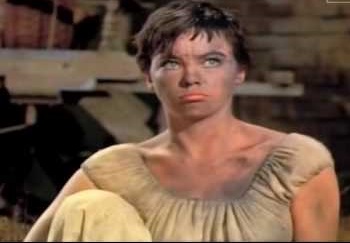
Billed as “MGM’s Musical Salute to Springtime,” the movie is more March than May, honing the old fairy tale to a pretty sharp edge. When we first meet Ella, she’s struggling desperately to mix in with a small clique of snooty townsfolk, who reject the smudge-nosed waif in the dirty dress, taunting her with cries of “Cinder-Ella!” Clearly wounded, she lashes out rather than retreating—working up such a rebellious head of steam you half-expect her to burst into a chorus of “When you’re a Waif, you’re a Waif all the way…”
This girl will not go quietly. But the narrator (Walter Pidgeon) warns, “The little spirit is still defiant and defensive and still unbroken, but give them time, and they will break it…” This is not a gossamer creature who can blithely glide above adversity. This is a real human being who can bear only so much pain before she’ll collapse under the weight of it.
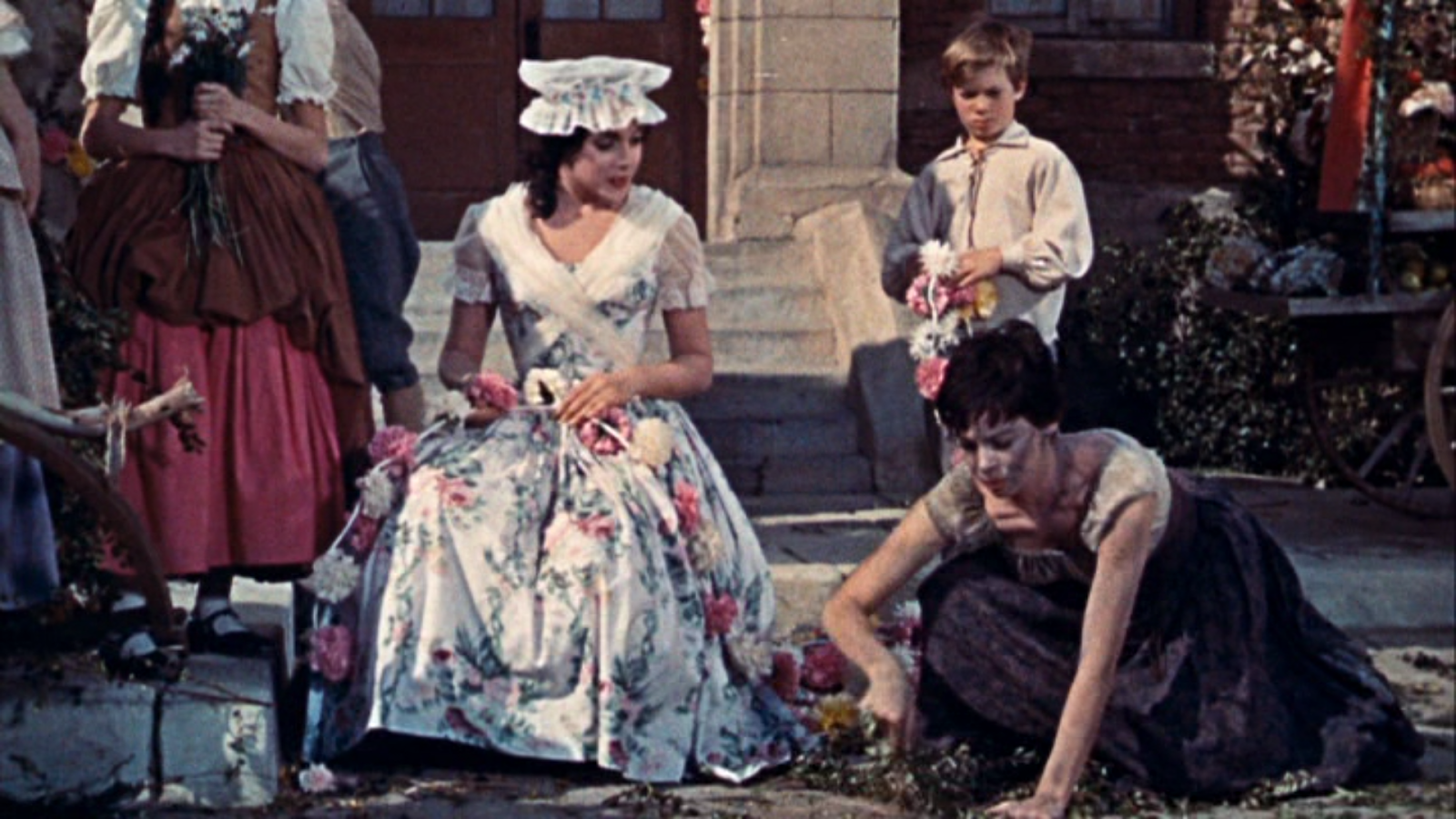
Meanwhile at the palace, Prince Charles (Michael Wilding) is explaining to his friend Kovin (Keenan Wynn) why he’s always such a soft touch. It seems that once, years ago, his carriage was stranded in the middle of the town, when suddenly out of a doorway ran “a little girl of about five, crying in a sort of tragic frenzy… I don’t know what it was all about… one thing I remember: she had great, agonized, rebellious eyes, the most tragic face I ever saw… I’d never known sorrow, not really, but ever since then I felt like I’ve had some knowledge of what it was like. And ever since then I find it almost impossible to resist a weeping woman!”
Of course you know where all this is going. But oh, the way it gets there…
For starters, Ella’s evil stepsisters aren’t the hags they’re usually depicted as. In another cold blast of reality—that life sometimes well and truly sucks—both of them are gorgeous. The narrator pegs Birdina (Amanda Blake) as “beautiful as a rose and poisonous as a toadstool” and Serafina (Linda Daniels) as “effortlessly alluring and cold as a cobra.” Even their mother, the Widow Sonder (Elsa Lanchester), isn’t too tough on the eyes.


Ella seeks sanctuary from these shrews in a soft, green meadow by a gentle little brook, “her home place, a place all by itself…” And one day, who should pop along but Mrs. Toquet (Estelle Winwood), the town eccentric by day and a bit of a klepto by night. These outcasts see in each other a kindred soul, and the older woman senses how much Ella needs to be loved and looked after. “We’ll talk and tell each other things and we’ll be friends!” Ella all but pleads. Mrs. Toquet looks at her so lovingly, you almost don’t care if she ever finds her prince. At least she’s found a mother—or in this case, a highly unorthodox fairy godmother.
They agree to meet again the next day, but when Ella arrives, her little spot is already taken by Charles and Kovin. “This is my place!” she spits at them. In the rare moment he’s not being shooed away, the prince manages to squeeze out a whopping lie, telling Ella that he works in the palace as a cook. She fires back that someday she’ll live in the palace—and when he responds with amusement, she takes it as ridicule. She beats her fists against him, sending him flying into the brook. And suddenly, as she runs away in tears, something about her seems awfully familiar…
Shaking himself dry, Charles chases after Ella and cajoles her into another rendezvous—and this time, he arrives with an invitation to the Palace Ball.
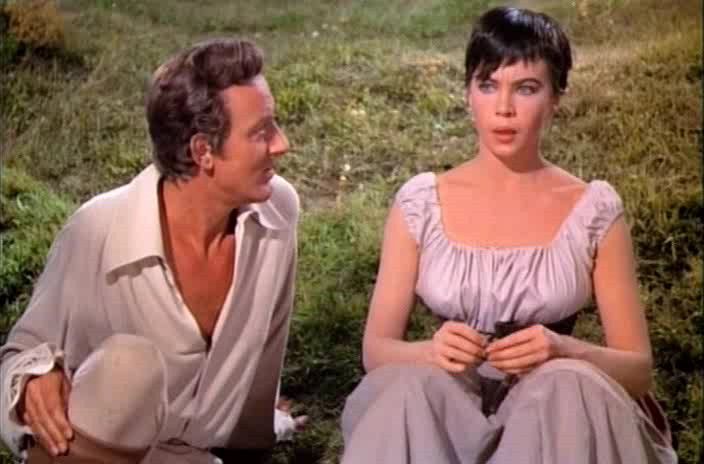

“B-but I don’t know how to dance!” she sputters. The prince gently takes her by the arm and shows her a few steps… and a few more… and soon they’re swirling all over the glen. She glides home in a near-trance, falls into bed and dreams. And because this is Leslie Caron we’re dealing with, her dream features the entire company of Roland Petit’s Ballet de Paris.
But even Ella’s fantasies are tinged with realism. In her memoir, Caron recalls: “Roland’s concept for the ballet was delightfully original. In her dreams, instead of imagining the ballet numbers in the ornate ballroom, which Cinderella, being a simple girl, couldn’t likely visualize, they take place in the depth of the palace kitchens—Cinderella’s world. Pots and pans steam in rhythm, while lovely kitchen maids and scullions brandish wooden spoons and huge ladles. The pas de quatre between the four cooks is a very witty takeoff on the Rose Adagio in the ballet Sleeping Beauty. As for my performance, I was in very good training after many months on the stage, and I think that I did my best classical dancing in this film and in Daddy Long Legs, which was to follow immediately after.”

When Ella awakens from her dream, nothing has changed. Yes, she’s holding tight to her invitation to the ball, and she’s mastered a step or two. But she still has nothing to wear—and everything to fear from her family if she strays from the role of servant. As she bitterly helps them primp and prepare for the evening, she doesn’t merely long to go to the ball; she flat-out envies those who are on their way there.
Once they’ve all swept haughtily out the door, Ella drops off to sleep, only to be awakened by the light-fingered Mrs. Toquet, who’s lifted a gorgeous gown—a pink satin and crystal confection fit for a princess—from the Widow Sonder’s rich cousin Loulou’s house. Her fairy godmother fretfully helps her dress (“The corset was invented by the devil!”), places a pair of glass slippers on her feet, and leads her to a golden carriage with but one warning: she must leave the ball by midnight. It seems the cabbie has another fare he needs to pick up at 1:00.


Fearing that her family will see her in the stolen dress and drag her back to the scullery, Ella all but sneaks through the front door of the palace. Still, she’s set upon by just about every man in the place. As she dances with one after another, too afraid to speak, she’s forever trying to make her way to the kitchen to see Charles, the “cook.” Finally, Ella whirls away from one partner only to see another standing before her: the prince in all his finery.
Thoroughly bewildered and still desperate to avoid her family—and keeping one eye on the clock—Ella breaks away from Charles and flees to her carriage, stepping out of a glass slipper as she makes her escape. But not before creating quite a stir: the whole room’s buzzing about the strange, dark-haired girl in the lovely pink dress, who never uttered a word to her admirers. Is she an exotic royal visitor who doesn’t speak the language?


By the next day, the rumors have jelled into a single narrative: The girl is an Egyptian princess, betrothed to the prince. When the news reaches a heartbroken Ella, who has no idea that she’s the one they’re all gossiping about, she gathers up her pitiful few belongings—including the lone glass slipper, which is all that remains of her dreams—and runs away, no longer able to live in the shadow of the palace she once hoped to call her home.
As she grows weary on the journey, she falls asleep in her meadow, awakening to find Charles holding forth the errant glass slipper in search of its mate. “I have the other!” Ella cries. He fits the slipper onto her foot as the curious villagers, including her hideous family, look on. The prince embraces her tenderly and protectively, and she falls against him with such blessed relief, it’s as if she couldn’t have taken another step.

You get the feeling that after Charles and Ella marry, her anger and wariness may soften, but she’ll never be a serene princess—and he’ll be fine with that. Wilding himself was no slouch when it came to formidable women: he was married to Elizabeth Taylor when he made this film and later spent his happiest years with Margaret Leighton, a fabulous handful if ever there was one. And onscreen, the wryly adorable actor held his own with any number of strong actresses, including Jane Wyman in the criminally underrated Stage Fright. (One exception was the unintentionally hilarious Torch Song, where Joan Crawford mowed him down and left him by the side of the highway like so much leading-man roadkill. More on that, including Joan in blackface, here.)
In The Glass Slipper, Wilding is perfect as the prince on a rescue mission: gentle, romantic, sometimes bemused, but always sure, solid and sympathetic. Caron, who never really got her due as an actress, is just devastating as the girl who hungers to be loved and to belong. And both stars are clearly comfortable with director Charles Walters, who worked with Caron on Gigi and Lili and survived Torch Song alongside Wilding. Together they crafted a fairy tale with a real heart beating beneath its candy-colored surface.
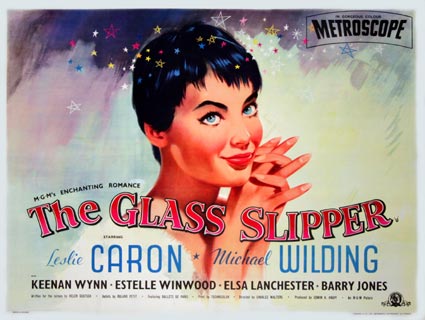
Win DODSWORTH in the First Sister Celluloid Contest!
Sister Celluloid is now just about six months old (websites grow up so fast—sniff!), and I’ve made so many new friends and met wonderful kindred spirits, I honestly can’t tell you how thankful I am. As a token of appreciation, I’ll be running contests with prizes including DVDs, CDs, vintage jewelry and other fabulous stuff. And it all starts… now!
Welcome to the First Sister Celluloid giveaway!
This time around, the prize is a new, sealed DVD of William Wyler’s Dodsworth, starring Walter Huston, Mary Astor and Ruth Chatterton. If I could, I’d send you the actual Walter Huston. (Oh who am I kidding, I’d keep him locked in my apartment.)
To enter, just do two simple things: After scrolling through the website, 1) comment on any post, and 2) share any post on Twitter and/or Facebook. That’s it. On November 15, I’ll jot down the names of everyone who did, put the slips of paper in a vintage hat, and pick one.
I’ll then announce and contact the winner, who can send their name and address to me at sistercelluloidwebsite@gmail.com. (And anyone else who wants to drop a line, please do!)
Good luck, and thank you so much for stopping by!
Bette and Joan, The Way It Should Have Been


The first pic is a publicity shot, for What Ever Happened to Baby Jane. But the second one, it just kills you, doesn’t it? This is the way it should have been, always, with Bette and Joan: Smart, tough, gorgeous, crazy-talented comrades in arms against the big bosses in Hollywood, who nickel-and-dimed them while they brought in millions and then dumped them when they hit their forties. (When they teamed in their fifties for Baby Jane, Jack Warner sneered, “No one will pay to see those two old broads act.”)
It’s believed that the Davis-Crawford feud started over Franchot Tone, of all people, whom either one of them could’ve taken in two falls out of three. In the midst of a painful divorce, Bette had become smitten with Tone while they made Dangerous—but he and Joan were already involved and would soon marry. If he were free, who knows? Maybe he and Bette would have had a fling, maybe not, and it probably would have fizzled, the way most Hollywood romances did. But Joan had snatched him away, and that was that—the blood hatred was on. And it fed on itself and festered, on both sides (though a bit moreso on Bette’s), for dismal decades.
But boy, if they had joined forces, what a team they would have made. What a waste of their dazzling fire that they spent even a spark of it burning each other.
Thank You So Very Much!
I started this site late last spring, to share my love of classic movies, to connect with people who had that special spot in their souls that nothing else could fill.
And yesterday, Sister Celluloid reached a little bit of a milestone:

So before writing another post, I needed to say:
THANK YOU SO VERY MUCH!
Thank you for taking the time to visit.
Thank you for reaching out to a kindred spirit.
Thank you for your friendship.
Thank you for sharing your thoughts and your opinions and your love of classic movies.
Thank you for your kind, wonderful comments.
Thank you for your help and support.
Thank you for sharing the site with others.
I scoured YouTube (and boy does it need scouring!) for the right clip to dedicate to you. Something to do with thankfulness, and joy, and of course old movies. I kept coming back to this one, which is one of my favorites, from Macy’s Thanksgiving Day Parades of the early 1930s.
Thank you.
With love and gratitude,
Janet
Test Your Classic Film Knowledge! (Not!)
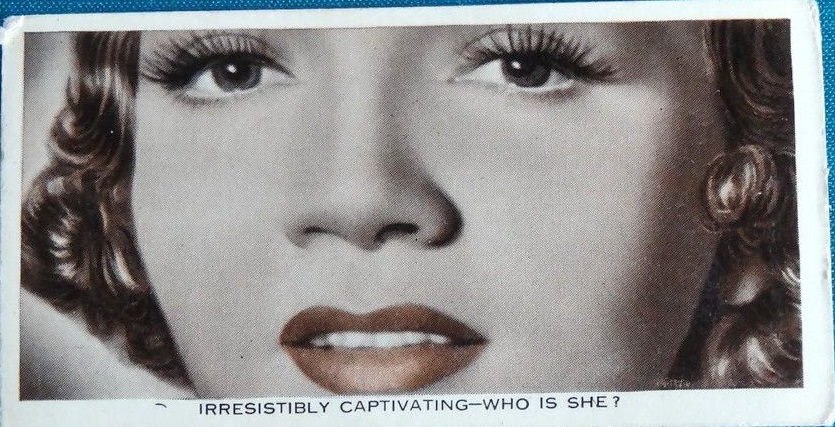
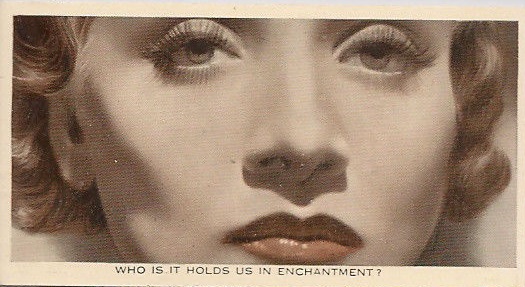
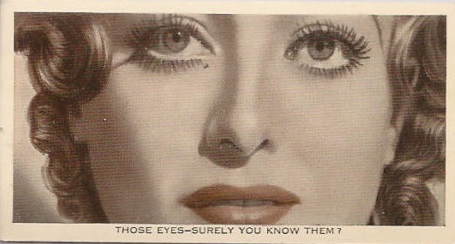
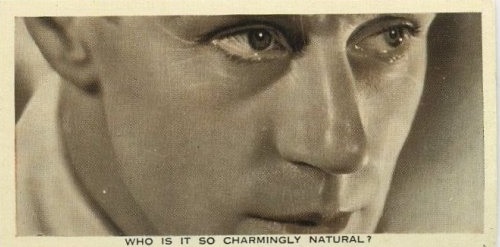
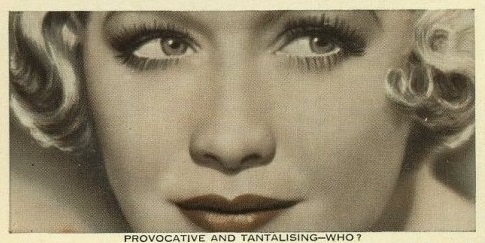
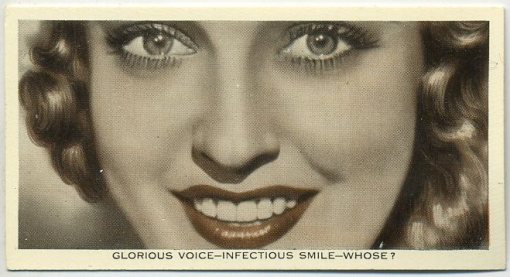
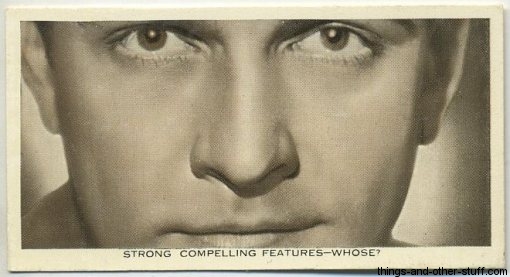
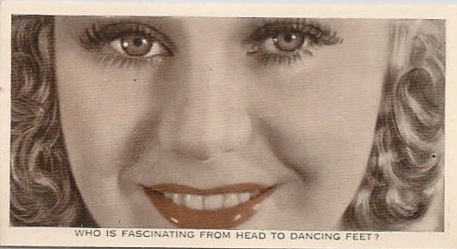
In the 1930s, lots of tobacco companies tucked little film-star photo cards into their packs of cigarettes. (By the way, if you’re looking for cheap, fabulous movie memorabilia, these cards, unlike the product they came with, are just what the doctor ordered: Just go to any auction site, type in your favorite star’s name and the word “card,” and see what pops up.)
In 1936, England’s Ardath Tobacco Company took things a step further with a series of 50 cards called “Who Is This?” asking fans to name the stars featured on the front.
I know—nobody told you there was gonna be a quiz.
But here’s the thing: the card showed you almost the whole face. So unless you were some sort of savant who identified people solely on the basis of their foreheads and chins, this was pretty easy sledding. (Don’t you wish your tests in school had been like this? “Name the 1815 battle where the Duke of Wellington beat Napoleon. It rhymes with ‘aterloo.'”)
For those who were still somehow stumped, the cards had little teasers under the “mystery” faces. Ann Harding has a “sweetly serious mein,” Garbo’s “cold serenity masks a depth of feeling,” Katharine Hepburn is “a red-haired tempestuous genius,” and Clark Gable has “firm lips and humorous eyes,” not to be confused with Herbert Marshall’s “sympathetic eyes and lips.”And amid the Garbos and Gables, they tucked in George Arliss, who “has made history live.” But somebody really phoned it in for the fabulous Kay Francis, calling her merely a “famous screen star.” I mean, come on! How about “divine deco diva” or “lush, limpid-eyed lover”?
Here’s a sampling of the cards; for the first one, I’ve shown the answer on the back (she “won the American 1934 Gold Medal” for It Happened One Night!), but for the rest, well, try to struggle through somehow:












Linda Darnell: “A Sweeter Girl Never Lived”
“At thirty-two, I can see tell-tale marks in the mirror, but the ravages of time no longer terrify me. I am told that when surface beauty is gone, the real woman emerges.” —Linda Darnell
She never lived long enough for her beauty to fade. But a real woman—and a real actress—did emerge, and deserve to be remembered.

Linda Darnell had a stage mother straight out of Gypsy. A monstrous woman who dominated her fearful family, Mama Pearl first pushed her daughter onto the pageant and modeling circuit when she was just 11, fudging her age by two or three years. And of course she sent the shy girl to drama and diction classes. “She didn’t stand out particularly, except that she was so sweet and considerate,” recalled one teacher. “But her mother was right behind her everywhere she went.” In 1937, at a local Dallas pageant, Darnell was discovered by a 20th Century Fox scout and sent straight to California—only to be shipped back home when the studio discovered she was 14.
Undaunted, Pearl then entered Linda in RKO’s “Gateway to Hollywood” contest, which dangled a short-term contract as first prize. She used Linda’s victory as leverage with Fox, which signed the girl as soon as she was free from her brief RKO stint. Now a whopping 15 years old, Darnell once again headed for Hollywood, with her pet rooster under one arm and her mother tightly grasping the other—never letting go until she was banned from the studio lot several years later.

“Mother really shoved me along, spotting me in one contest after another,” Darnell later recalled. “I had no great talent, and I didn’t want to be a movie star particularly. But Mother had always wanted it for herself, and I guess she attained it through me.”
In less than a year, Darnell snagged her first starring role, in 1939’s Day-Time Wife. “Despite her apparent youth, [Darnell] turns in an outstanding performance when playing with popular players,” cooed one reviewer. No less an authority than Life magazine, sounding creepily eugenic, dubbed her “the most physically perfect girl in Hollywood.”
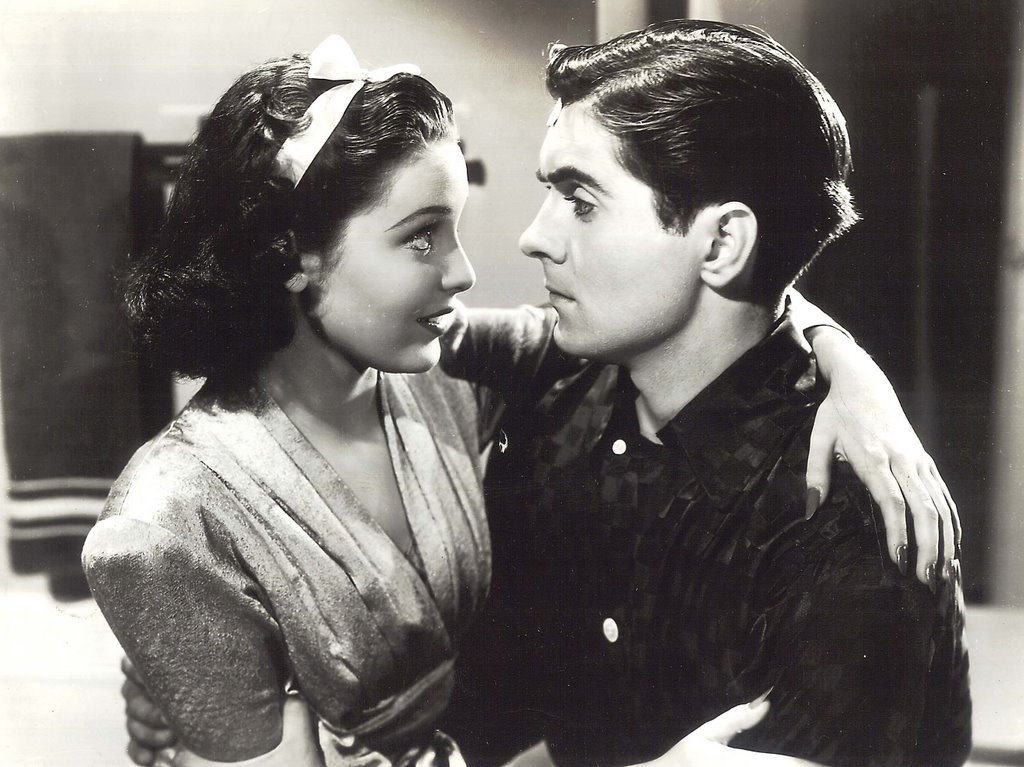
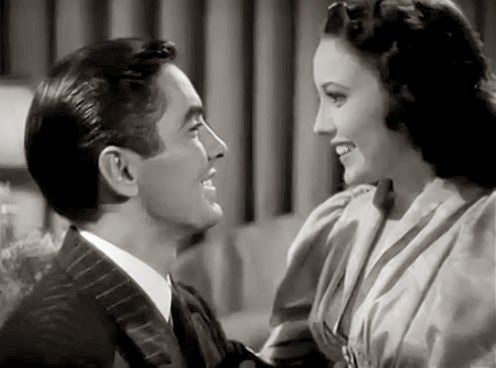
Utterly un-self-conscious and natural, the 16-year-old held her own with old pros like Tyrone Power and Warren William before she would have been old enough to date them. And when she occasionally froze up, Power deliberately blew his lines to take the pressure off her. Their easy, playful chemistry was so strong that they were quickly cast in three more films: Brigham Young, the most expensive movie Fox had ever made; the box office sensation The Mark of Zorro; and Blood and Sand, which a confident Darryl Zanuck premiered uncut, without previews, at Grauman’s Chinese Theatre in 1941. Years later, the hard-bitten Henry Hathaway, who directed Darnell in Brigham Young, recalled wistfully, “A sweeter girl never lived.”
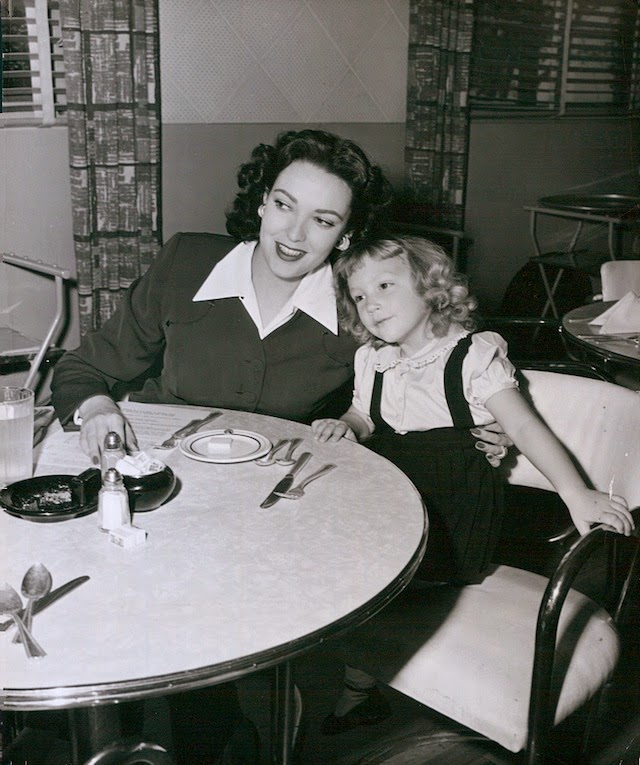
Offscreen, her life was running less smoothly. Perhaps seeking a stronger father figure than the one she’d grown up with (a mild-mannered postal worker steamrolled by Pearl), the 19-year-old eloped with Peverell Marley, a cameraman 23 years her senior, much to the horror of her friends. Marley drank heavily and after a while, his impressionable bride—needing a release from the pressures of the studio and her increasingly unhinged mother—picked up the habit, which would eventually prove disastrous. The couple adopted a baby, Lola, whom Darnell doted on; pictures of her with her daughter provide the only glimpse of real happiness she seems to have ever known.
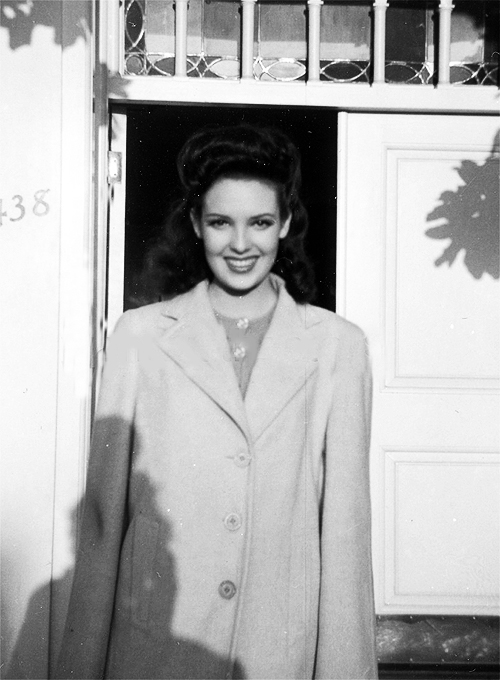
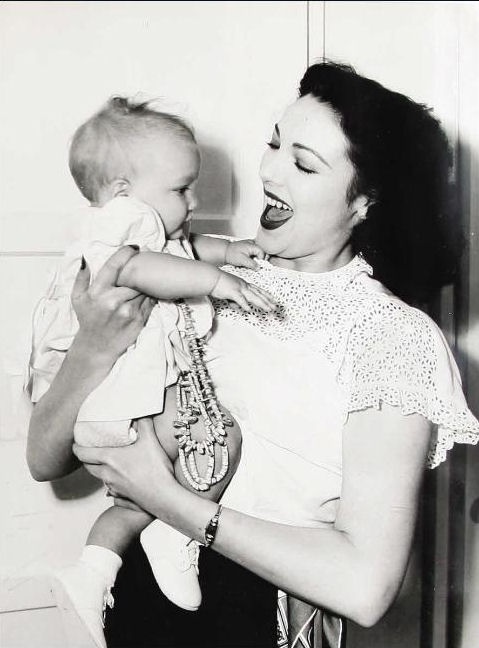
The married Zanuck, who had pursued the actress without success, was furious about her elopement and quickly turned his attentions to other proteges. And just months after Pearl Harbor, her favorite co-star, Power, joined the Marines. With her career suddenly adrift, Darnell threw herself into the war effort, selling bonds, working for the Red Cross, and taking frequent shifts at the Hollywood Canteen. She also studied to become a nurse’s aide, and with her best friend, Ann Miller, ran a daycare center for women working at the war plants.

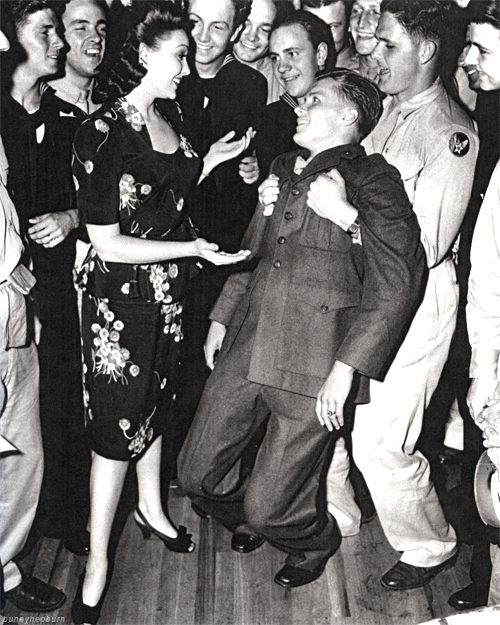
In 1944, Look magazine, on the hunt for popular wartime pin-ups, named Darnell one of the “Four Most Beautiful Women in Hollywood,” along with Ingrid Bergman, Hedy Lamarr and Gene Tierney. Quick to capitalize on the publicity, Fox loaned her out at a premium to Douglas Sirk for Summer Storm. “For eighteen months I did nothing in pictures—I pleaded for something to do, but nothing happened,” she told a reporter. “The character in the Chekov film is a wild sort of she-devil, which any actress would go miles to play. She’s devil mostly—at times angelic—and perfectly fascinating to interpret. I’m counting on my Russian girl to give me a new start.” Ah, yes, a new start. At 21.

Darnell followed up with another bad-girl role in Fallen Angel for Otto Preminger, whom she found “terrifying.” But her fabulous reviews in the noir classic must have soothed her nerves, and she seemed to have found her stride again. A year later, she won the coveted lead in Forever Amber, based on Kathleen Winsor’s wildly popular bodice-ripper. “My first seven years in Hollywood were a series of discouraging struggles for me,” she recalled at a press conference for the film. “For a while it looked as though the ‘Darnell versus Hollywood’ tussle was going to find Darnell coming out second best. The next seven years aren’t going to be the same.”
For the most part, they were much worse.
On Forever Amber, Darnell was again paired with the tyrannical Preminger. She had dieted strenuously for the corset-heavy costume drama, and twice collapsed on the set from hunger as well as nervous exhaustion. And for all the misery she endured, the film fell short of its massive hype: while audiences cheered, the critics mostly yawned, and the film didn’t give Darnell the boost, either in confidence or in clout, that she’d hoped for.

Meanwhile, her marriage to Marley, never all that sturdy to start with, was unraveling; in 1948, they separated for the first time. Alone, afraid and drinking more heavily, Darnell drifted into an affair with the married writer/director Joseph Mankiewicz—her first, his fifteenth or so.
During one of the lowest points in her life, Darnell made two of her finest films.
In Unfaithfully Yours, produced, written and directed by Preston Sturges, she’s the wife of an egocentric orchestra conductor (Rex Harrison) who concocts an elaborate revenge fantasy when he suspects she’s cheating on him. She’s so gasp-inducingly gorgeous, you’re almost distracted from how fabulously funny she is—a Sturges heroine who throws away her lines with the ease of a Colbert or a Stanwyck.
Ironically, given Darnell’s situation with Mankiewicz, the movie’s release was delayed after actress Carole Landis took her own life when Harrison, then married to Lilli Palmer, ended their affair. When the film finally did open, audiences and critics rejected its dark, offbeat humor, though it’s since been embraced as Sturges’s last great film.
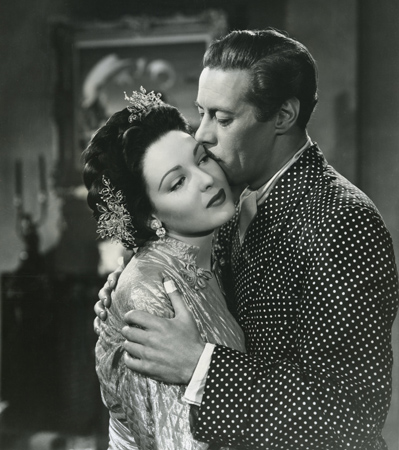
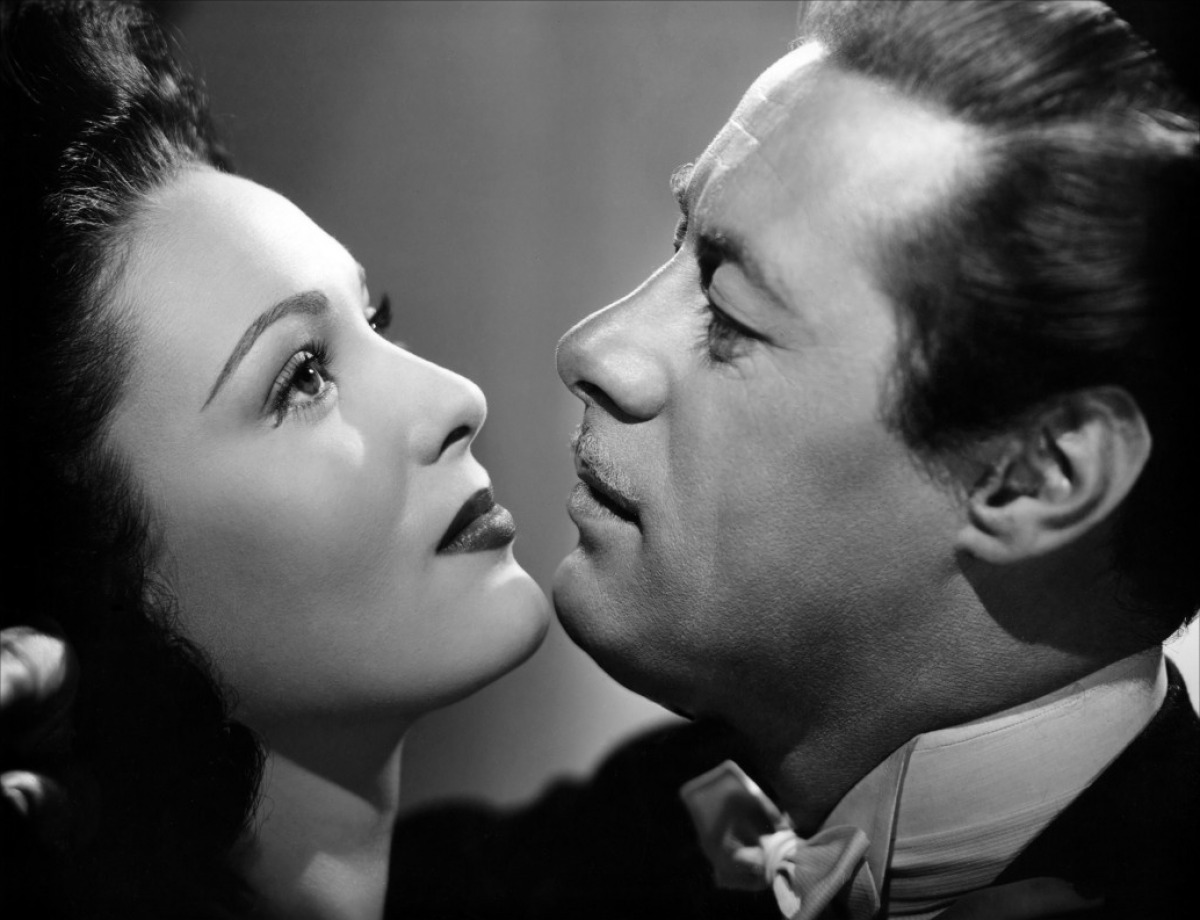
In 1949’s A Letter to Three Wives, written and directed by Mankiewicz, Darnell earned the best reviews of her life. As Lora Mae Finney, a social-climbing beauty who’s literally from the wrong side of the tracks—the whole house shakes whenever a train roars by—she’s hard-edged, touching and hilarious. She gets some of the best lines in a flawless script, and casually belts every one of them into the stands.
Determined to marry Porter Hollingsway (Paul Douglas), who owns the department store where she and half the town work, Lora Mae wangles a late-night meeting to discuss a promotion, though both she and Porter know it’s a prelude to something more. As she sweeps into the kitchen before the date, her mother’s friend Sadie (Thelma Ritter), who deems her dress much too simple, asks, “Doncha think you should wear something with beads?” And Lora Mae replies matter-of-factly, “Ma, what I got don’t need beads.” She’s not vain, just realistic—but she thinks she’s savvier than she is. She plans to snag Porter by playing the naif, but soon discovers just how out far of her depth, and genuinely innocent, she really is.
That Darnell wasn’t even nominated for an Oscar for her performance was criminal; they should have just dispensed with the ceremony and mailed the thing to her house.


Off the set, Darnell’s life was growing more desperate. In January 1949, she sued former business manager Cy Tanner for fraud, claiming he’d stolen thousands of dollars from her over the years; he eventually went to prison but never repaid a dime. The following year, Marley essentially extorted $125,000—just about all the money his wife had—in return for a quiet divorce with no mention of Mankiewicz. Having broken her own code of honor to steer clear of married men, she had paid dearly for loving and protecting a man who had given her little in return.
Still only 27, Darnell had seen too much and been used too often—and, astonishingly, was already on the downside of both her career and her life. “I’d crammed thirty years into ten,” she recalled ruefully. “I missed out on my girlhood, the fun, little things that now seem important.”
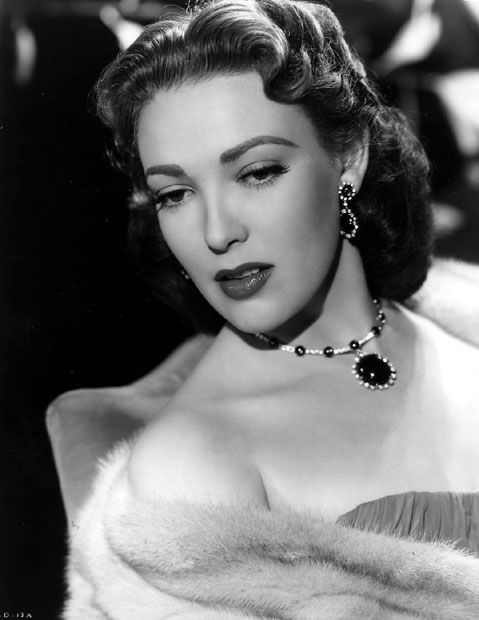
For his part, Mankiewicz never publicly acknowledged their affair; in his memoirs, he referred to Darnell only as “a lovely girl with very terrifying personal problems.” (Which were something of a specialty of his: among his previous paramours was a deeply troubled 20-year-old Judy Garland.)
Her last memorable film, in 1950, was Mankiewicz’s No Way Out, with Richard Widmark as a vicious, racist criminal and Sidney Poitier as the doctor who must tend to him. Always her own harshest critic, she called the groundbreaking social drama “the only good picture I ever made.”
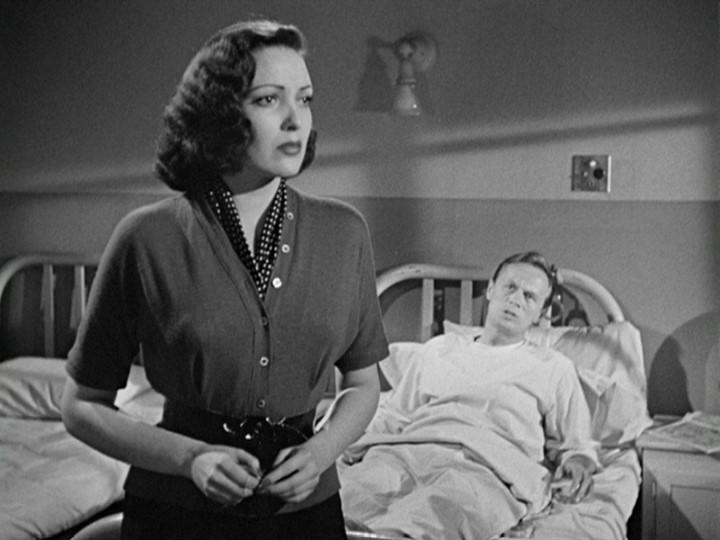
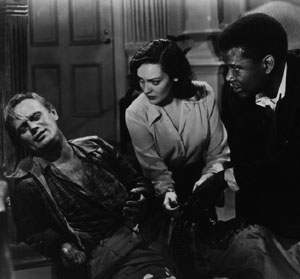
As the studio system began to collapse, so did Darnell’s film career; Fox dropped her contract in 1952. She freelanced for a while, with little success. “I thought in a little while I’d get offers from other studios, but not many came along,” she said, more out of confusion than bitterness. “The only thing I knew how to do was be a movie star. No one expects to last forever in this business. You know that sooner or later the studio’s going to let you go. But who wants to be retired at twenty-nine?”
So she turned to television and then the stage, where, to the surprise of skeptics, she thrived in plays as farflung as The Children’s Hour, Critic’s Choice and A Roomful of Roses. In 1956, she took on the daunting role of the compassionate teacher in a Miami production of Robert Anderson’s controversial Tea and Sympathy, opposite a 20-year-old Burt Reynolds. “I’m scared stiff [about the play],” she confided to local reporters. “But this marvelous, magic world of live theater is one of the high spots of my life.” The Miami Herald called it a “sensitive, absorbing presentation” in which “Miss Darnell gives the role a new dimension.”
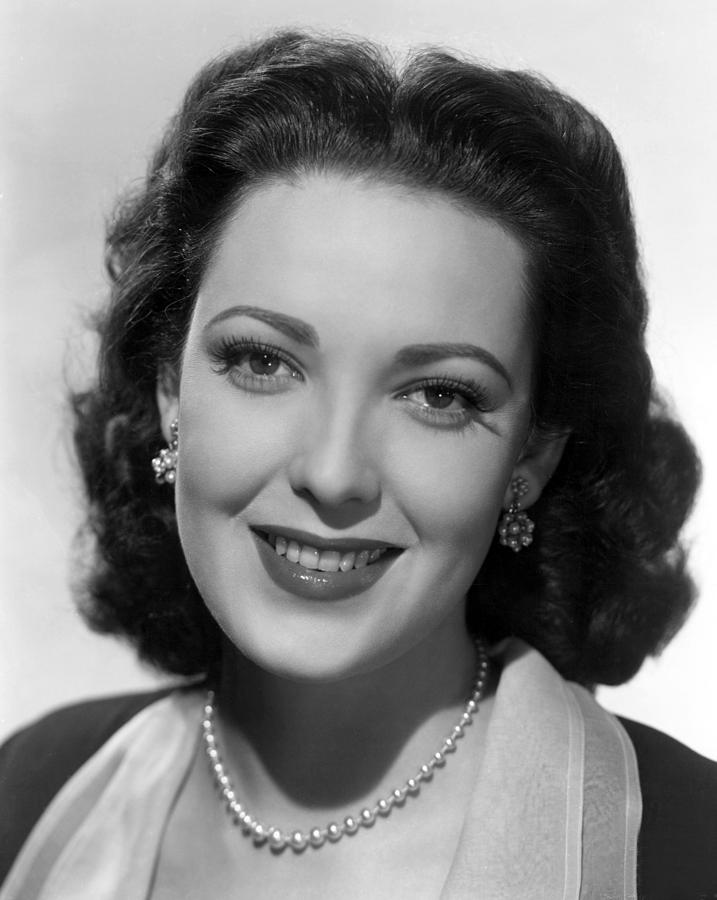
While TV and theater parts paid the basic bills, she was still forced to give up the last remnant of her film success: in 1962, her modest Hollywood house was foreclosed upon. But even in her darkest days, she was so kind and thoughtful that she went through all the rooms before she left, taping the correct keys to each door, to make things easier on the new owner. (Her reward? The man who bought the house parked in the driveway, blocking the shaken actress’s exit, while shrieking, “I want to meet Linda Darnell!”)
Throughout her last years, Darnell continued to work sporadically. In the spring of 1965, while preparing for a play near Chicago, she stayed at the home of her friend and former secretary, Jeanne Curtis, one of many former Fox staffers who still adored her. Late one night, she turned on the television only to find her 17-year-old self staring back at her in Star Dust, her second big film.
Not long after drifting off to sleep, she was jolted awake by the smell of smoke and the sounds of panic: the house was on fire. While Curtis, her husband and her daughter leapt to safety from a second-floor window, Darnell, too terrified to jump, tried to escape through a downstairs door. But a neighbor had run over and smashed a back window with a shovel, and the inrushing air fed the fire and spread the flames throughout the first floor. Darnell, who had a lifelong fear of fire, was found crouched behind the sofa, burned over almost 90 percent of her body.
She died at the hospital two days later, regaining consciousness only once, briefly, when Lola arrived at her bedside. She was 41 years old. Contrary to persistent rumors, she had not fallen asleep while smoking, nor had she been drinking. She had nothing to do with starting the awful blaze that claimed her life.
In her last interview, just a few weeks before she was killed, Darnell reflected on her chaotic, disappointing career and her efforts to give Lola the kind of home and security she never had. “Life has been rough on me,” she confided. “I hope it doesn’t end in tragedy.”
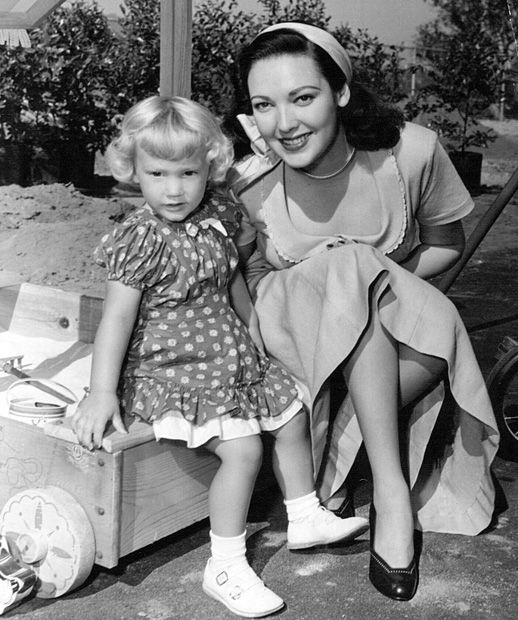
Thomas Gomez: The Soul Behind the Villain
You’ve seen him a hundred times. Maybe not in the center of the screen, but you always know he’s there.
The shambling menace, just off to the side. Maybe he’s got a score to settle. Or a hurt that won’t heal. Or maybe he’s handed his fate and what’s left of his conscience over to someone who’s stronger and smarter. He may want to give you a break. He may not. He may have to kill you. But he probably won’t be happy about it.
Yeah, that guy.
Thomas Gomez.

By virtue of his bulky frame, deep, slightly hooded eyes and raspy growl, Gomez was usually cast as the heavy. But he was so much more than that—and even his villains covered a lot of terrain. The hulking henchman who kept Bogie at bay in Key Largo was also Conan Doyle’s cunning Professor Moriarty and Shakespeare’s scheming Claudius on Broadway. But the gentle, thoughtful man behind all these masks never packed anything more threatening than a shrimp knife.
Gomez poured almost half a century of great performances into his 65 years—playing peasants and kings, priests and pentitents, victims and thugs, and even one ape. He began his career in heady company and never looked back. In 1923, straight out of high school, he won a scholarship to study with famed Shakespearean actor/director Walter Hampden, often called The Dean of American Theater (who went on to play a string of wise old patriarchs on film, including the father of William Holden and Humphrey Bogart in Sabrina).

By the end of the decade, Gomez was touring with Alfred Lunt and Lynn Fontanne. He spent most of the 1930s criss-crossing the country with their troupe, taking ever-larger roles in productions including Hamlet, Cyrano de Bergerac, Becky Sharp, Idiot’s Delight and The Taming of the Shrew.
His riveting work in two plays, The Sea Gull and There Shall Be No Night (featuring a young Montgomery Clift) caught the interest of Hollywood, where he was first cast as a murderous Nazi spy in 1942’s Sherlock Holmes and the Voice of Terror. Rootless when he arrived, Gomez lived at the Hollywood Roosevelt Hotel. An insatiable reader, he’d hang onto the newspapers left outside his door each morning until he had a chance to catch up on them. Never one to start a story in the middle, when he had an hour to spare, he’d ask the bellboy to lift the stack so he could snatch the oldest papers from the bottom.

When other film offers rolled in, Gomez, a homebody at heart, bought a modest house in the Hollywood Hills where he lived for the rest of his life, creating for himself the same kind of warm, safe cocoon he’d grown up in on Long Island.
Spanish on his father’s side (by way of Gibraltar and Santander, Spain) and French-Irish on his mother’s (courtesy of Alsace and County Cork), Gomez’s family migrated to New York from the Spanish Creole south shortly before he was born in 1905. With the Spanish-American War a recent memory and The Great War looming, jingoism was running hot and high, and blending in was the buzzword. But for Gomez, assimilation never meant capitulation: All his life, he legally kept the name he was born with: Sabino Tomas Gomez. And he vowed to take Hispanic roles only if he could play them “with sympathy, or at least humanity.”
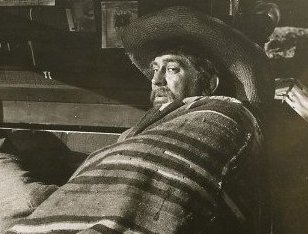
That chance arrived in 1947, with Ride the Pink Horse. In lesser hands, the role of Pancho in Robert Montgomery’s classic film noir could have turned into exactly the kind of role Gomez despised. Universal’s own publicity department described the character as “a big, greasy, tequila-swilling slob, who has one brief glow of nobility.” (Okay the first half of that sentence is blatantly racist, and the second half makes no sense whatsoever. Nice going, Universal flack!) Gomez seized the chance to blow away every cliche—even those perpetrated by his own studio.
In Ben Hecht’s taut, terrific story, disillusioned war veteran Lucky Gagin (Montgomery) arrives in a Mexican border town to avenge the murder of a comrade. Pancho, who operates the local merry-go-round, risks his life to help him—and very nearly loses it when he’s brutally beaten by thugs as children watch helplessly, captive on the spinning carousel. You get the feeling that while this may be the worst beating he’s endured, Pancho has been knocked around all his life. He’s resigned to expecting the worst while still lifting his eyes in search of something better.
The final scene, when he and Gagin say goodbye, likely never to meet again, is just heartwrenching. Honestly you’ll never see a sadder parting. I half-expected Gagin to say, “We’ll always have San Pablo.”
Gomez’s vivid, compassionate portrayal of a man who could easily have been reduced to a stereotype brought him his only Oscar nomination—the first ever for an American-born Hispanic actor. But in a stroke of bad luck to rival any of those found in his darkest films, he was up against Santa Claus. He lost the Oscar race to Edmund Gwenn for Miracle on 34th Street.

The late 1940s brought Gomez many of the best noir roles of his career. To each, he brought a deep, soulful sense of weary resignation, a feeling that life is gonna do to you what it’s gonna do to you, and you gotta do what you gotta do, and you’ll probably lose anyway.
In 1947’s Johnny O’Clock, directed by Robert Rossen from his own screenplay, Gomez plays a casino owner whose wife (Ellen Drew) had once been involved with his partner (Dick Powell). “Thomas Gomez is oily as the villain,” sniffed New York Times critic Bosley Crowther at the time. Really? Because to me he seemed pitiable.
“You can give me a kiss—it’ll make you look good in front of people,” Drew sneers at him on the balcony, as his workers—the only people over whom he has any control—play cards inside. Like a wounded lion, he lashes out and paws her roughly, but his face softens as he kisses her. Then he turns away in shame and limps, broken, back into the casino.
If you’ve never seen the movie (or even if you have), drop everything and click this link; the whole film is here.

Of course Gomez’s most famous noir role was Curly Hoff, Edward G. Robinson’s sweaty right-hand man in John Huston’s Key Largo. He doesn’t seem to like his boss any more than the people he’s terrorizing do. He knows what kind of guy he’s thrown his lot in with, and he’s not proud of it. But he’ll do whatever it takes to hang onto what little he has, including denying Claire Trevor that damn drink. Oh and killing people. The guy who has long since sold his soul is somehow creepier than the guy who never had one.
Humphrey Bogart summed up Gomez’s work as Curly—and a good chunk of his career—when he told him, after shooting wrapped,”That was the essential heavy, pal.”

Gomez turned from bloodless predator in Key Largo to desperate, hunted prey in Abraham Polonsky’s violent and disturbing Force of Evil. Leo Morse is a small-time, “honorable” numbers runner, who’s managed to steer clear of the mob until his brother Joe (John Garfield), a charming, arrogant and completely amoral lawyer (redundancy alert!), goes to work for them—tasked with the job of either bringing operations like Leo’s into the fold or rubbing them out entirely.
Leo feels the walls closing in on all sides, bitter and sick with the knowledge that his own brother is doing most of the pushing. His fear and suffocation are palpable as he sees the little world he’s built for himself being slowly destroyed. I watched this film again last winter, when it was about 5 degrees outside, and I had to open a window. Somehow I thought that might help Leo a little. Gomez is that heartbreaking. (And you want to strangle Garfield. He’s a lot like Goff in Out of the Fog—only now he’s armed with a law degree.)
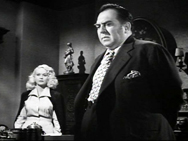
As the busy decade closed, Gomez even added a little touch of noir to the Christmas classic Come to the Stable, playing mobster Luigi Rossi, whom the good sisters (Celeste Holm and Loretta Young) are sure they can reform and hit up for a sizeable donation of property. Hmm, I wonder if they’ll succeed…
When he wasn’t holding Bogie and Bacall hostage, gunning for Dick Powell or fighting off adorable nuns, Gomez, a passionate progressive and union man, was serving on the board of directors of the Screen Actors Guild. He never married, and lived quietly and simply. His only nod to indulgence was a love of fine dining, with predictable results to his waistline.
And in the midst of racking up roughly 60 movie credits, Gomez shuttled back to Broadway whenever a great role came calling: Claudius in Hamlet, Professor Moriarty in Sherlock Holmes. and perhaps the ultimate villain, Oliver Cromwell in A Man for All Seasons. He followed Burl Ives as Big Daddy in the original run of Cat on a Hot Tin Roof, winning superior reviews from Tennessee Williams (who later tapped him to play Papa Zacharias in the film version of Summer and Smoke).
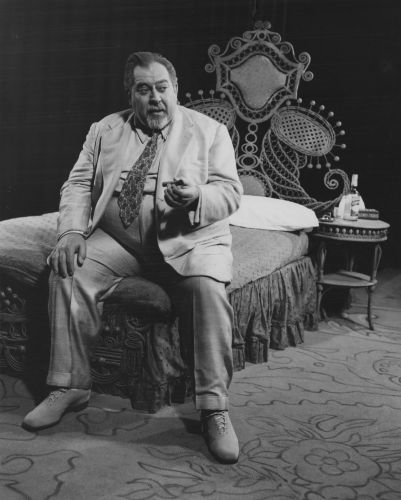
Throughout the late 1950s and 1960s, Gomez also guested on TV shows, including The Twilight Zone (in a memorable turn as Satan—the role he’d been building up to all his life), Route 66, Dr. Kildare, Burke’s Law, The Virginian, It Takes a Thief, Bewitched and The Rifleman. But if you really want to see him as never before, watch his fabulous turn as pool shark Chicago Chubby on this 1965 episode of Mr. Ed. (Spoiler alert: Ed beats him.)
In his last film appearance, Gomez played The Minister in 1970’s Beneath the Planet of the Apes. His last role ever was on Gunsmoke as Agustin, a Mexican farmer who risks his life to save a wounded Matt Dillon. In May 1971, Gomez was grievously injured in a car accident in Santa Monica, and succumbed to his injuries a month later. He was 65 years old.
Thomas Gomez once said that no matter how flat a role may have appeared on paper, he tried to infuse it with “some rascality, warmth and dimension.” Sleep well, Sabino. You met your own high standards a thousand times over.
 Sister Celluloid
Recent Comments